
In Singapore homes, it is common to spot black, green or brown staining on painted walls and wonder whether a quick coat of paint will solve the problem. The short answer is: painting over mould is not a proper fix if the underlying moisture issue is still present. It may improve appearance for a while, but the mould can continue to grow beneath the paint film and return later.
If you are dealing with visible mould on walls, the better approach is to assess the affected surface, identify the likely moisture source, and treat the surface appropriately before repainting. For many homes in Singapore, especially HDB flats, condominiums and landed properties exposed to humidity, the real issue is not just the stain on the wall, but the damp condition behind it or around it.
Why Painting Over Mould Is Usually Not Enough
Painting over mould does not remove the growth. It only covers what you can see. If the wall remains damp from condensation, a plumbing leak, air-conditioning drip, poor ventilation or trapped moisture, the mould may reappear through the new paint layer or spread to nearby areas.
There are also practical limits to what paint can do:
- Paint does not dry out a damp wall.
- It does not remove mould spores already present on the surface.
- It does not fix hidden water intrusion or recurring condensation.
- It may trap moisture if applied over an unprepared surface.
In some cases, an anti-mould paint system can be part of the finishing stage after proper cleaning and drying. However, it should be used as one part of a broader mould mitigation plan, not as a substitute for source control.
What Proper Wall Mould Removal Involves
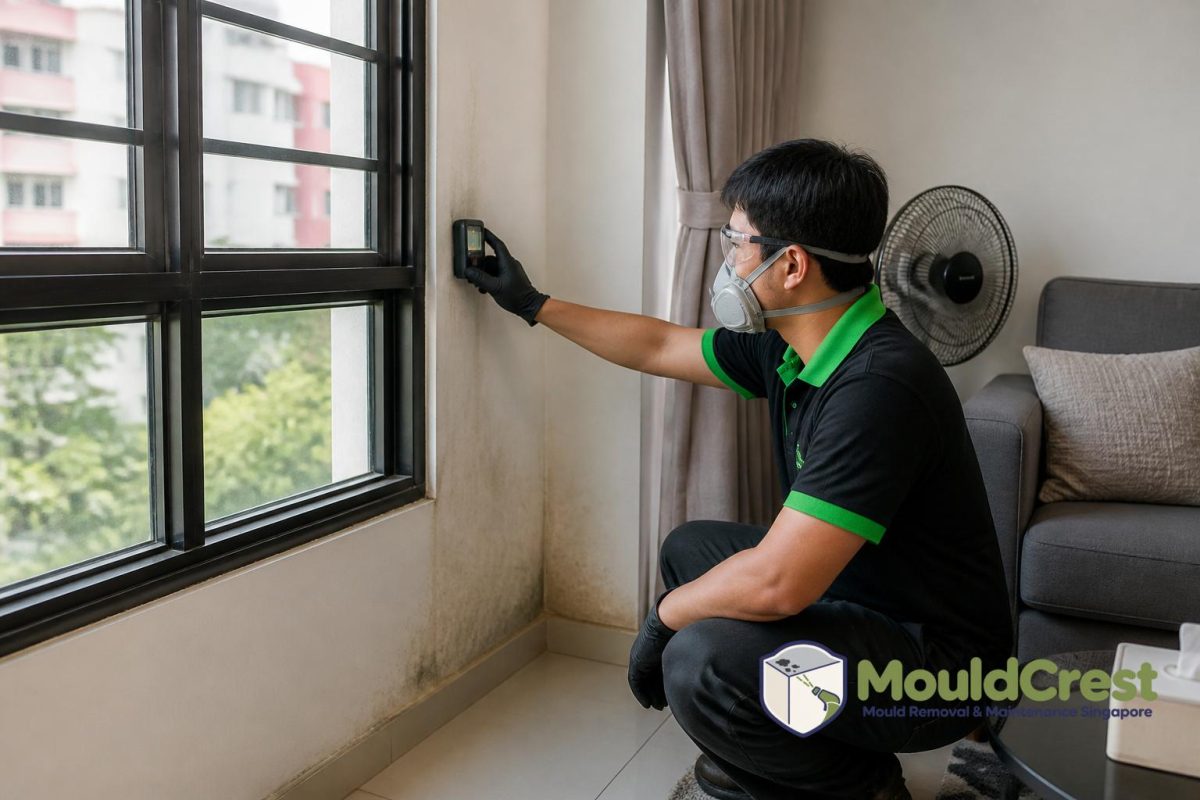
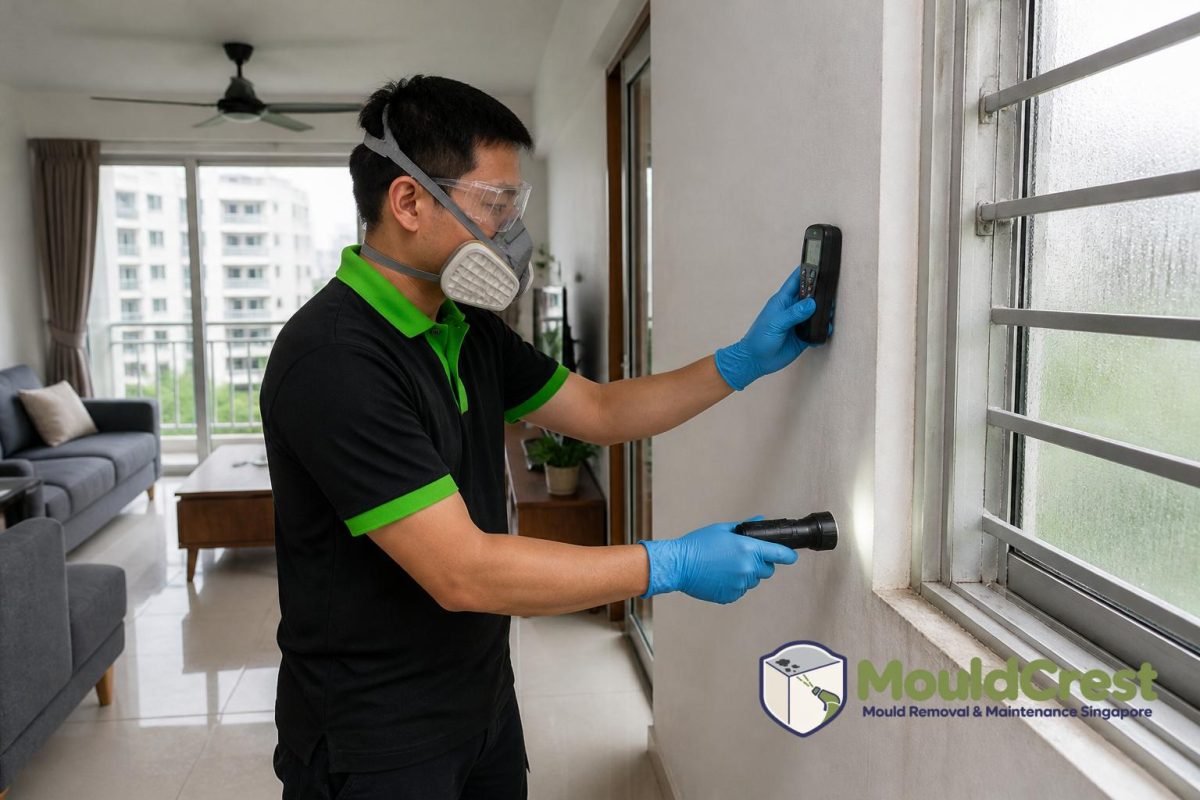
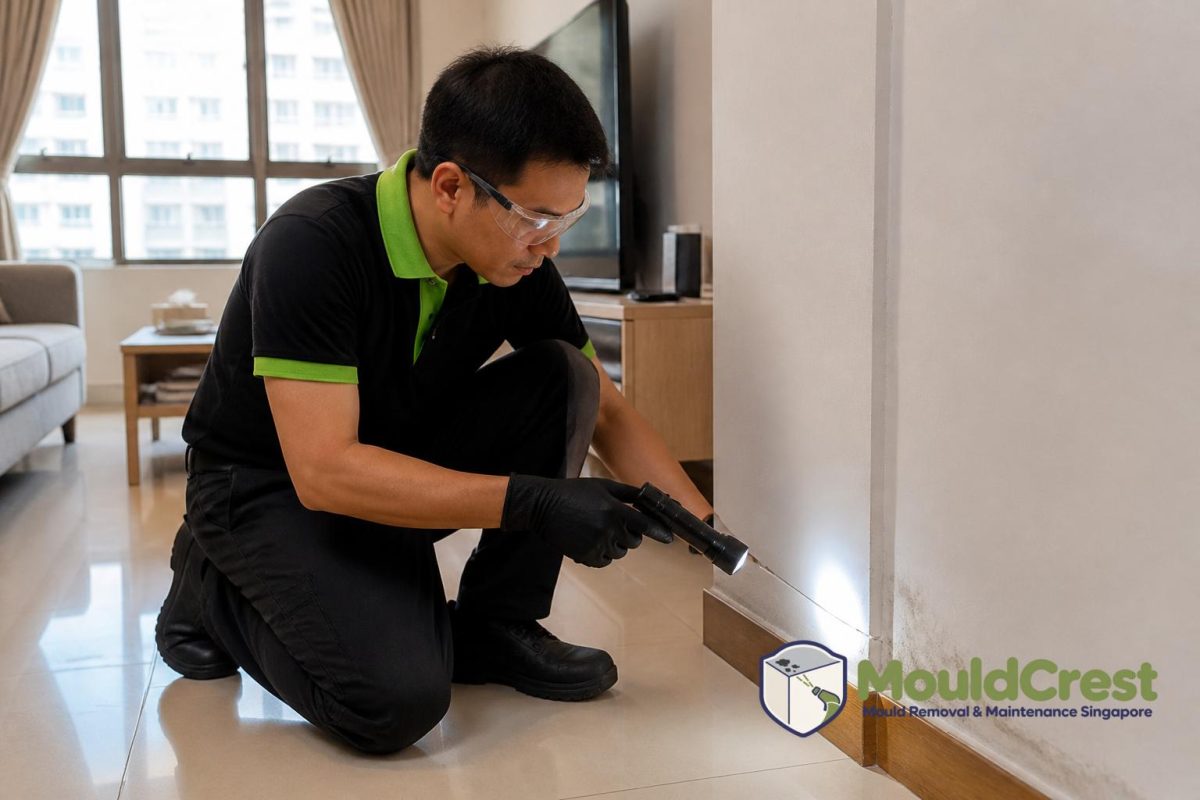
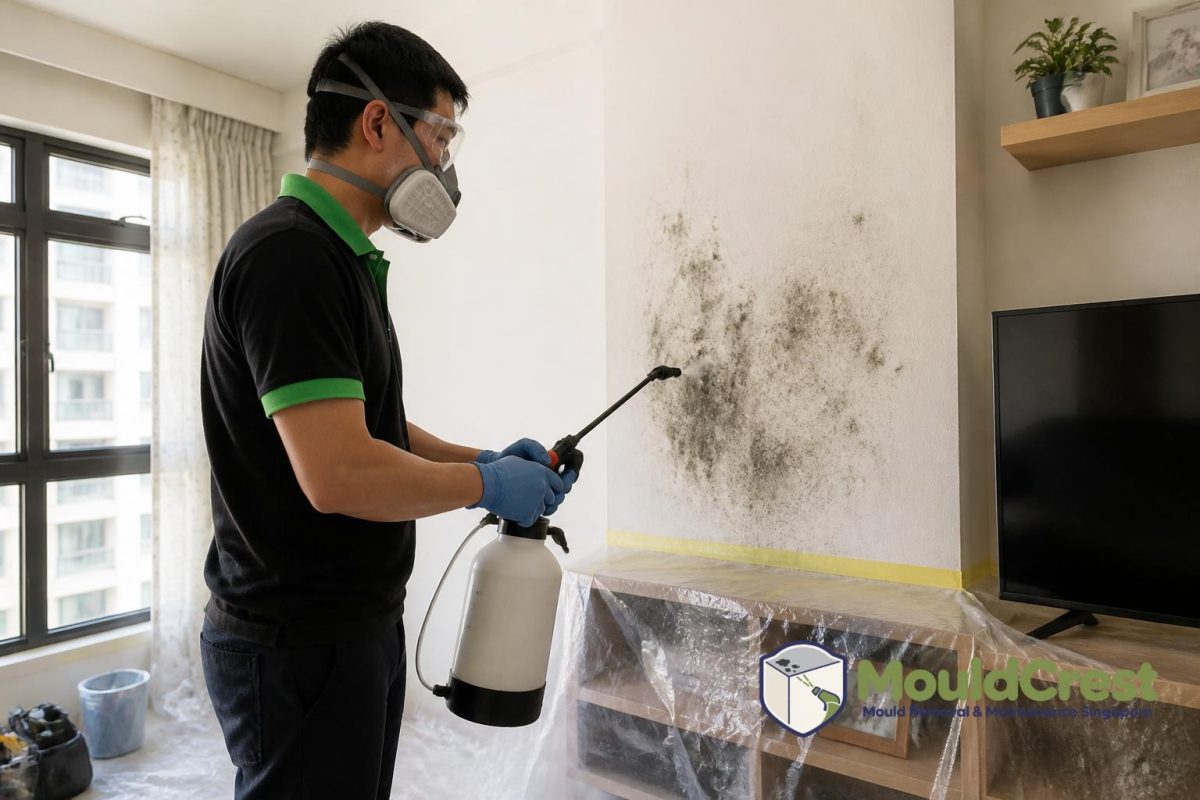
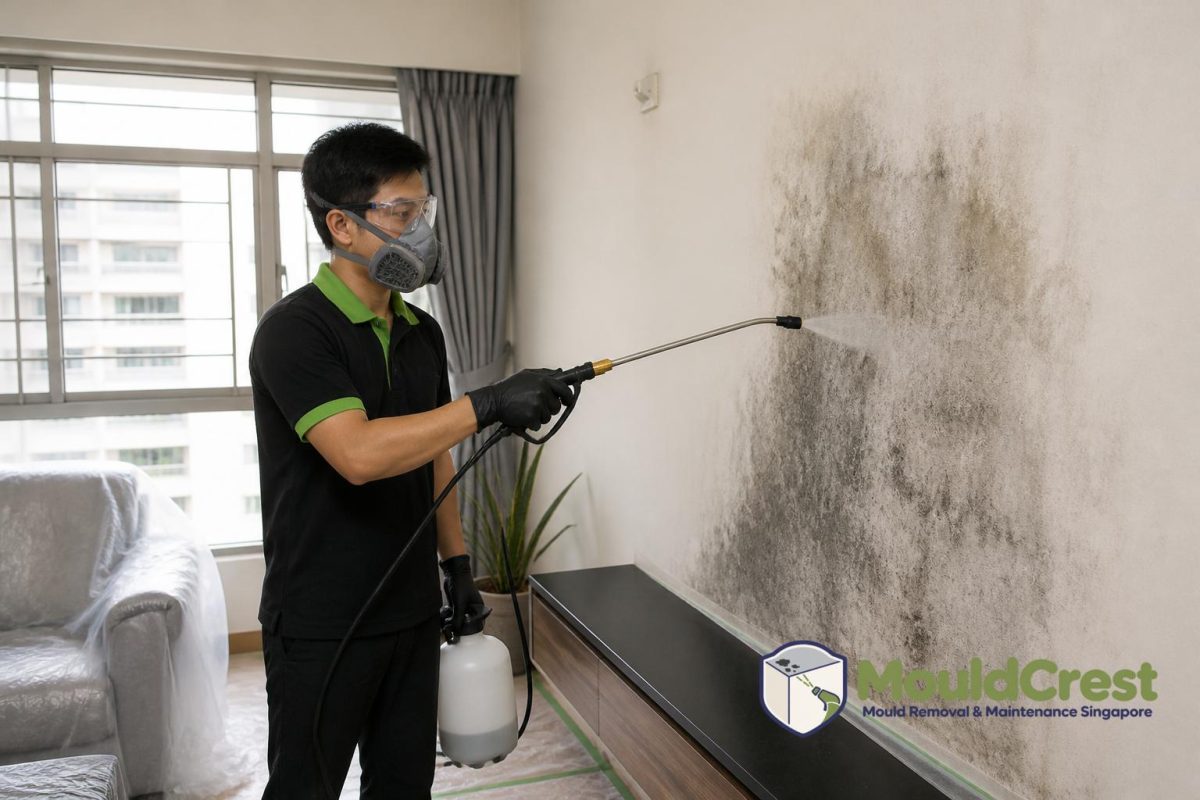
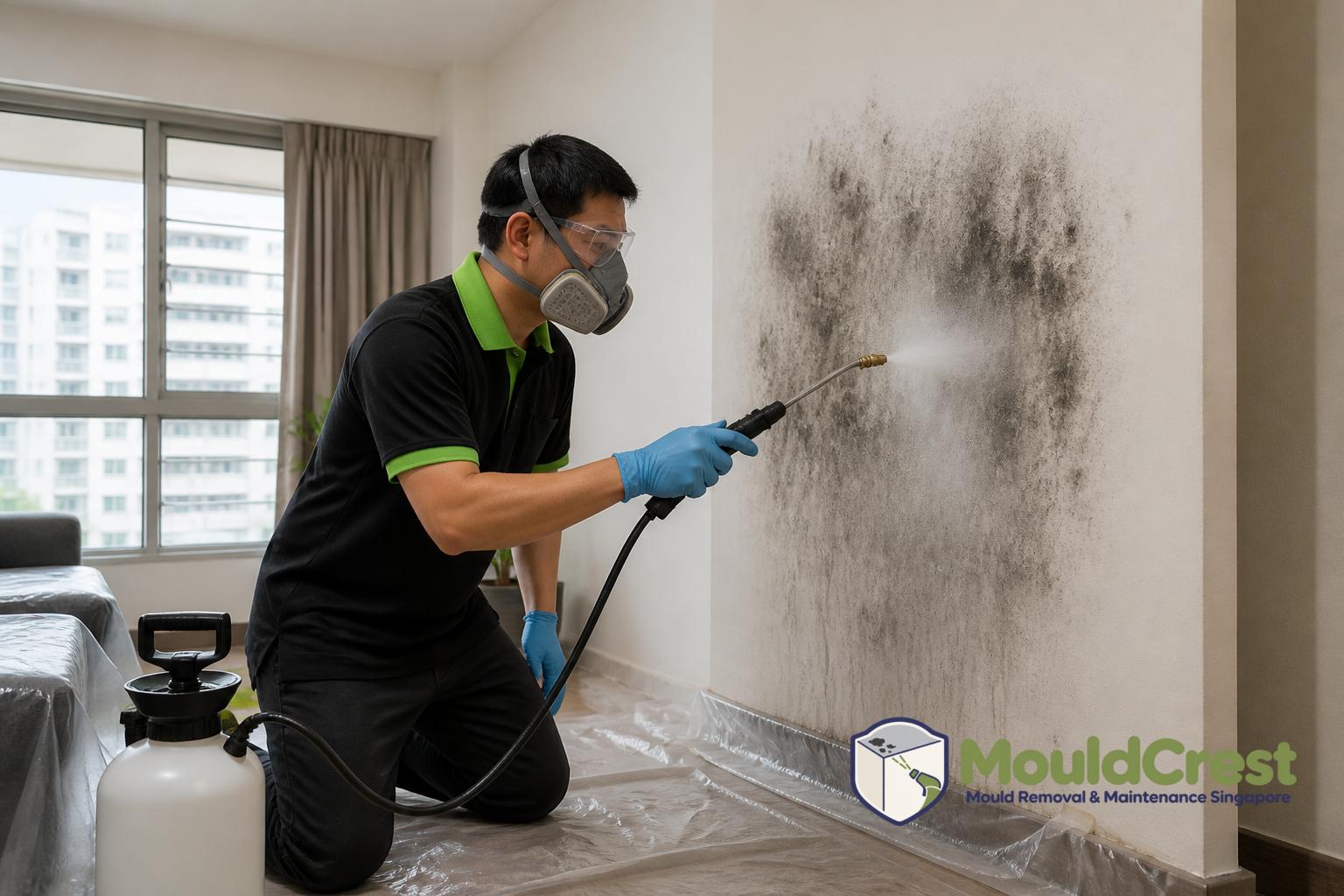
Wall mould removal starts with assessing the accessible visible surface. This usually includes checking the affected wall area, surrounding paint condition, and whether the stain appears linked to condensation, a leak, or a cold bridge. The goal is to decide whether the surface can be treated or whether further work is needed.
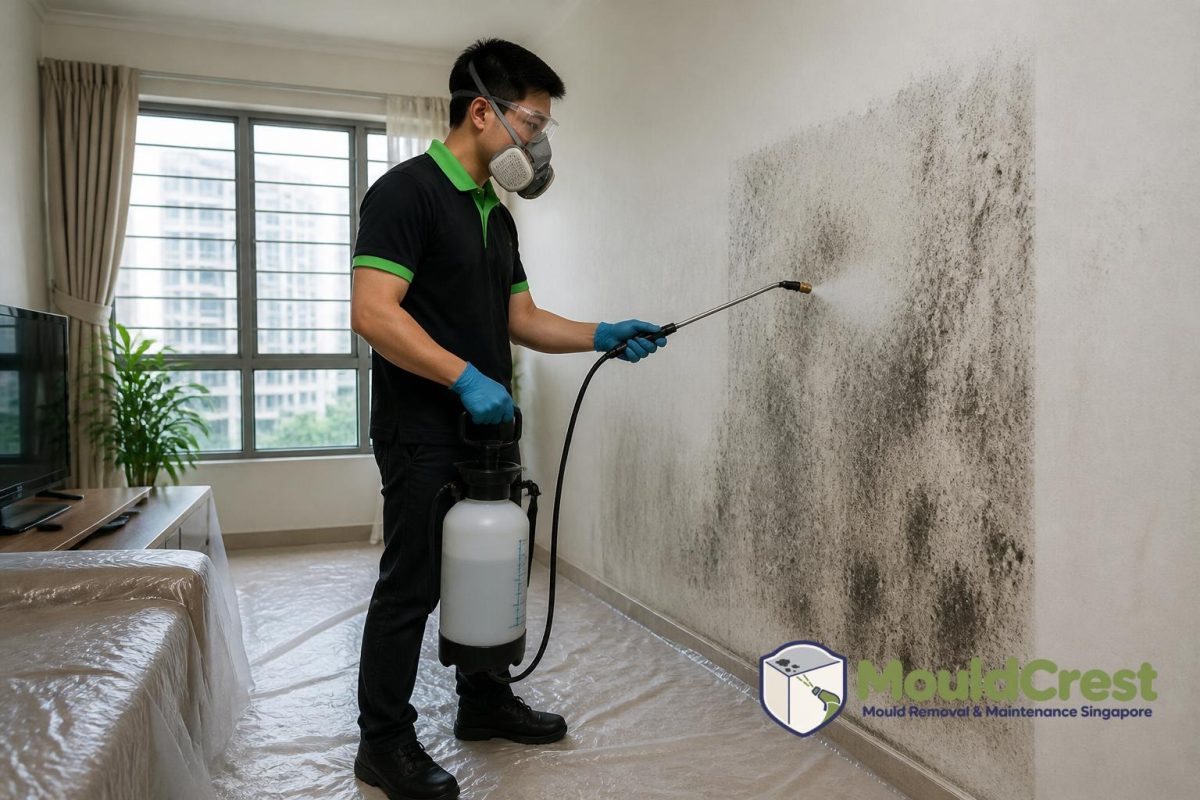
For vertical plastered or painted walls, suitable treatment typically involves:
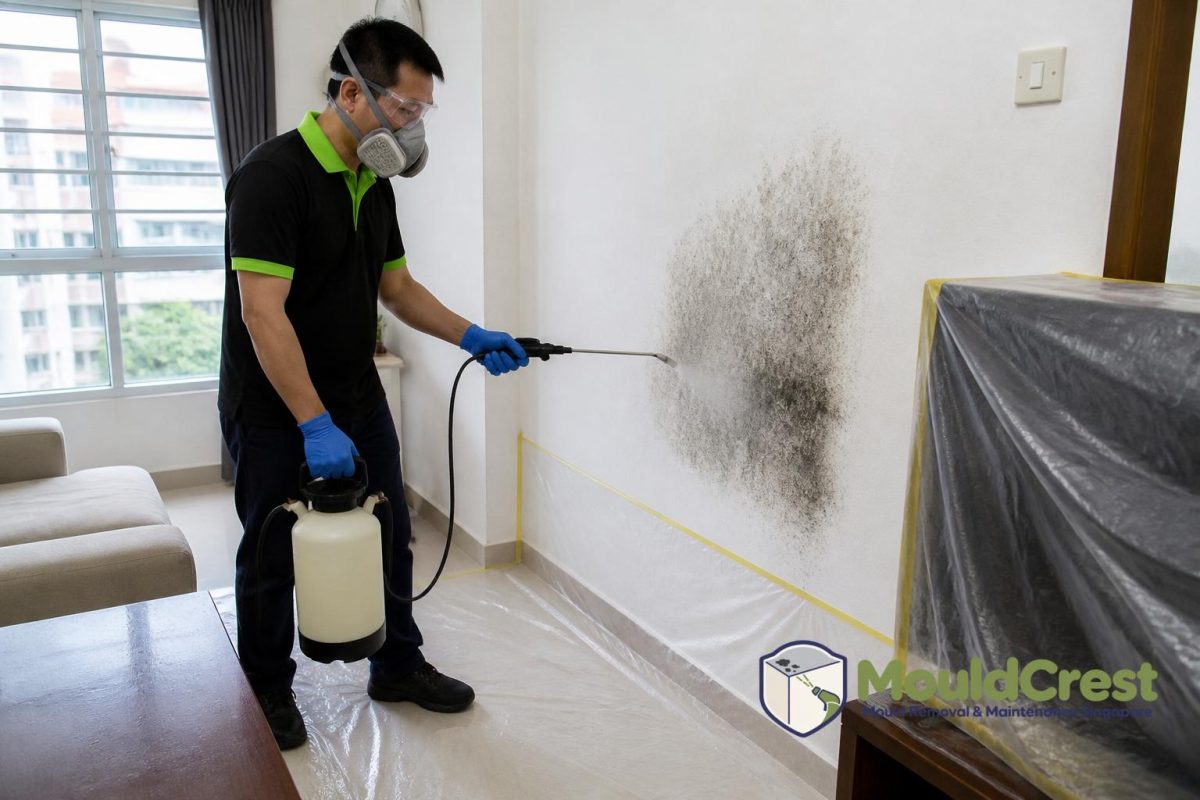
- Protecting the surrounding area before work begins.
- Carefully cleaning the visible mould from the accessible surface.
- Using appropriate products and methods for the wall finish.
- Allowing the area to dry fully before any repainting.
- Checking for ongoing moisture conditions that may encourage regrowth.
Wall mould removal is different from simply wiping a stain. The surface needs to be handled in a way that suits the wall material and the extent of growth. If the plaster is soft, blistering, or repeatedly damp, painting alone is unlikely to be a lasting solution.
When Ceiling Mould Needs a Different Approach
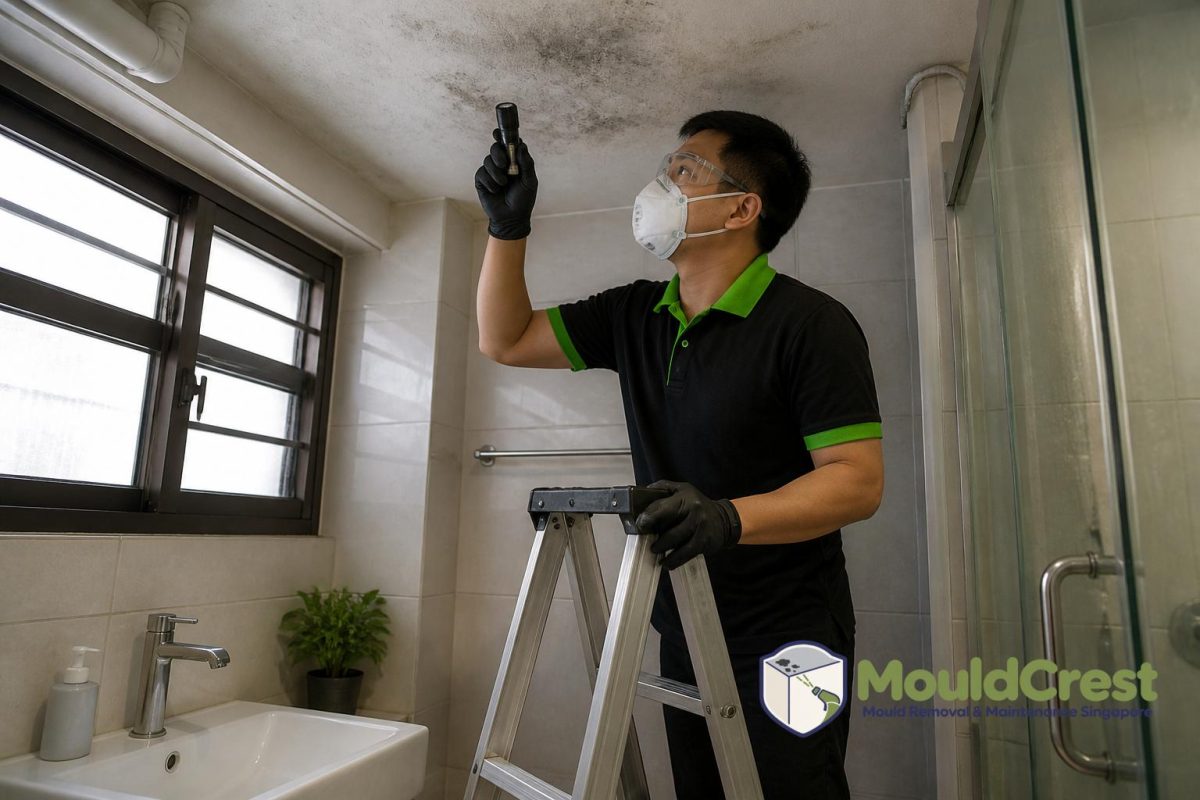
Ceiling mould removal is not the same as wall treatment. Overhead surfaces usually require different access, preparation and worker positioning. Ceiling areas may also be affected by condensation, roof leaks, pipework above, or poor air circulation in bathrooms, kitchens and enclosed rooms.
Because ceilings are overhead, proper preparation matters. The work area may need to be cleared, protected and assessed carefully before any cleaning or surface treatment begins. Personal protective equipment is also important because overhead work can release particles during cleaning.
Ceiling mould often appears around:
- Bathroom ceilings with frequent steam exposure.
- Air-conditioned rooms with cold surfaces and condensation.
- Top-floor units where roof seepage may be a concern.
- Areas with poor ventilation or low airflow.
If the cause is moisture-related, the ceiling should not simply be painted over after a superficial wipe-down. The underlying condition must be addressed, or the marks are likely to return.
Mould Remediation Versus Mould Removal
Mould removal refers to treating the accessible visible growth on a surface. Mould remediation is broader. It looks at the affected area more holistically, including the scope of contamination, the types of materials involved, and how moisture is being managed.
In practical terms, mould remediation may involve:
- Inspecting the affected space and adjacent surfaces.
- Identifying whether the problem is isolated or widespread.
- Assessing whether painted surfaces, plaster, skirting or nearby finishes are affected.
- Applying professional treatment to accessible areas.
- Managing the moisture source, where possible, to reduce recurrence.
This distinction matters because some areas can be cleaned and restored, while others may need further repair before repainting. A proper remediation plan avoids treating mould as only a cosmetic issue.
Can Fogging, Misting or Spraying Be Used?
ULV fogging or misting may be used as an additional method in some situations, particularly when a broader surface treatment is needed. However, spraying alone is not a long-term solution, and it should not be presented as a guarantee against recurrence.
The important point is that any fogging or spray treatment still needs to be supported by:
- Visible surface cleaning where appropriate.
- Drying and preparation before repainting.
- Moisture-source management.
- Ventilation and humidity control.
For Singapore homes, recurring mould is usually linked to moisture conditions rather than lack of spraying. If those conditions remain, the problem can return even after treatment.
Mould Mitigation for Singapore Homes
Mould mitigation focuses on prevention. This means reducing the moisture conditions that allow mould to grow in the first place. In Singapore’s humid climate, mitigation is often just as important as cleaning because many homes face recurring condensation or dampness in certain rooms.
Good mould mitigation can include:
- Improving ventilation in bathrooms, kitchens and bedrooms.
- Managing indoor humidity and reducing condensation on cold surfaces.
- Using exhaust systems effectively during and after showers or cooking.
- Keeping affected walls and corners dry and well aired.
- Addressing plumbing drips, aircon condensation or seepage early.
Mitigation is not about hiding the problem. It is about reducing the conditions that make regrowth more likely. In many homes, this is the difference between a short-lived clean-up and a more stable long-term result.
Where Ventilation Fan Installation Fits In
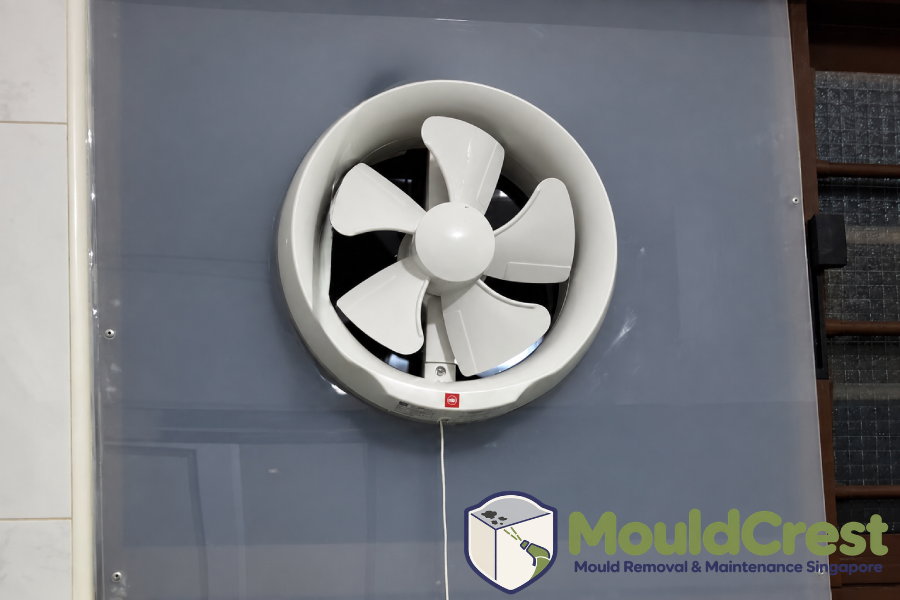
Ventilation fan installation is a separate service from mould removal. It is part of controlling moisture, but it is not a cleaning method. A properly placed fan can help remove humid air from enclosed spaces, especially in bathrooms or other rooms that trap steam.
For a fan to be useful, it should be sized and located for the space rather than fitted as an afterthought. In some cases, a window acrylic panel may be needed to support installation. Safe electrical installation is also important, and the work should be handled by the appropriate trade where electrical connections are involved.
Ventilation improvements work best when they match the room layout and the cause of dampness. A fan alone will not solve a leak, but it can be a helpful part of broader mould mitigation.
Other Trades That May Be Needed
Not every mould issue is solved by one service. In Singapore homes, mould often appears alongside other maintenance issues that need different trades and methods.
For example:
- Plumbing services may be needed if there is a leak behind a wall, under a sink or near a bathroom fitting.
- Electrical services may be needed for safe fan wiring or light fitting issues near damp areas.
- Aircon servicing may help when condensation, blocked drainage or airflow problems are contributing to dampness.
- Property maintenance and handyman services may assist with repairs, sealing, minor reinstatement and general upkeep.
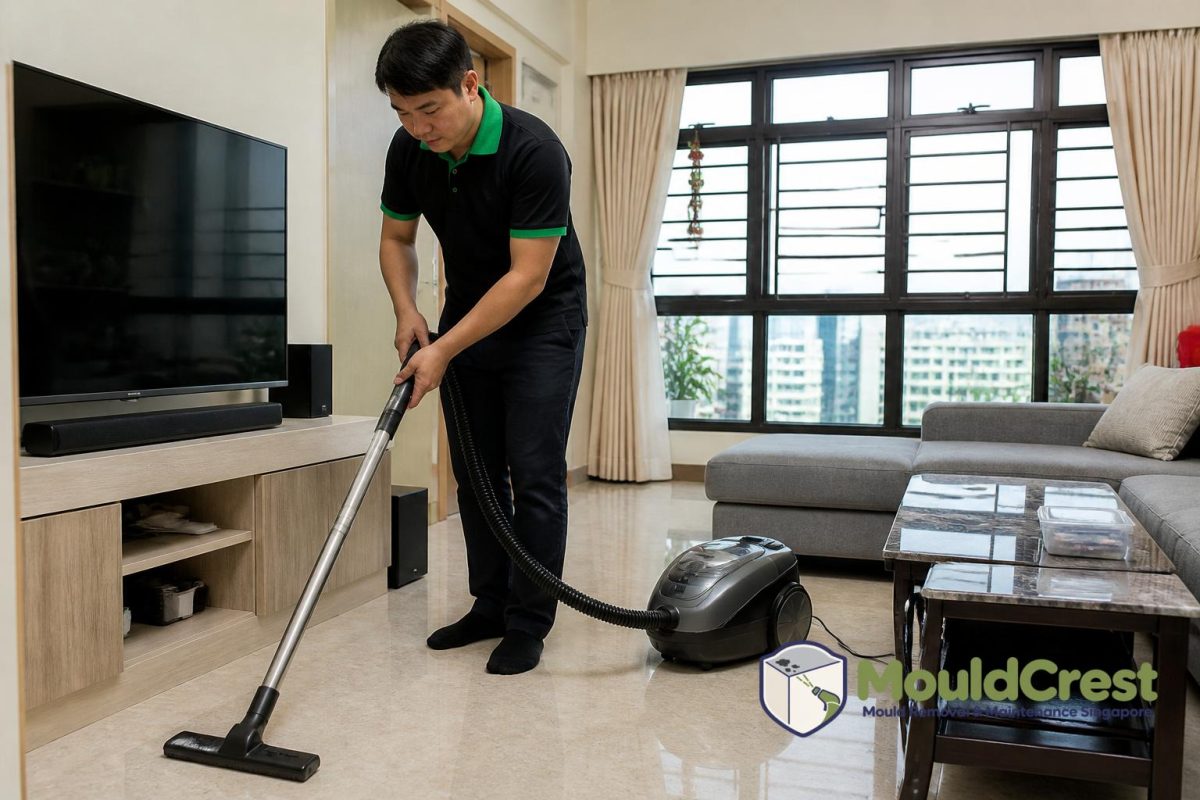
- Cleaning services are suitable for routine upkeep, while mattress cleaning and sofa cleaning address fabric items separately from wall or ceiling mould.
Keeping these services distinct is important. Wall mould treatment, moisture control, plumbing repair and upholstery cleaning each require different methods and expectations.
To discuss the mould concern covered here, WhatsApp MouldCrest with details of the affected surface and any moisture signs to request an assessment or quotation.
Conclusion
In Singapore homes, you should not simply paint over mould on walls and assume the issue is resolved. A proper approach starts with assessing the visible growth, treating the accessible surface correctly, and managing the moisture source that allowed the mould to appear. For walls and ceilings, the preparation and method should match the surface condition and the cause of dampness.
When the issue is recurring, mould remediation and mitigation are usually more effective than cosmetic repainting alone. If ventilation, plumbing, air-conditioning or maintenance factors are involved, those should be addressed as part of the overall solution so the problem is less likely to return.
Choose MouldCrest Mould Removal & Maintenance Singapore
At MouldCrest Mould Removal & Maintenance Singapore, we offer mould removal services to address mould growth and improve the condition of affected spaces. We provide wall mould removal to treat growth and marks on walls and mould on ceilings can be addressed through our ceiling mould removal service. For a more comprehensive approach, our mould remediation service addresses mould concerns across the affected area. We also offer mould mitigation to help reduce the risk of recurring growth. As airflow is an important part of managing moisture, we provide ventilation fan installation to improve air circulation and help reduce the likelihood of mould growth.
Our services also cover property maintenance, which includes handyman services for repairs and installations, plumbing services for leaking taps and fixture issues, and electrical services for switches, sockets and light fittings. To refresh frequently used furnishings, we offer cleaning services that include mattress cleaning and sofa cleaning to remove accumulated dirt. Visit our blog for helpful insights and browse our completed projects to see our work. WhatsApp us today at +65 8241 0032 to enquire about our services and to discuss your requirements.
Frequently Asked Questions
Can I paint over mould after cleaning it?
Only if the surface has been properly cleaned, dried and made suitable for repainting. Even then, you should also address the moisture source. Painting alone is not a lasting fix if dampness remains.
Is mould removal the same as mould remediation?
No. Mould removal usually refers to treating visible mould on an accessible surface. Mould remediation is broader and may include scope assessment, moisture-source management and treatment of the affected materials or surrounding area.
Will a fan or spray solve mould permanently?
No single spray or fan guarantees that mould will not return. Fans can help with ventilation, and sprays may be part of treatment, but long-term control depends on reducing moisture, improving airflow and addressing the cause of the dampness.