
Wall mould is one of the more common issues seen in Singapore homes, especially in HDB flats, condominiums and landed properties where humidity, condensation and poor air movement can build up around certain rooms and surfaces. In many cases, what looks like a simple black patch on paint is actually a sign that the wall has been exposed to moisture for some time. That is why proper wall mould removal is more than a quick wipe-down. It starts with checking the visible area, understanding the likely moisture source and choosing a treatment suited to the wall surface.
For homeowners, landlords and property managers, the key is to separate surface cleaning from longer-term mould mitigation. A wall can be cleaned, but if the underlying damp condition remains, mould may return. At MouldCrest Mould Removal & Maintenance Singapore, the approach is practical and measured: assess the affected accessible surface, treat it appropriately, and consider the moisture conditions that allowed mould growth in the first place.
What wall mould usually looks like
Wall mould often appears as dark speckling, blotches or patchy growth on painted plaster, plasterboard or other finished wall surfaces. In Singapore homes, it is commonly seen in bedrooms, wardrobes against external walls, behind furniture, along skirting lines or in spaces with limited ventilation. Condensation on cooler surfaces, aircon use, and indoor humidity can all contribute to this.
- Small black, grey or greenish spots on paint or plaster
- Musty odour in a room or cupboard
- Paint bubbling, staining or visible damp patches
- Recurring growth in the same location after cleaning
It is important not to assume every stain is mould, and not every mould patch means the wall is damaged beyond cleaning. The condition of the surface and the moisture source both matter.
How wall mould removal is assessed
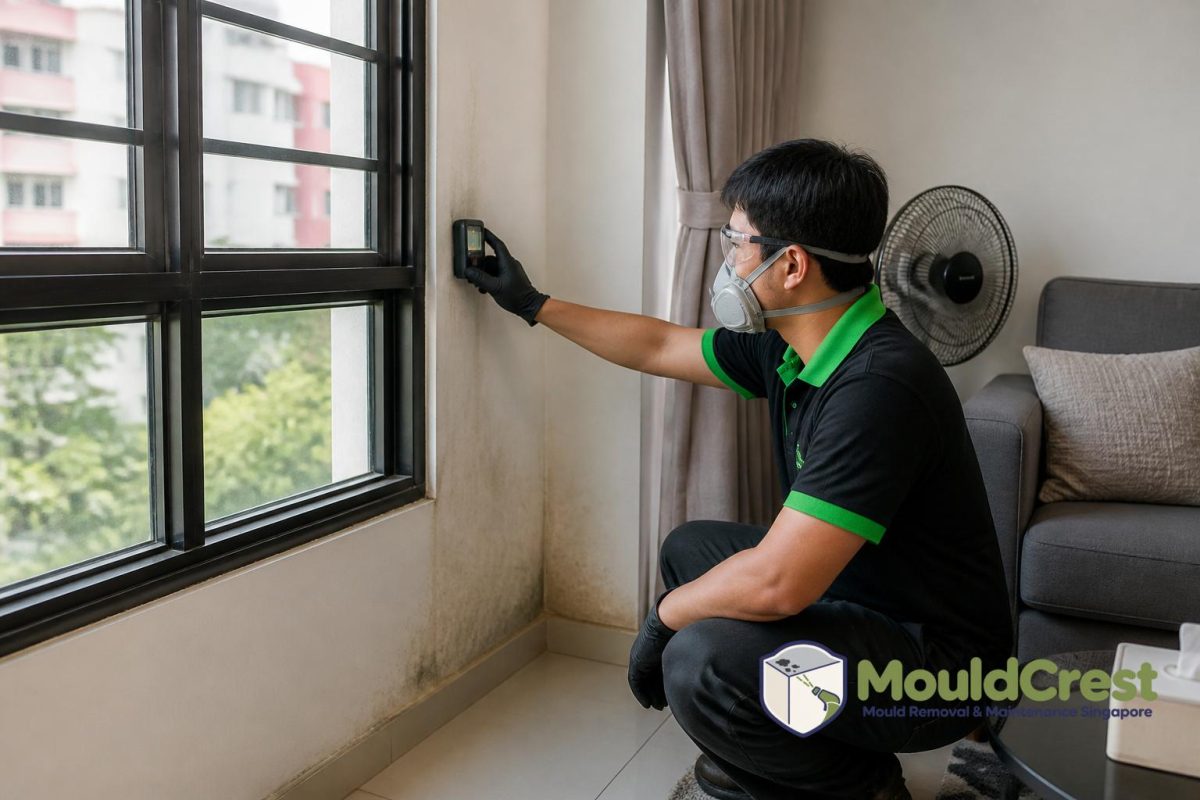
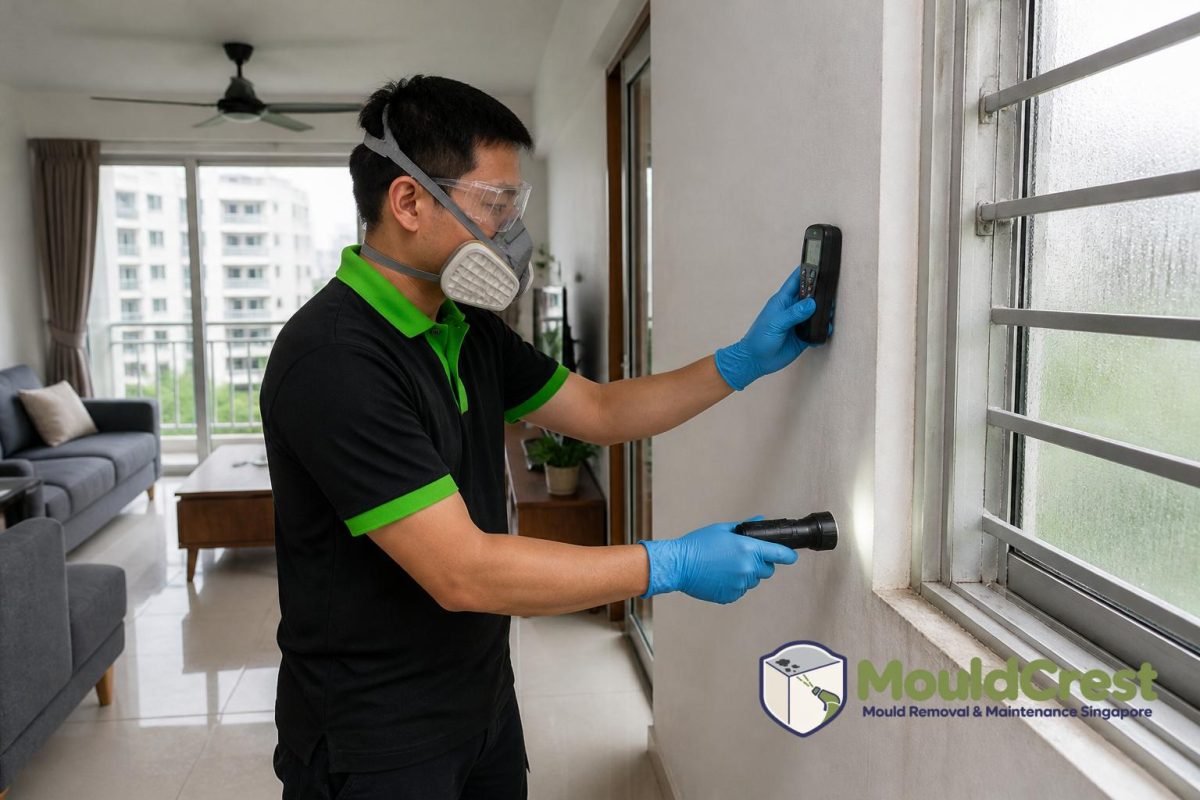
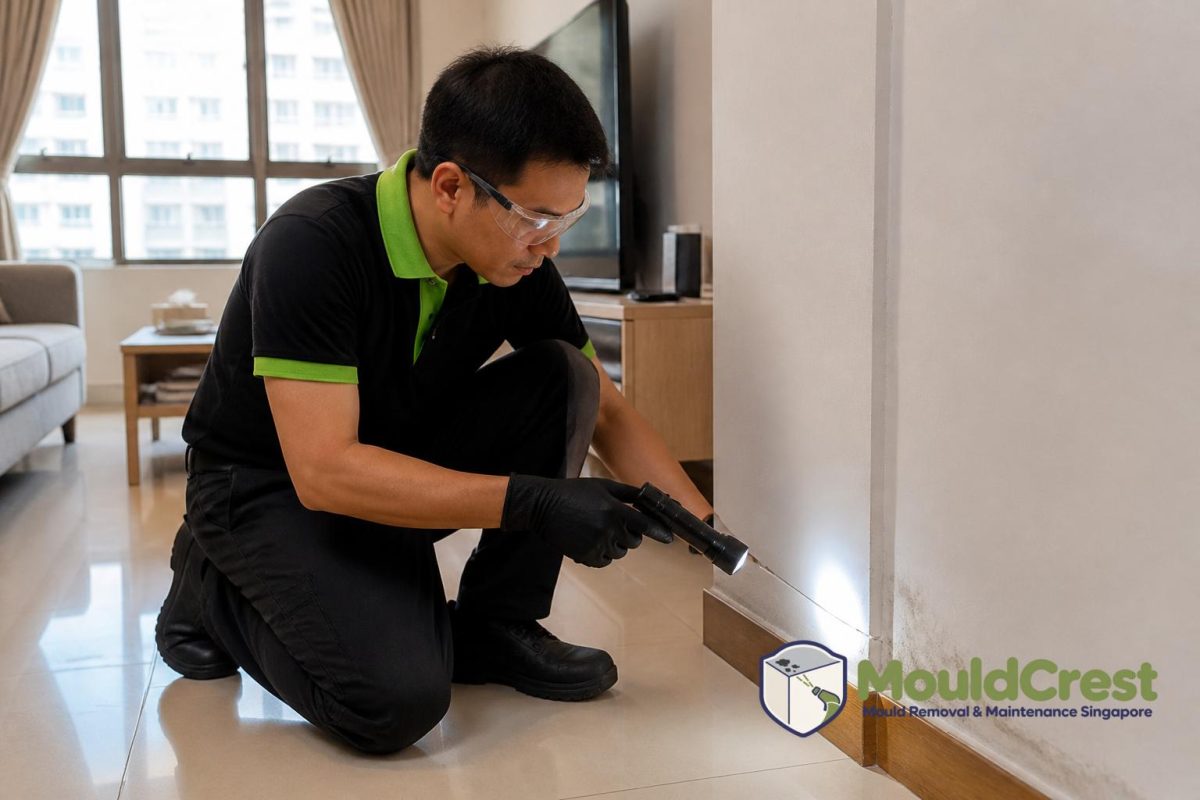
The first step in wall mould removal is an assessment of the accessible area. This means looking at where the growth is located, how extensive it is and whether it appears to be limited to the painted surface or involves a deeper moisture issue. A professional will typically consider the room layout, ventilation, nearby plumbing, air-conditioning use and whether the wall is an external wall, bathroom-adjacent wall or a wall affected by condensation.
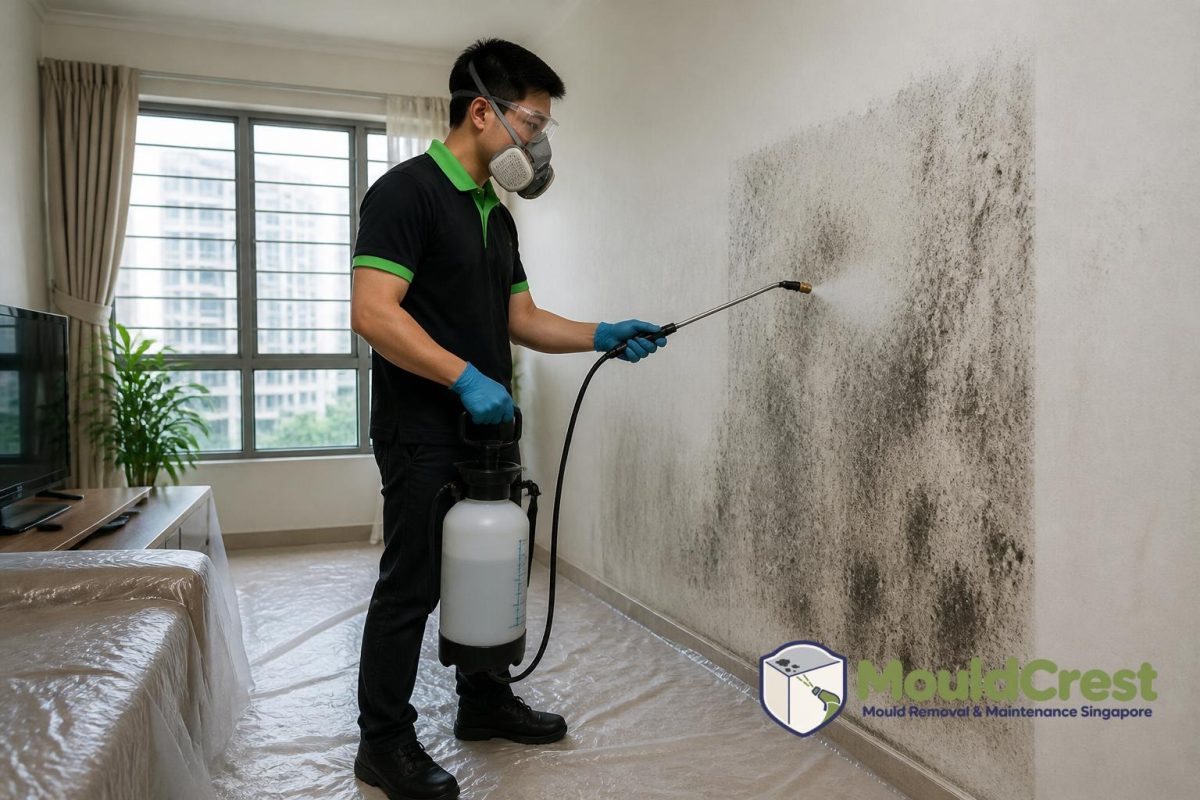
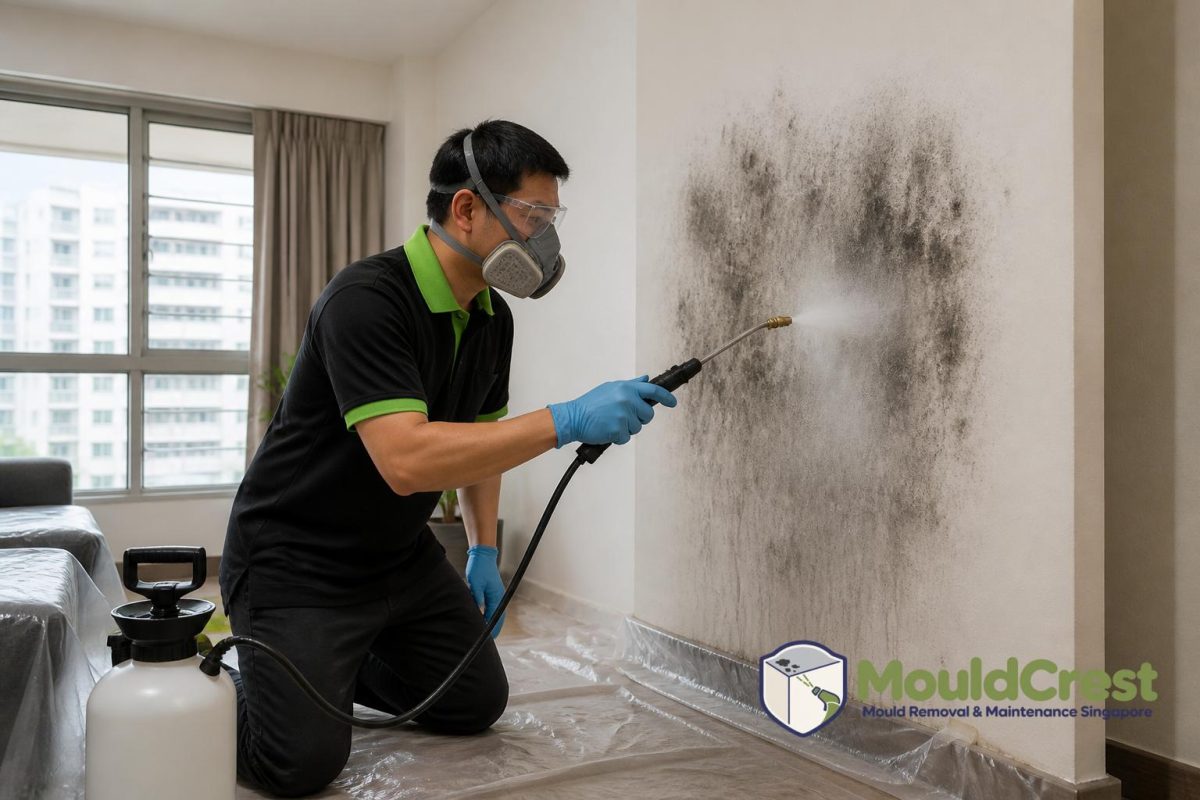
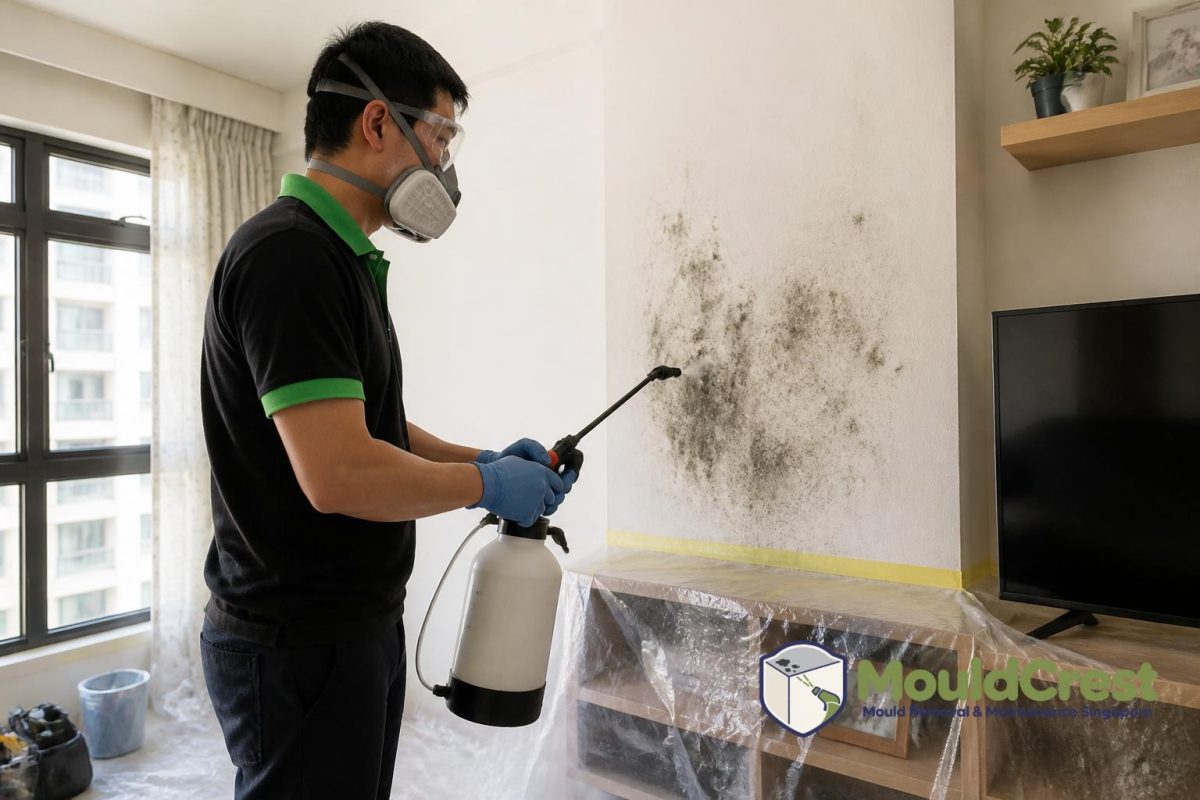
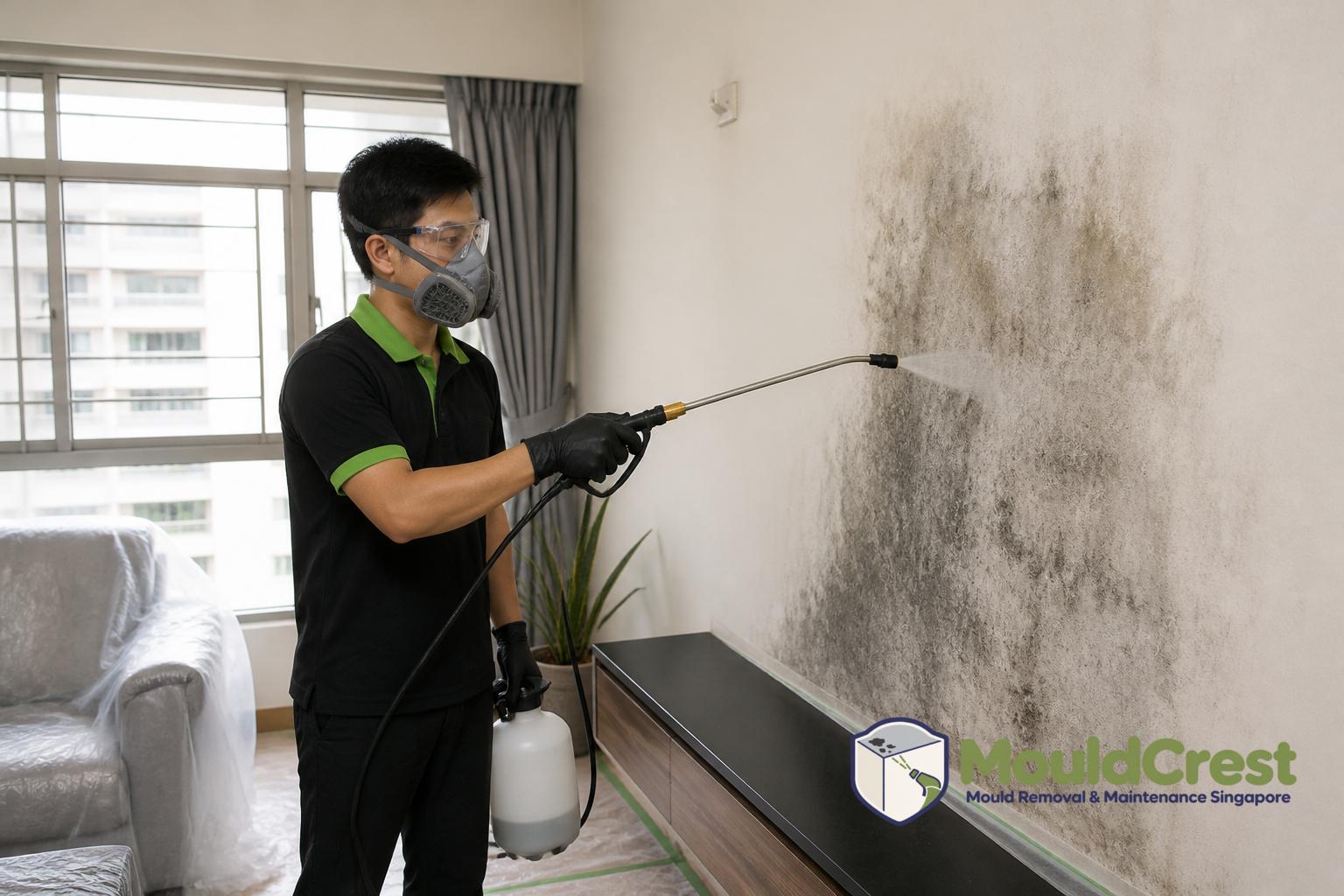
For visible mould on an accessible wall surface, treatment may involve careful cleaning, surface preparation and the use of appropriate mould removal products for the material involved. The method should suit the wall finish. A painted wall, for example, is treated differently from a porous or damaged surface. Spraying alone is not a complete solution if the wall continues to collect moisture.
Where there are signs of leak-related dampness, peeling paint or repeated regrowth, the scope may shift from simple mould removal to broader mould remediation, with attention to the moisture source and any affected materials.
Wall mould removal methods used in Singapore homes
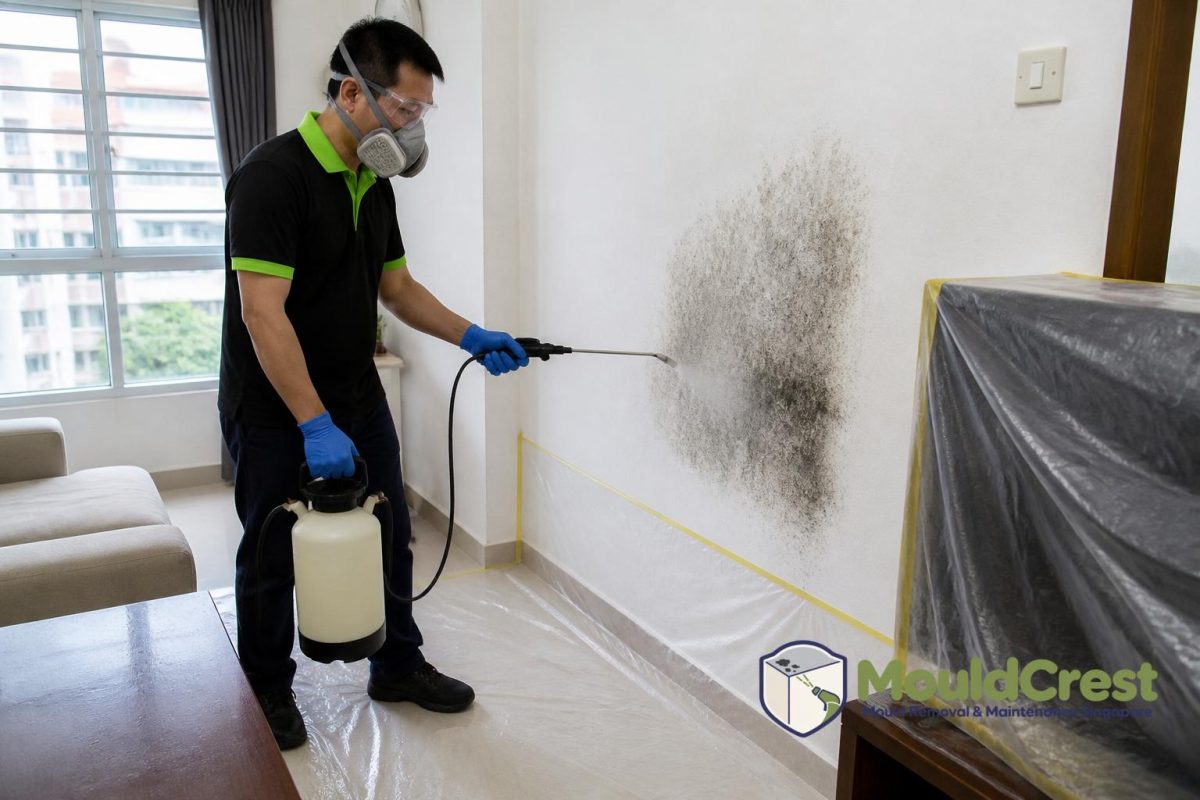
The right method depends on the wall condition. In most homes, the goal is to remove visible growth from the accessible surface without unnecessarily damaging the finish. Preparation is important because the surrounding area must be protected before any treatment begins.
- Surface cleaning: removing visible growth from painted or finished wall surfaces using suitable cleaning and mould treatment products
- Targeted treatment: applying products to the affected area after assessment, rather than broadly spraying the whole room
- Careful drying: allowing the treated surface to dry properly, with attention to airflow and humidity
- Follow-up checks: looking for signs that moisture is still present, especially if the mould has returned before
Fogging or misting may be used as an additional measure in some situations, but it should not be mistaken for a long-term answer on its own. If the wall is still exposed to condensation, seepage or repeated dampness, mould mitigation must include moisture management as well.
When wall mould removal becomes mould remediation
There is a difference between mould removal and mould remediation. Wall mould removal usually refers to treating visible growth on an accessible wall surface. Mould remediation is broader. It involves scope assessment, dealing with affected materials where appropriate, professional treatment and steps to manage the moisture source that contributed to the problem.
In Singapore homes, remediation may be relevant when mould keeps reappearing, when there is water staining, or when the issue seems linked to a concealed or recurring moisture problem. This does not mean every case requires invasive work, but it does mean the situation should be assessed properly rather than relying on repeated cleaning alone.
For example, if a wall next to a bathroom, service yard or aircon line shows repeated mould, the issue may involve ventilation, condensation or plumbing-related moisture. In such cases, mould removal and moisture-source management should be considered together.
Why wall mould returns in Singapore homes
Singapore’s climate makes mould management especially relevant. High humidity, limited indoor airflow, closed rooms and the use of cooling systems can all create conditions where moisture settles on walls. This is particularly common in spaces that are shaded, poorly ventilated or exposed to temperature differences between indoors and outdoors.
- Condensation: moisture forming on cooler wall surfaces
- Poor ventilation: trapped humid air in bedrooms, storerooms or wardrobes
- Aircon usage: temperature changes that encourage condensation on certain walls
- Water ingress or seepage: moisture entering from external sources or adjacent wet areas
- Furniture placement: large cabinets pushed tightly against walls can reduce air circulation
Because the cause differs from home to home, a careful assessment is more useful than a one-size-fits-all approach. The right treatment for a bedroom wall may not be the same as for a bathroom-adjacent wall or a wall affected by plumbing moisture.
How wall mould removal differs from ceiling mould removal
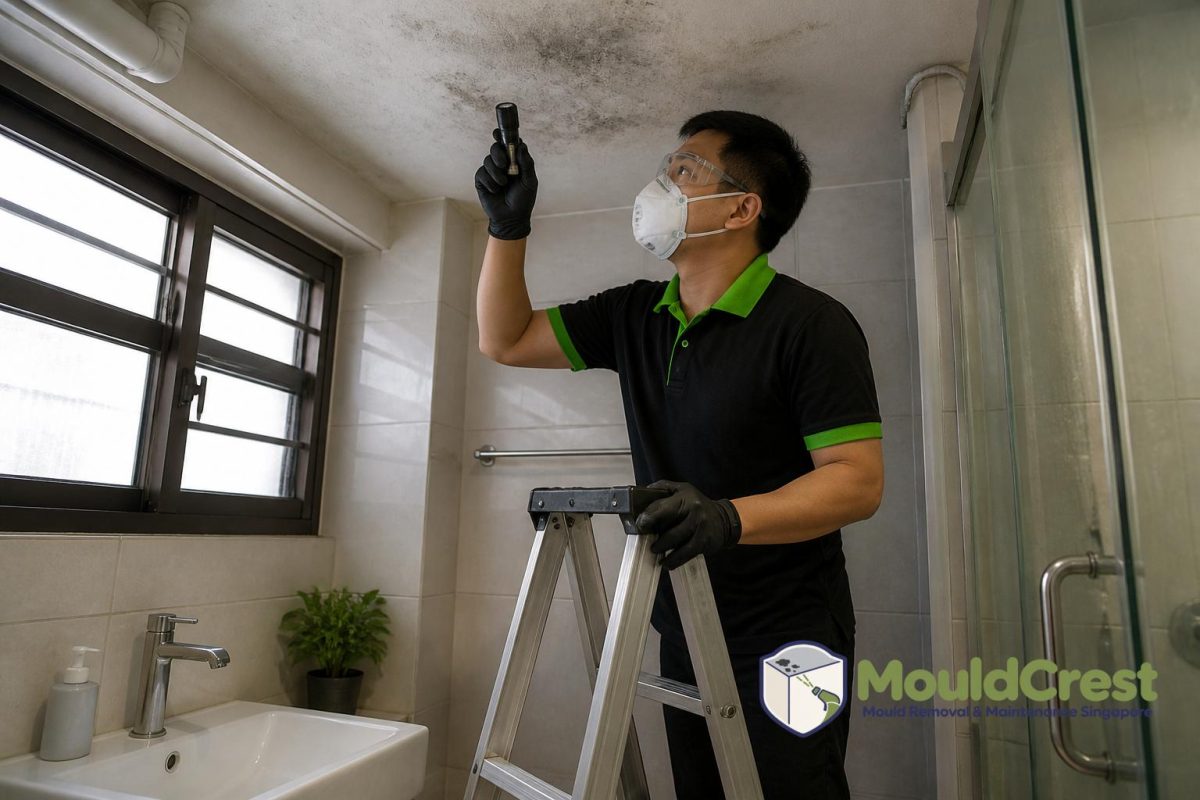
Wall mould removal and ceiling mould removal are not identical tasks. A wall is vertical and generally easier to inspect and prepare. A ceiling is overhead, which changes access, working position, safety precautions and treatment approach. Ceiling mould often involves ventilation, condensation or leaks from above, while wall mould is more commonly tied to side-wall moisture, poor airflow or adjacent damp sources.
For ceiling mould removal, preparation usually requires more care because the work is overhead and may need ladders, protective coverings and additional PPE. The surface condition and moisture source should still be assessed, but the access and application method are different from wall work. That is why it is useful to treat the two as distinct services rather than assuming the same process applies.
Preventing recurrence through mould mitigation
Mould mitigation is about reducing the conditions that allow mould to come back. This is not just about cleaning after the fact. It includes moisture management, condensation control and improving ventilation so that indoor surfaces are less likely to remain damp.
- Keep rooms ventilated where possible, especially after showers or heavy air-conditioning use
- Avoid placing large furniture directly against cooler external walls for long periods
- Address leaks, seepage or plumbing issues promptly
- Use suitable ventilation fans in areas that naturally hold moisture, where appropriate
- Monitor rooms that repeatedly show signs of condensation or musty odour
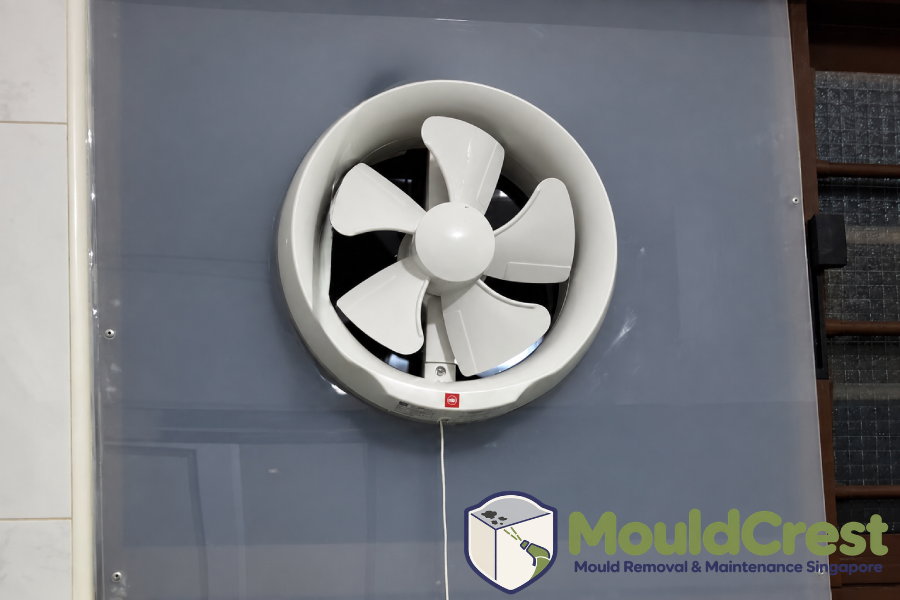
Ventilation fan installation is a separate trade from mould removal. If a bathroom, kitchen or enclosed utility space needs a real fan installed, the task involves proper sizing, location planning, possible window acrylic panel work and safe electrical installation by the appropriate tradesperson. It should not be confused with surface treatment or fogging.
What to expect from a professional service
A professional wall mould removal service should be clear about what it is treating and what it is not. If the mould is visible on an accessible wall surface, the service can assess and treat that area. If the issue appears more complex, the recommendation should shift towards mould remediation or another relevant trade, such as plumbing, electrical work, aircon servicing or general property maintenance.
This matters because different problems need different solutions. A plumbing leak, a blocked drain, an air-conditioning condensation issue or inadequate airflow may each contribute to mould, but each requires its own method of repair or servicing. Cleaning services, mattress cleaning and sofa cleaning are also distinct and should only be used where the issue relates to those specific items or surfaces.
Good service is about matching the method to the problem, not overpromising. No responsible provider should suggest that one spray, mist or wipe guarantees that mould will never return.
To discuss the mould concern covered here, WhatsApp MouldCrest with details of the affected surface and any moisture signs to request an assessment or quotation.
Conclusion
Wall mould removal in Singapore homes works best when it begins with proper assessment of the accessible wall surface, followed by suitable treatment and attention to the moisture conditions behind the growth. In many homes, the visible mould is only part of the story. Condensation, humidity, poor ventilation or nearby water sources may also need to be addressed if the problem is to be reduced meaningfully.
By treating wall mould as both a surface issue and a moisture issue, homeowners can make better decisions about whether they need simple removal, broader remediation or supporting services such as ventilation improvements or plumbing checks. The aim is not exaggerated promises, but a practical and professional approach suited to Singapore living conditions.
Choose MouldCrest Mould Removal & Maintenance Singapore
At MouldCrest Mould Removal & Maintenance Singapore, we provide mould removal to treat affected surfaces and restore their appearance. Our wall mould removal service addresses growth and marks on walls. For mould on ceilings, we offer ceiling mould removal. We also provide mould remediation for a more comprehensive approach to affected areas. To help manage the risk of mould returning, our mould mitigation service focuses on the conditions that encourage growth. We offer ventilation fan installation to improve airflow and help reduce moisture build-up. Our services also cover property maintenance, including handyman services for various repairs and installations, plumbing services to address plumbing issues, and electrical services for different electrical fittings. We also provide cleaning services such as mattress cleaning and sofa cleaning to freshen frequently used furnishings. Explore our blog for practical information and browse our completed projects to see our work. WhatsApp us today at +65 8241 0032 to enquire about our services and discuss your needs.
Frequently Asked Questions
Is wall mould removal the same as mould remediation?
Not always. Wall mould removal usually refers to treating visible mould on an accessible wall surface. Mould remediation is broader and may include scope assessment, affected materials and moisture-source management when the problem is more extensive or recurring.
Can mould on a wall be removed with just spraying?
Spraying may form part of the treatment, but it is not a complete solution on its own. The wall surface still needs proper assessment and cleaning, and the moisture cause should be considered if you want to reduce the chance of recurrence.
Why does mould often come back on the same wall?
It usually comes back because the moisture condition has not changed. This may be due to condensation, poor ventilation, a nearby leak, air-conditioning-related dampness or furniture blocking airflow against the wall.