
When Singapore homeowners search for professional cleaning services, the phrase can cover a wide range of work, from general housekeeping to specialised maintenance such as mould removal, mattress cleaning, sofa cleaning, plumbing, electrical services, aircon servicing and more. Understanding what each service actually includes helps you choose the right trade for the right problem, especially in HDB flats, condominiums, landed homes and commercial premises where moisture, ventilation and surface conditions can differ quite a bit.
For MouldCrest Mould Removal & Maintenance Singapore, the key point is that mould-related work is not the same as general cleaning. Mould removal, mould remediation, wall mould removal, ceiling mould removal and mould mitigation each have a different scope. Likewise, ventilation fan installation is a separate fitting and electrical task, while property maintenance, handyman, plumbing, electrical, aircon servicing, cleaning, mattress cleaning and sofa cleaning remain distinct services with their own methods and limitations.
What professional cleaning services usually cover in Singapore homes
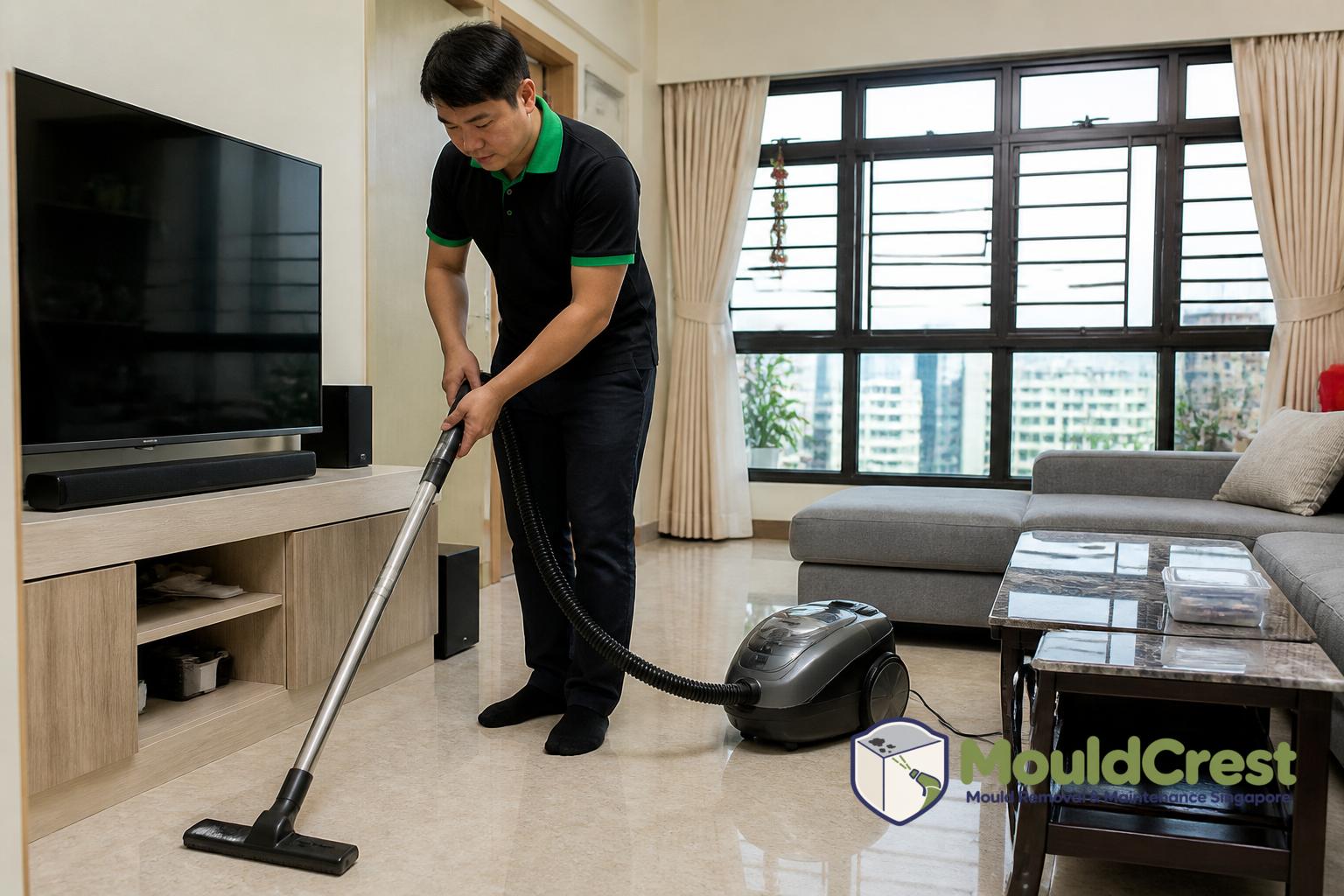
In a typical Singapore home, professional cleaning services may include routine cleaning of floors, kitchens, bathrooms and touch points, as well as more specific services for upholstery, mattresses, appliances and harder-to-reach areas. A cleaning service may focus on appearance, hygiene and upkeep, but it is not the same as mould remediation or electrical repair.
Common cleaning-related scope can include:
- Surface cleaning of tiles, laminates, glass and fixtures
- Bathroom and kitchen cleaning, including routine grime removal
- Mattress cleaning for dust, odour and general freshness
- Sofa cleaning for fabric or upholstery maintenance
- General household cleaning for occupied homes or move-in / move-out preparation
In Singapore, this often sits alongside property maintenance work, especially where homeowners need a practical solution for upkeep rather than a one-off cosmetic clean. However, if the issue is visible mould, staining linked to condensation, or recurring growth in corners, a general cleaning service alone may not address the underlying cause.
Mould removal: accessible visible growth on surfaces
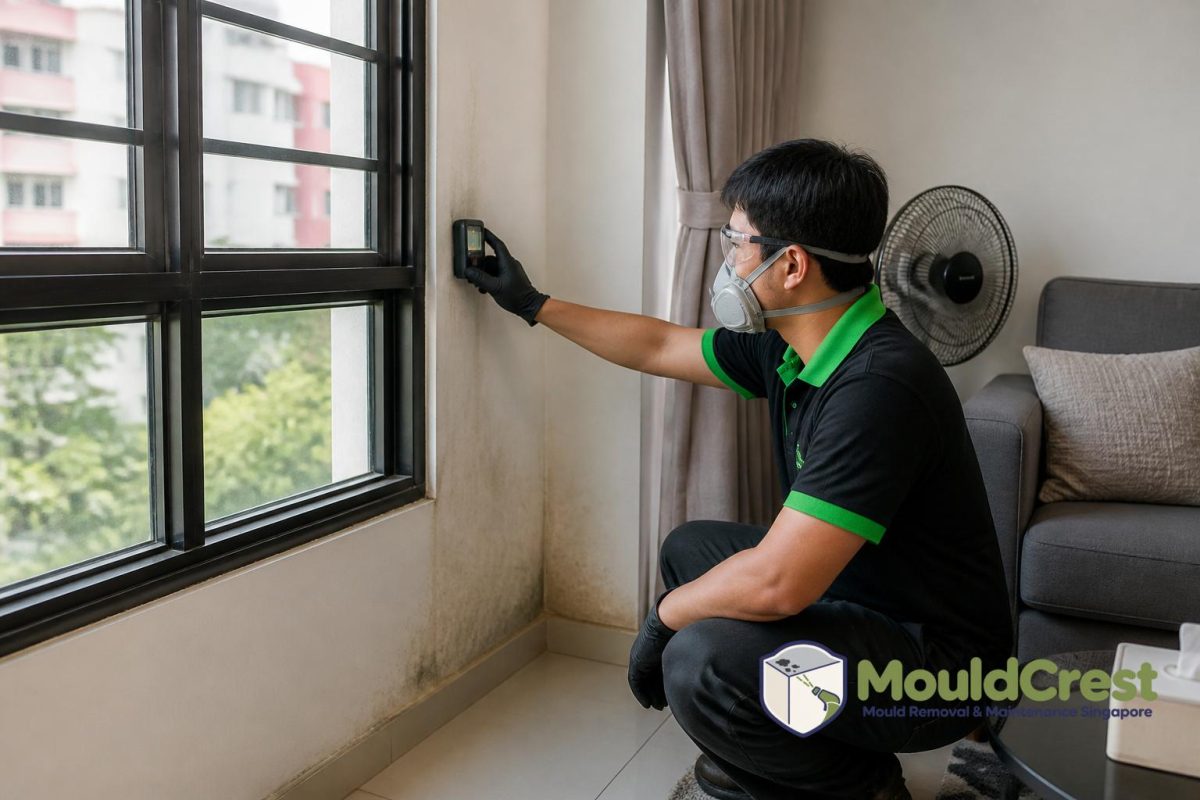
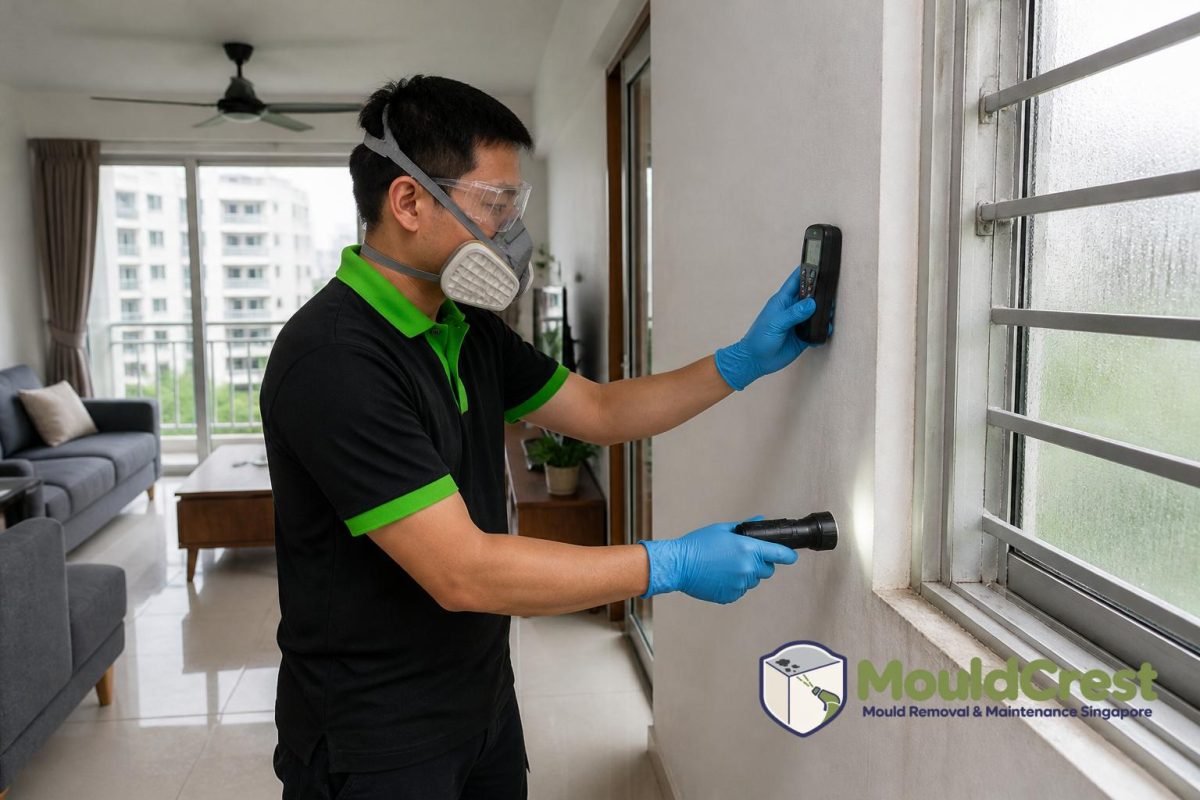
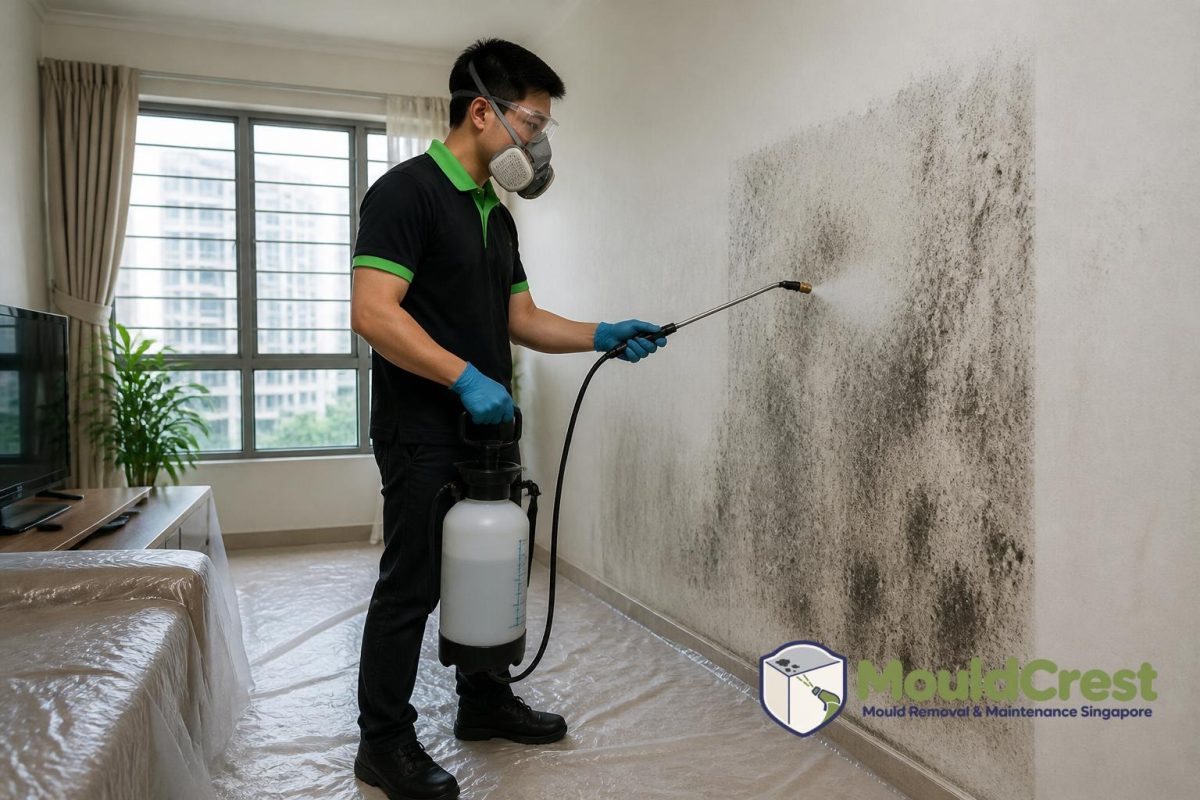
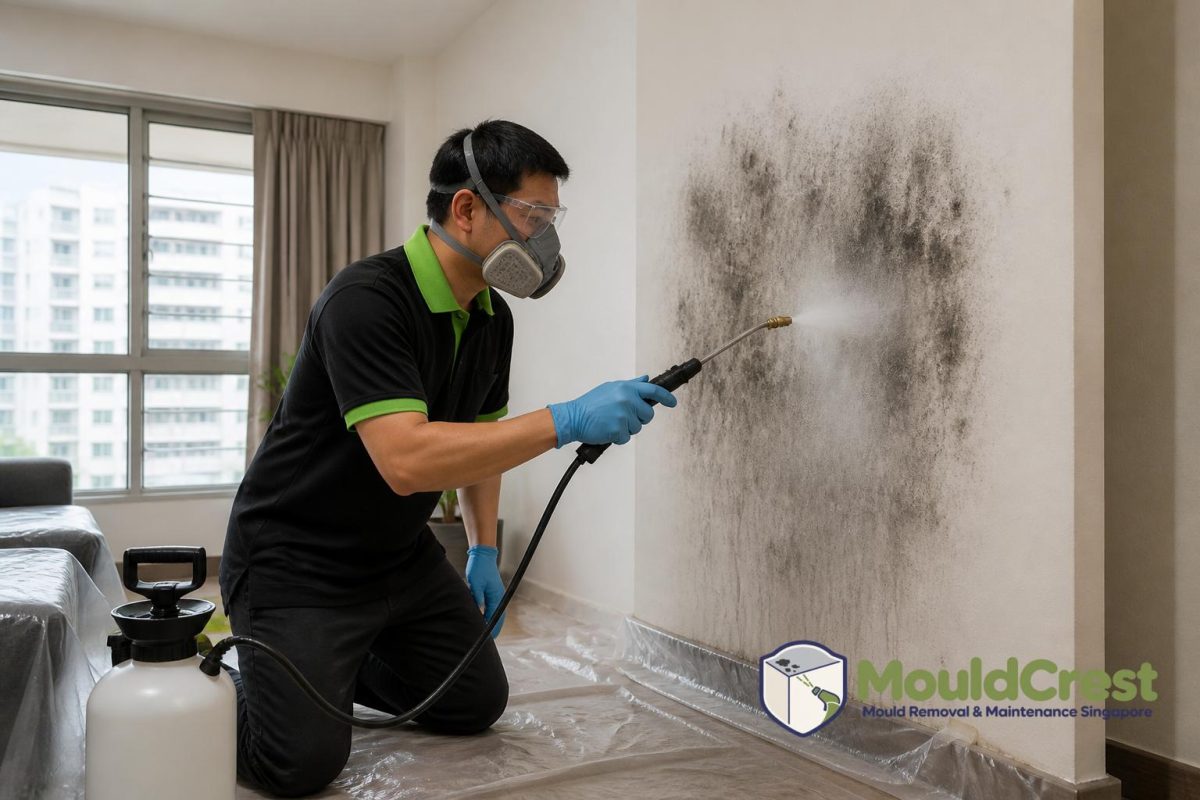
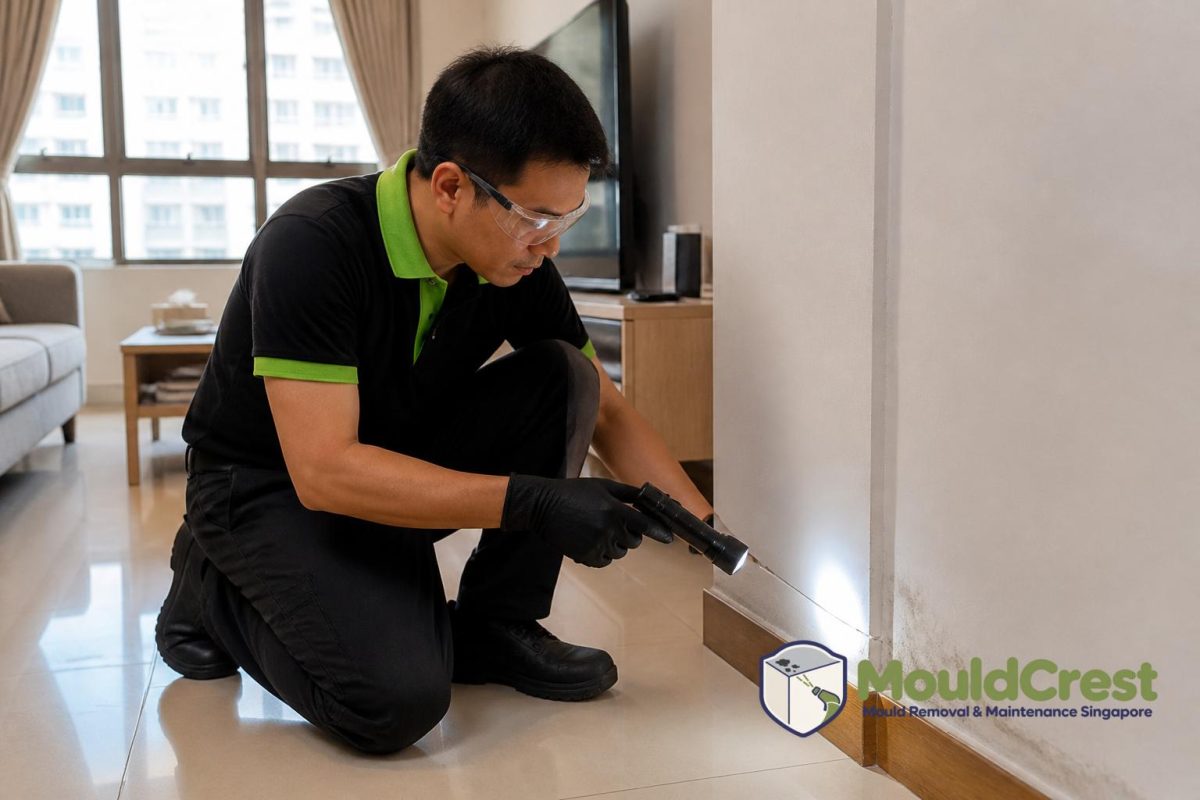
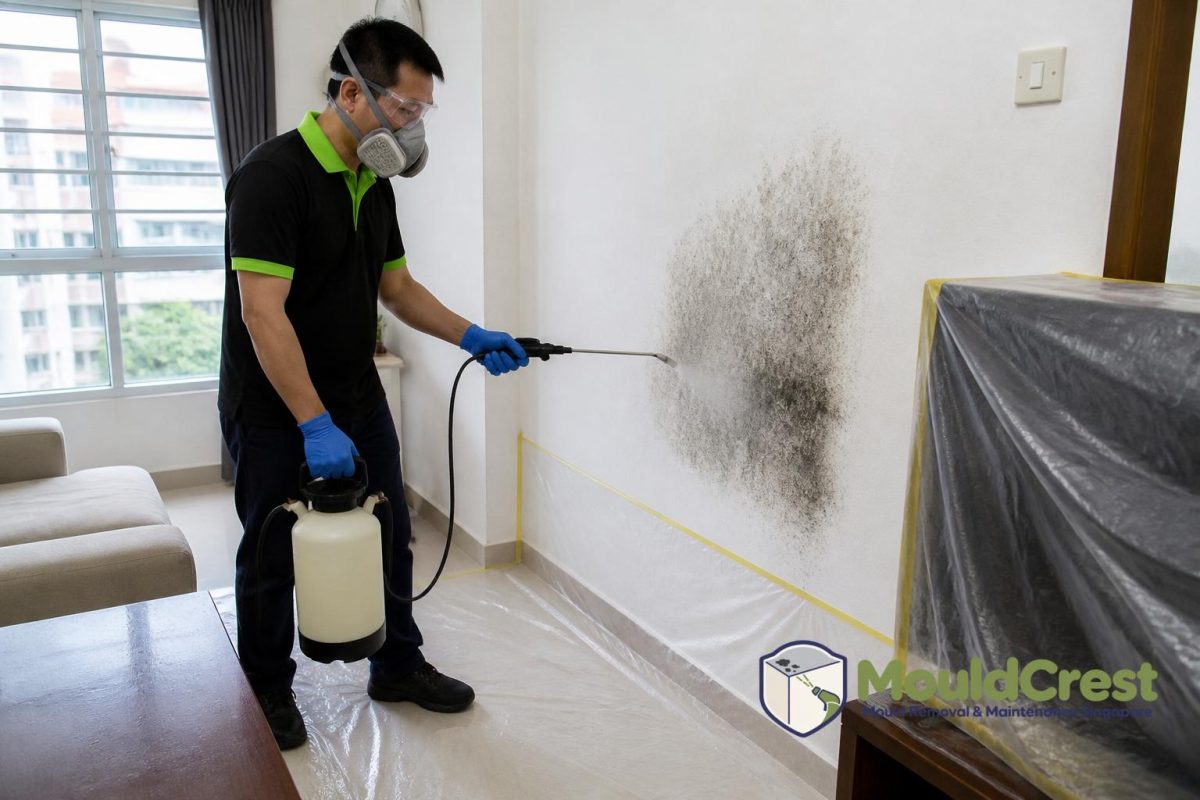
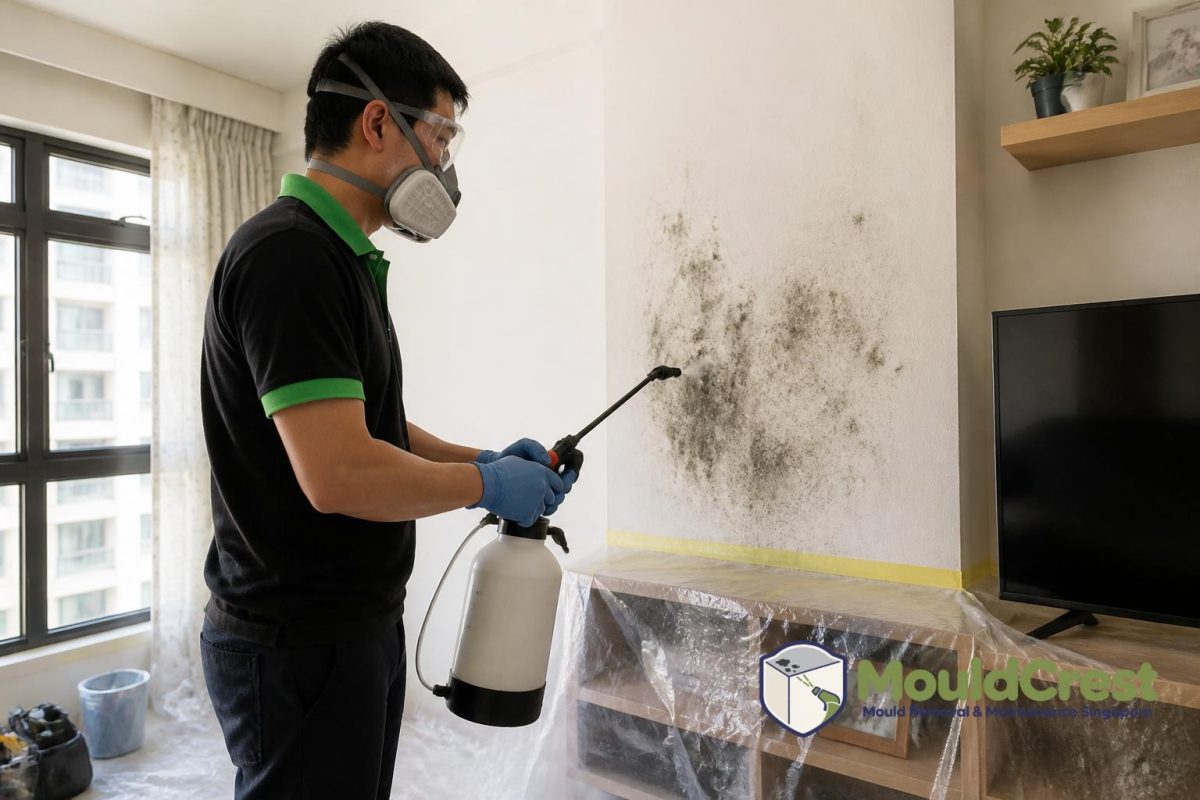
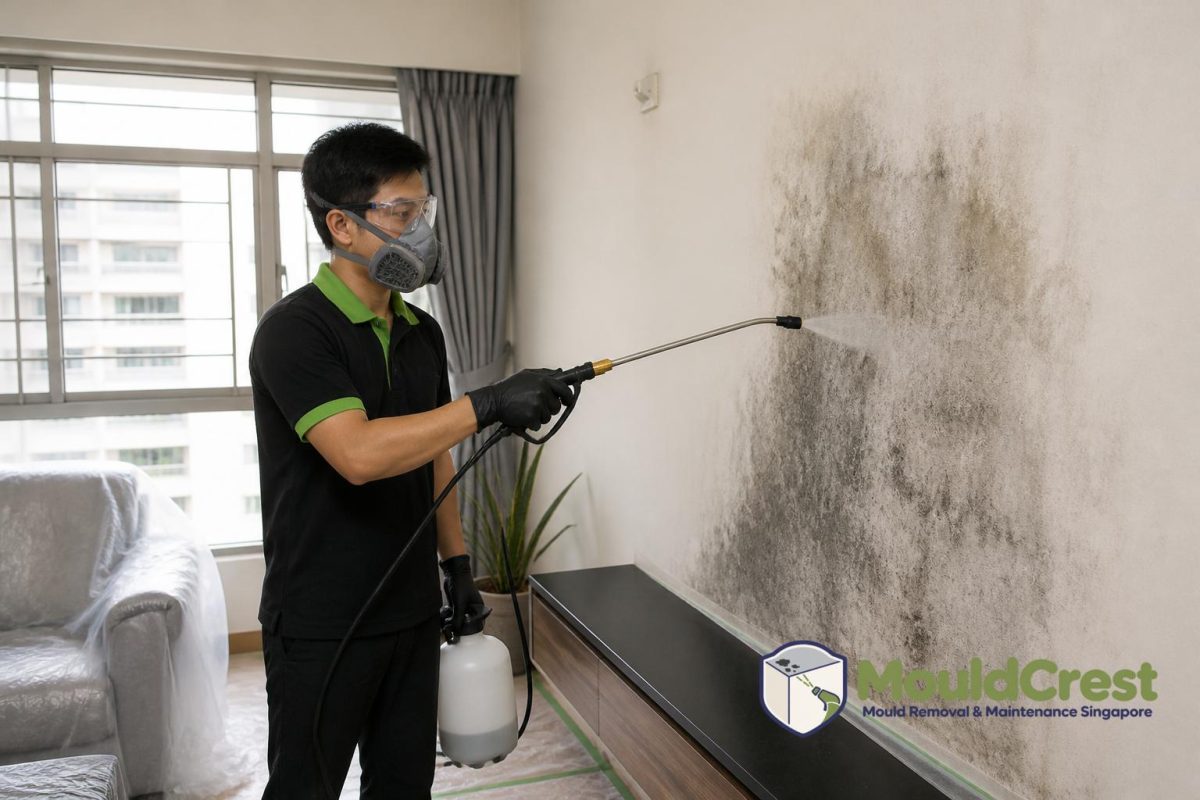
Mould removal refers to assessing visible mould on an accessible surface and applying an appropriate treatment based on the material, the extent of growth and the site conditions. This can involve walls, ceilings, bathroom surfaces, skirting, seals and other readily accessible areas. The purpose is to remove the visible growth carefully and to reduce the chance of spreading spores during the process.
Professional mould removal should not be confused with simply spraying a product and walking away. Surface treatment may help clean the affected area, but recurrence depends on whether the moisture conditions that supported growth are addressed. In Singapore homes, recurring mould is often associated with humidity, condensation, poor airflow or leaks.
A proper assessment normally considers:
- How much of the surface is visibly affected
- Whether the surface is painted, plastered, tiled or another finish
- Whether the growth appears to be linked to condensation or water ingress
- Whether the area is safely accessible for treatment
Mould remediation: broader scope and moisture-source management
Mould remediation is broader than removal alone. It involves scope assessment, treatment of affected materials where appropriate, and management of the moisture source or contributing condition. The goal is to deal with the issue in a more complete way, rather than only treating the visible patch.
This matters because mould can reappear if humidity remains high, if a leak continues, or if a room is poorly ventilated. Remediation may therefore include identifying whether the issue is localised to a surface or whether the surrounding area also needs attention. In some cases, materials may need to be cleaned, isolated or handled differently depending on their condition and the extent of visible growth.
For Singapore properties, remediation is often relevant where:
- There is repeated mould growth at the same location
- Condensation forms on cooler surfaces, especially in air-conditioned rooms
- A bathroom, bedroom or utility area has limited ventilation
- There is a plumbing or building moisture source contributing to the problem
Good remediation is practical and measured. It is not about promising a permanent mould-free result, but about addressing the visible problem and the contributing conditions as thoroughly as reasonably possible.
Wall mould removal and ceiling mould removal are not the same
Wall mould removal focuses on vertical plaster or painted wall conditions. These surfaces may require careful preparation because paint finish, wall porosity and the extent of the staining can affect how the treatment is carried out. Walls are often affected by condensation, furniture placement, adjacent plumbing or poor airflow around corners and behind wardrobes.
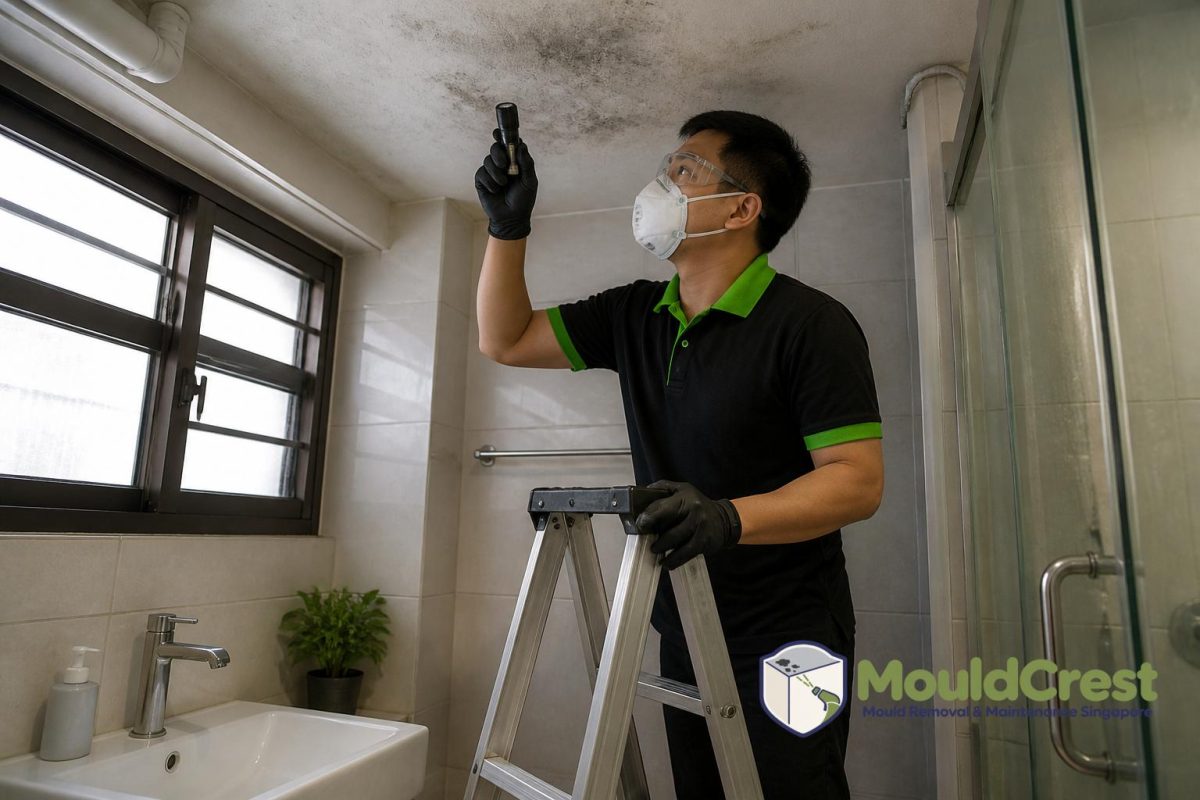
Ceiling mould removal is different because overhead access changes both the working method and the preparation needed. Ceilings may require more controlled access, additional overhead protection and suitable personal protective equipment. Ceiling work can also be linked to ventilation issues, roof or pipe moisture, or trapped humidity above the room. It is important not to treat ceiling growth as though it were the same as a wall patch.
In both cases, the moisture cause matters. A clean-looking finish is not enough if the underlying condition remains. For example:
- Wall mould may be linked to condensation on cold surfaces or furniture blocking airflow
- Ceiling mould may be associated with poor ventilation, trapped moisture or a leak above
- Bathroom ceilings often require more attention to airflow and humidity control than general room walls
Mould mitigation: prevention through moisture and ventilation control
Mould mitigation is about reducing the conditions that allow mould to return. This usually means moisture management, condensation control, ventilation improvements and sensible prevention measures. It is not simply about masking the problem with fogging or misting. Those methods may be used as part of a broader approach in some situations, but they are not a long-term solution on their own.
Practical mould mitigation in Singapore homes may include:
- Improving airflow in bathrooms, bedrooms and enclosed areas
- Managing indoor humidity through better ventilation and everyday habits
- Reducing surface condensation on walls, ceilings and around windows
- Checking for repeated moisture sources such as leaks or seepage
- Repositioning furniture to allow air circulation behind walls
Mitigation is especially useful for homeowners who want to reduce the chance of recurring mould after treatment. It complements removal and remediation, but it does not replace them.
Ventilation fan installation as a separate service
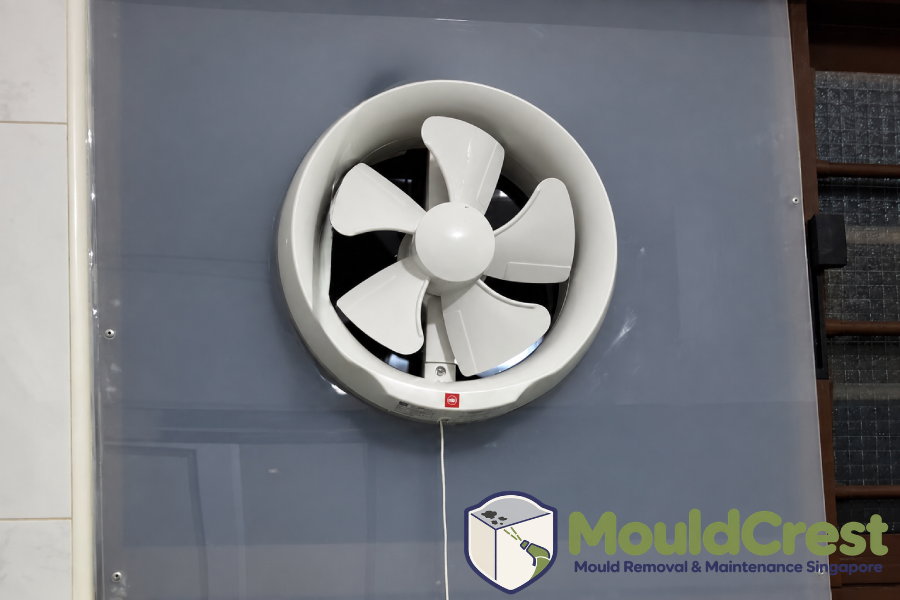
Ventilation fan installation is a separate service from cleaning or mould work. It is a fitting and electrical task that should be planned according to the room, the airflow path and the intended use of the fan. A proper installation considers the fan location, the size of the room or enclosed area, and whether a window acrylic panel or similar fitting is needed to support the setup safely.
In Singapore homes, ventilation fans are often considered for bathrooms, service areas or other spaces where trapped moisture contributes to condensation and odour build-up. The aim is to improve airflow, not to use the fan as a substitute for repairs, waterproofing or mould treatment where those are needed.
Because this is an electrical and installation task, it should be handled with care and in line with the property’s layout and safety requirements. It is distinct from general housekeeping, and also distinct from aircon servicing, plumbing or handyman work, even though these services may be coordinated in the same property maintenance plan.
How other home services differ: handyman, plumbing, electrical, aircon and upholstery cleaning
Many Singapore homeowners use the term “cleaning services” broadly, but it helps to separate the different trades.
- Property maintenance covers ongoing upkeep across multiple small issues in a home or business premises.
- Handyman services typically deal with minor repairs, fixture adjustments and general small jobs that do not fall under a specialist trade.
- Plumbing deals with pipes, taps, drainage, leaks and water-related fittings.
- Electrical services cover wiring-related work, fittings, switches and other electrical points.
- Aircon servicing focuses on the air-conditioning system itself, such as maintenance and cleaning of the unit components.
- Mattress cleaning is a fabric and bedding-related cleaning service, usually aimed at freshness and surface hygiene.
- Sofa cleaning is upholstery care for fabric or leather seating, depending on the material and method used.
These services may support a cleaner and better-maintained home, but they are not interchangeable. For example, a sofa cleaning appointment will not solve a ceiling mould issue, and aircon servicing will not remove wall mould unless the moisture and condensation conditions are also properly understood.
Choosing the right service for the right problem
The best outcome usually comes from matching the service to the issue. If you can see growth on a wall, ceiling or other surface, start with mould removal or mould remediation rather than general cleaning. If the problem keeps returning, consider whether mould mitigation and moisture-source management are also needed. If the concern is poor airflow in a bathroom or enclosed area, ventilation fan installation may be relevant as part of a broader plan.
For Singapore homes, a practical approach is usually to identify whether the issue is cosmetic, moisture-related or maintenance-related. That helps avoid over-ordering the wrong service and reduces the chance of leaving the underlying cause unaddressed.
To enquire about the cleaning service discussed, WhatsApp MouldCrest with details of the item or surface and its condition.
Conclusion
Professional cleaning services in Singapore can mean many things, from routine household cleaning to specialised work such as mould removal, mould remediation, mattress cleaning, sofa cleaning, aircon servicing and property maintenance. The key is to recognise that each service has its own scope. Wall mould removal and ceiling mould removal require different access and preparation. Mould mitigation focuses on humidity, ventilation and moisture management. Ventilation fan installation is a separate fitting and electrical task. When the right service is matched to the right problem, homeowners are better placed to maintain a cleaner, more comfortable property without relying on quick fixes.
Choose MouldCrest Mould Removal & Maintenance Singapore
At MouldCrest Mould Removal & Maintenance Singapore, we provide mould removal to treat affected surfaces and restore their appearance. Our wall mould removal service addresses growth and marks on walls. For mould on ceilings, we offer ceiling mould removal. We also provide mould remediation for a more comprehensive approach to affected areas. To help manage the risk of mould returning, our mould mitigation service focuses on the conditions that encourage growth. We offer ventilation fan installation to improve airflow and help reduce moisture build-up. Our services also cover property maintenance, including handyman services for various repairs and installations, plumbing services to address plumbing issues, and electrical services for different electrical fittings. We also provide cleaning services such as mattress cleaning and sofa cleaning to freshen frequently used furnishings. Explore our blog for practical information and browse our completed projects to see our work. WhatsApp us today at +65 8241 0032 to enquire about our services and discuss your needs.
Frequently Asked Questions
Is mould removal the same as general cleaning?
No. General cleaning focuses on routine dirt and hygiene, while mould removal deals with visible mould on accessible surfaces and uses methods suited to the affected material. If moisture remains, mould may return.
Can fogging or misting solve mould problems on its own?
No. Fogging or misting may be one part of a broader process, but it is not a long-term solution by itself. Mould control usually also requires moisture management, ventilation and attention to the source of the issue.
What is the difference between wall mould removal and ceiling mould removal?
Wall mould removal deals with vertical painted or plastered surfaces, while ceiling mould removal involves overhead access, different preparation and often stronger attention to ventilation or leak-related moisture. They should not be treated as the same job.