
In Singapore homes, mould often appears on walls, ceilings, wardrobes, or around windows and air-conditioning areas, but the visible patch is only part of the story. A proper mould specialist does not simply clean the surface and leave. The main task is to find where moisture is coming from, because mould needs damp conditions to grow. In HDB flats, condominiums, landed homes and even shopfront or office premises, the source may be condensation, plumbing seepage, poor ventilation, rainwater ingress, or a combination of factors.
MouldCrest Mould Removal & Maintenance Singapore approaches each case by assessing the affected accessible surface first, then identifying likely moisture pathways. This matters because mould removal, mould remediation, wall mould removal and ceiling mould removal are not the same thing. Each requires different access, preparation and treatment methods. Where the problem is linked to humidity or airflow, mould mitigation measures may also be needed to reduce the chance of recurrence.
Why moisture source detection matters before treatment
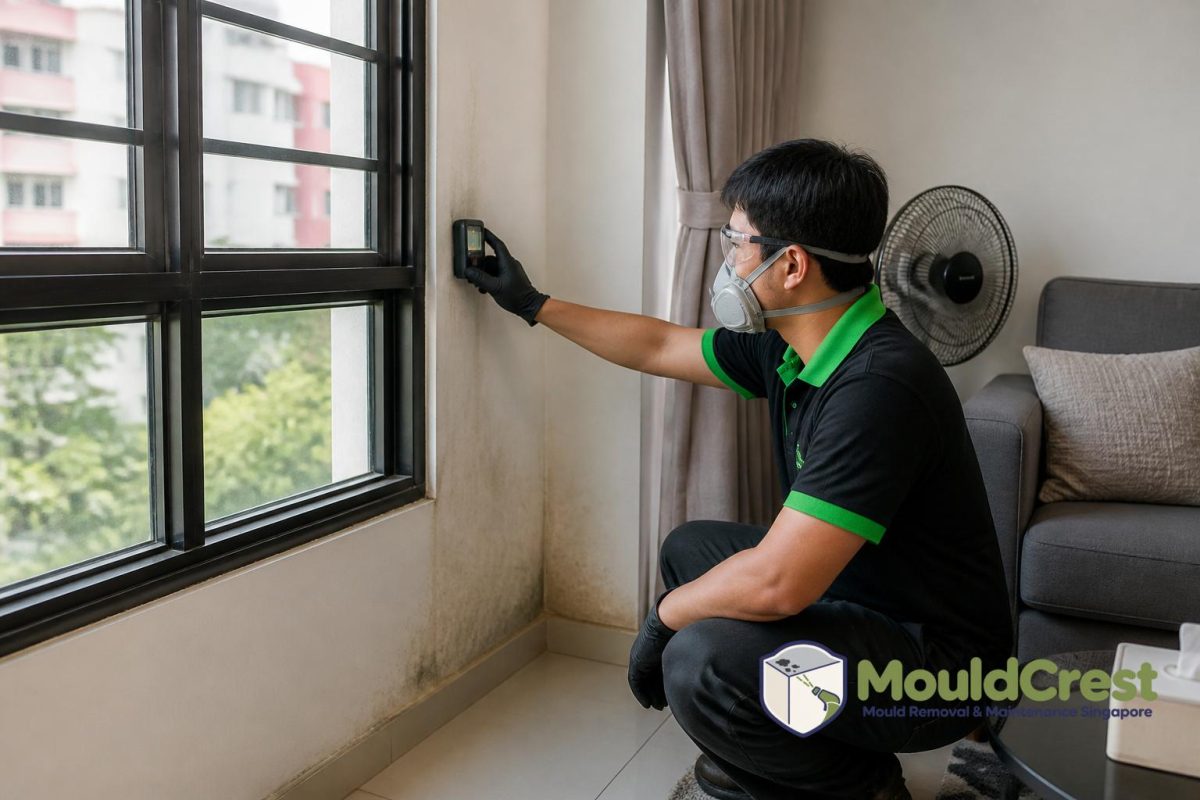
Visible mould can be removed from an accessible surface, but if the damp condition remains, regrowth is possible. That is why source detection is central to mould work. A specialist will usually look beyond the stain or spotting and consider the surrounding conditions:
- Is the area cold compared with the surrounding room, suggesting condensation?
- Is the growth near a bathroom, sink, pipe run, or air-conditioning line?
- Does the problem worsen after heavy rain, pointing to water ingress?
- Is ventilation limited, especially in enclosed bedrooms, bathrooms or utility areas?
- Are there repeated signs on the same wall, ceiling edge or skirting area?
These observations help narrow the likely source. In Singapore, high humidity and daily temperature changes often create condensation on cooler surfaces, especially when air movement is poor. However, not every dark patch is caused by the same thing, which is why a one-size-fits-all spray approach is not appropriate.
How mould removal specialists inspect Singapore homes
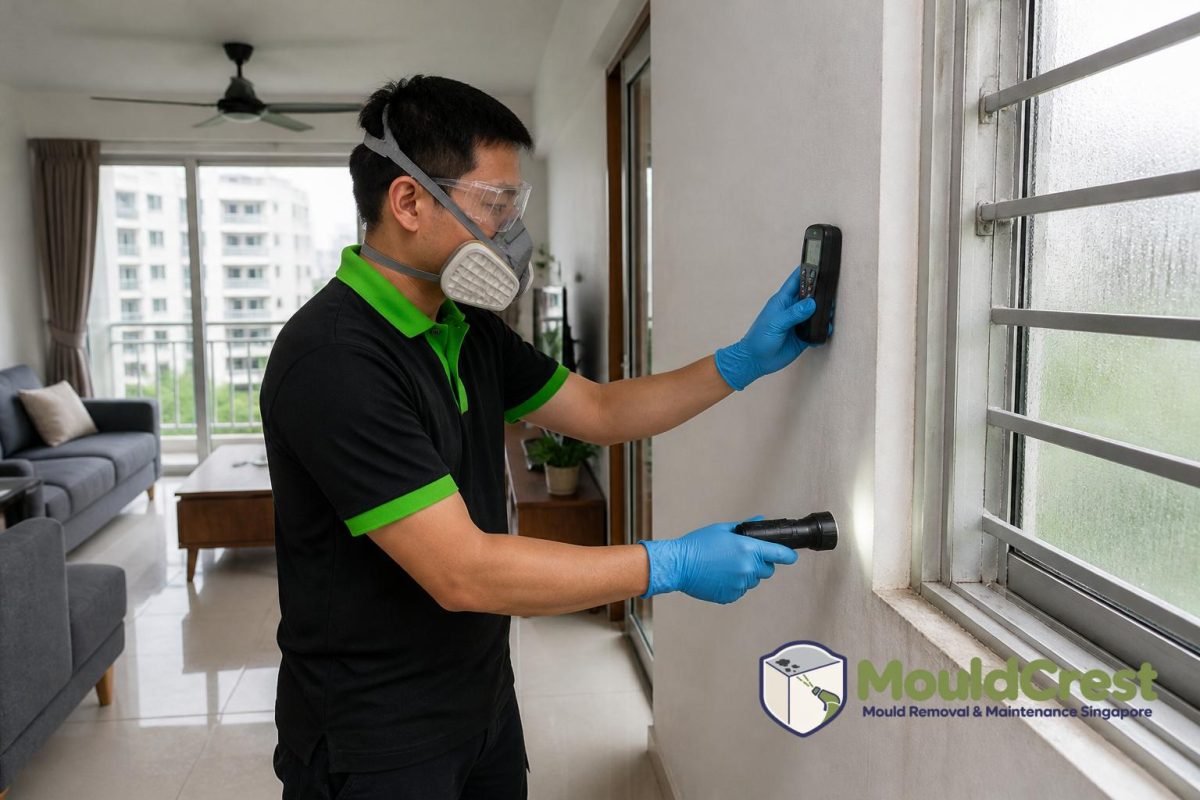
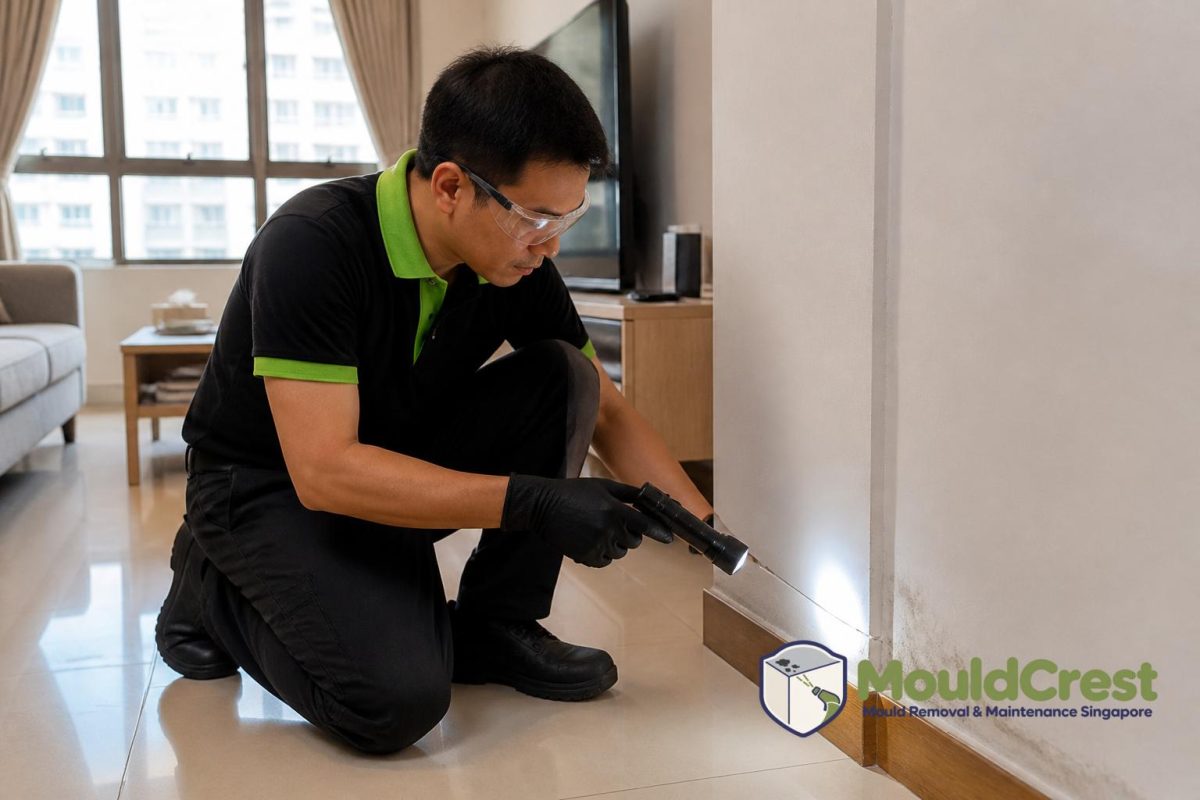
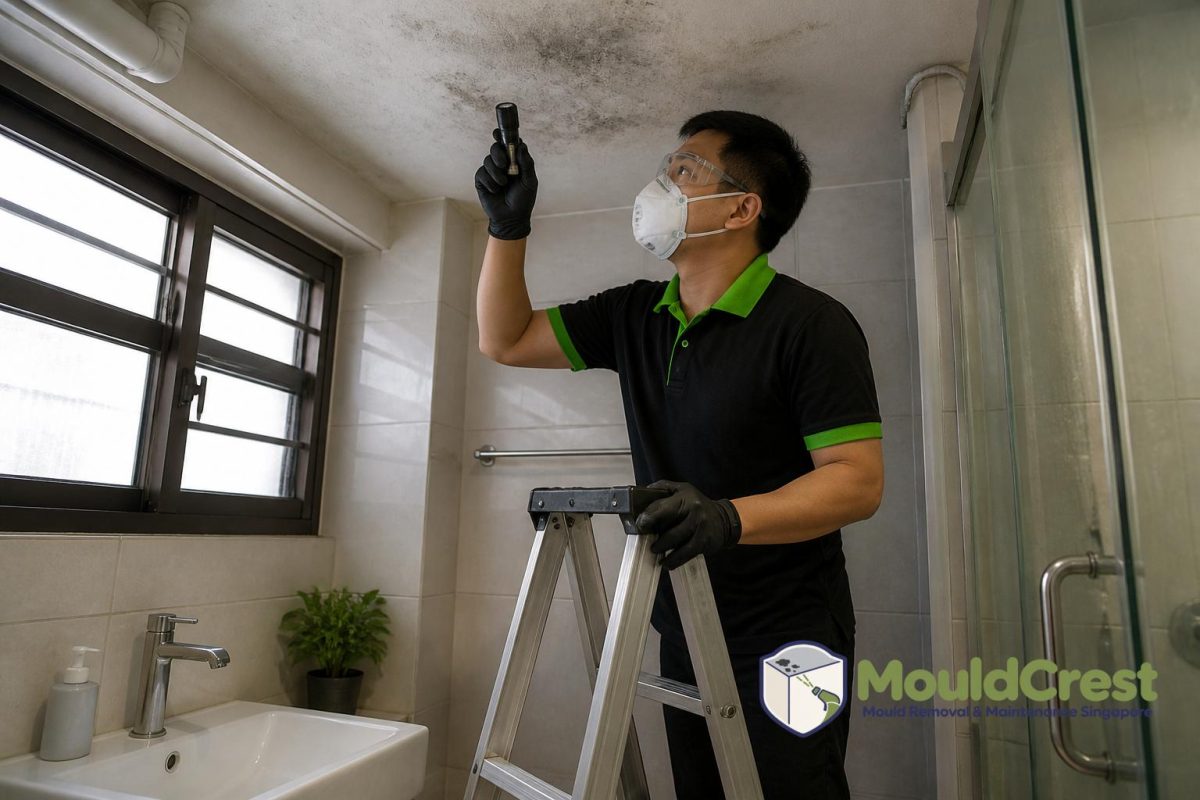
For mould removal, the first stage is usually a visual assessment of the affected accessible surface. This means checking the part of the wall, ceiling or other area that can be reached safely without dismantling hidden structures. The specialist may examine surface finishes, paint condition, staining patterns, ventilation points and nearby moisture-prone fixtures.
Depending on the location, the inspection may include:
- Checking for visible mould growth on painted surfaces, plaster, silicone seals or tile edges
- Looking for dampness signs such as peeling paint, musty odours or discolouration
- Assessing whether the issue is localised or spread across a broader area
- Reviewing nearby possible contributors such as bathrooms, aircon units, windows or plumbing fittings
In mould remediation, this assessment becomes broader. The specialist considers the scope of affected materials, whether only the surface is involved, and whether there is a continuing moisture source that must be managed. The aim is not to overstate what can be achieved, but to match the treatment to the actual condition found.
Wall mould removal: surface condition and moisture cause
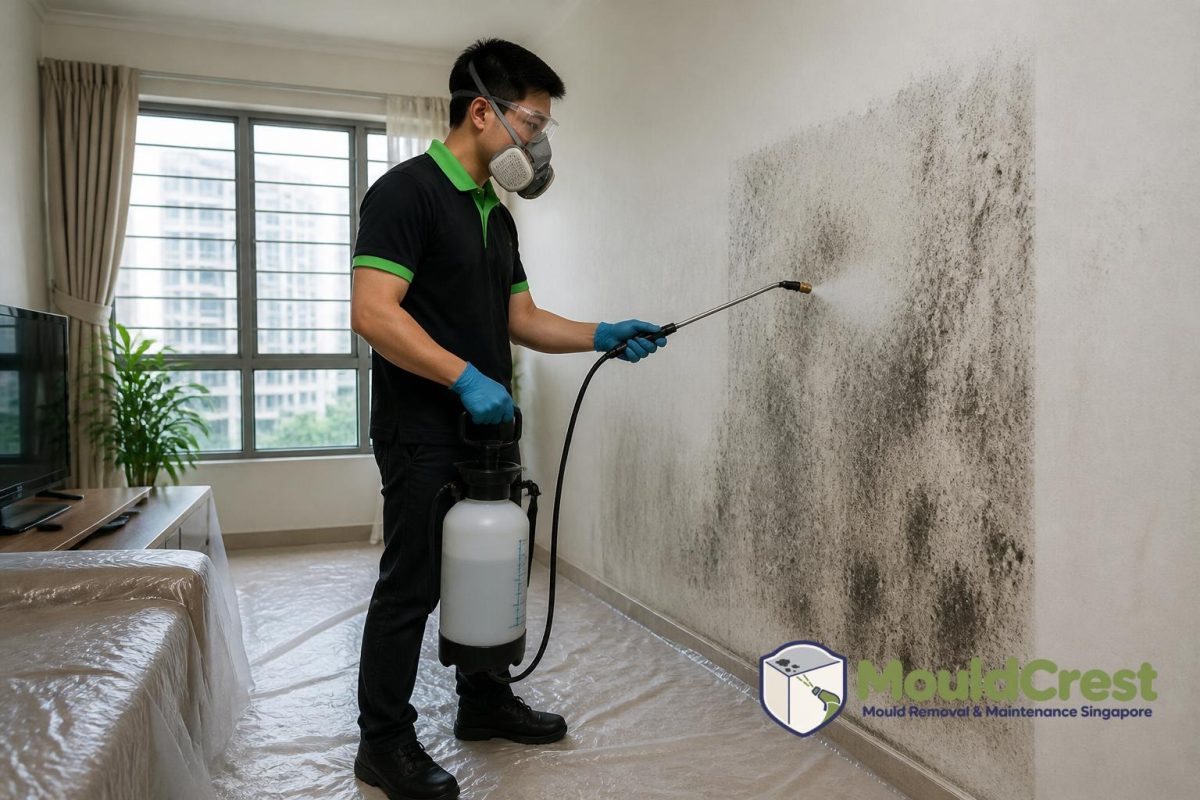
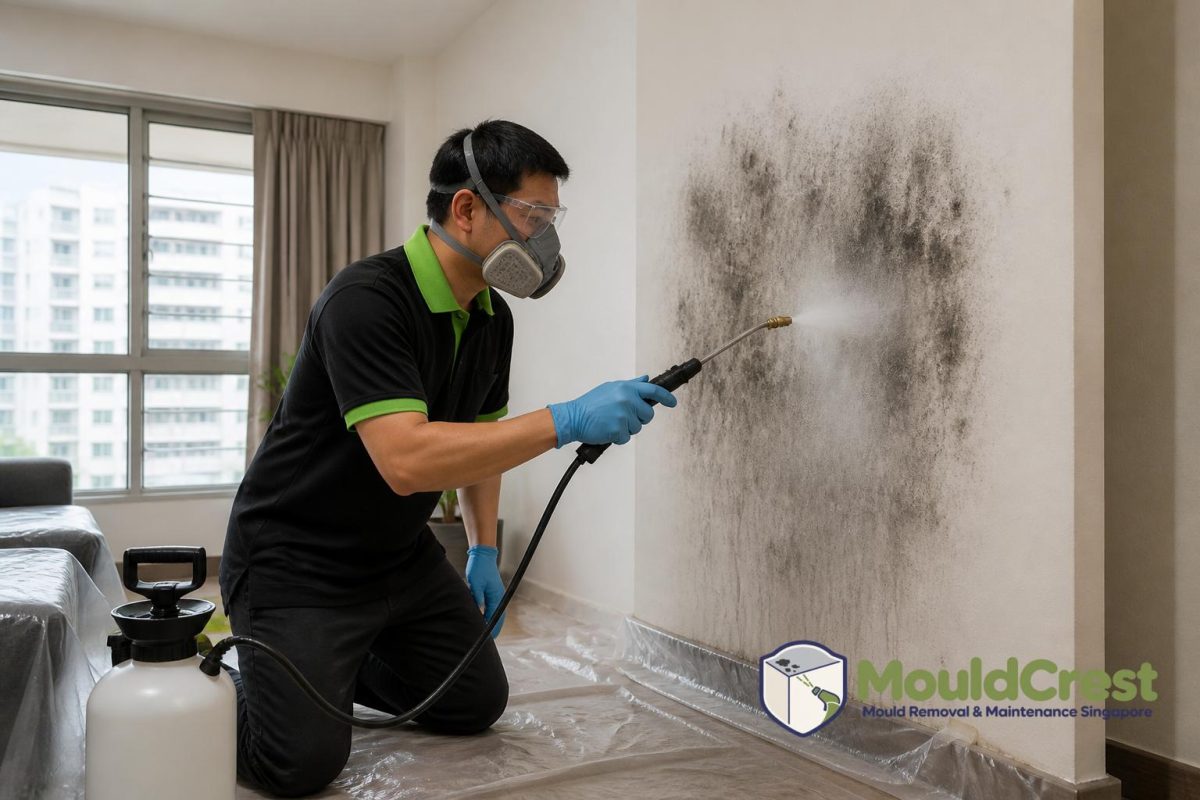
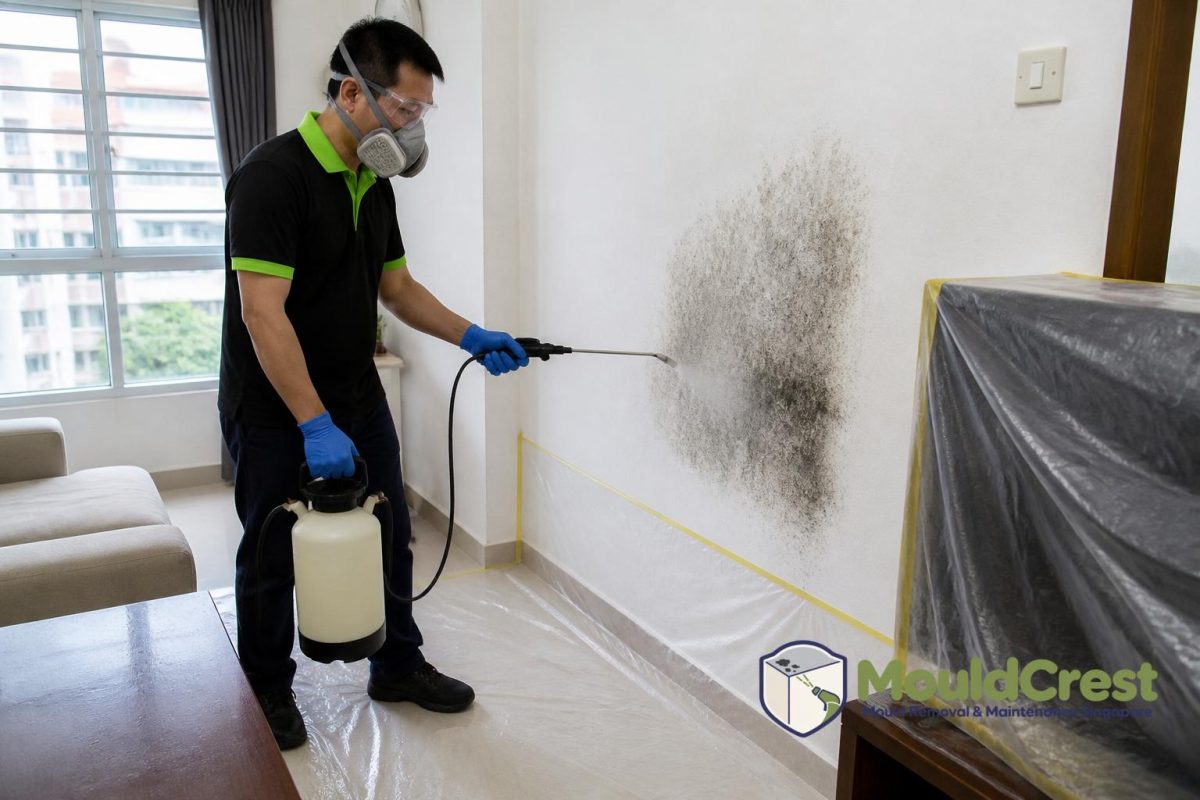
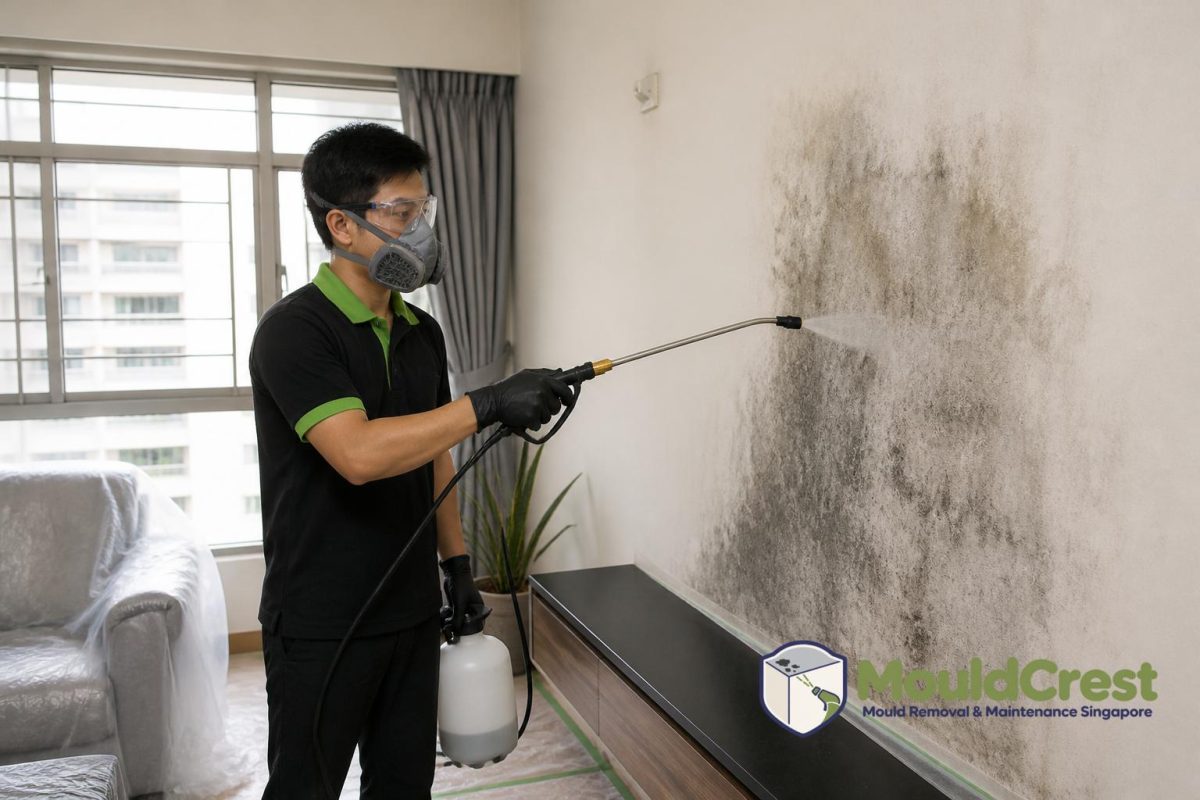
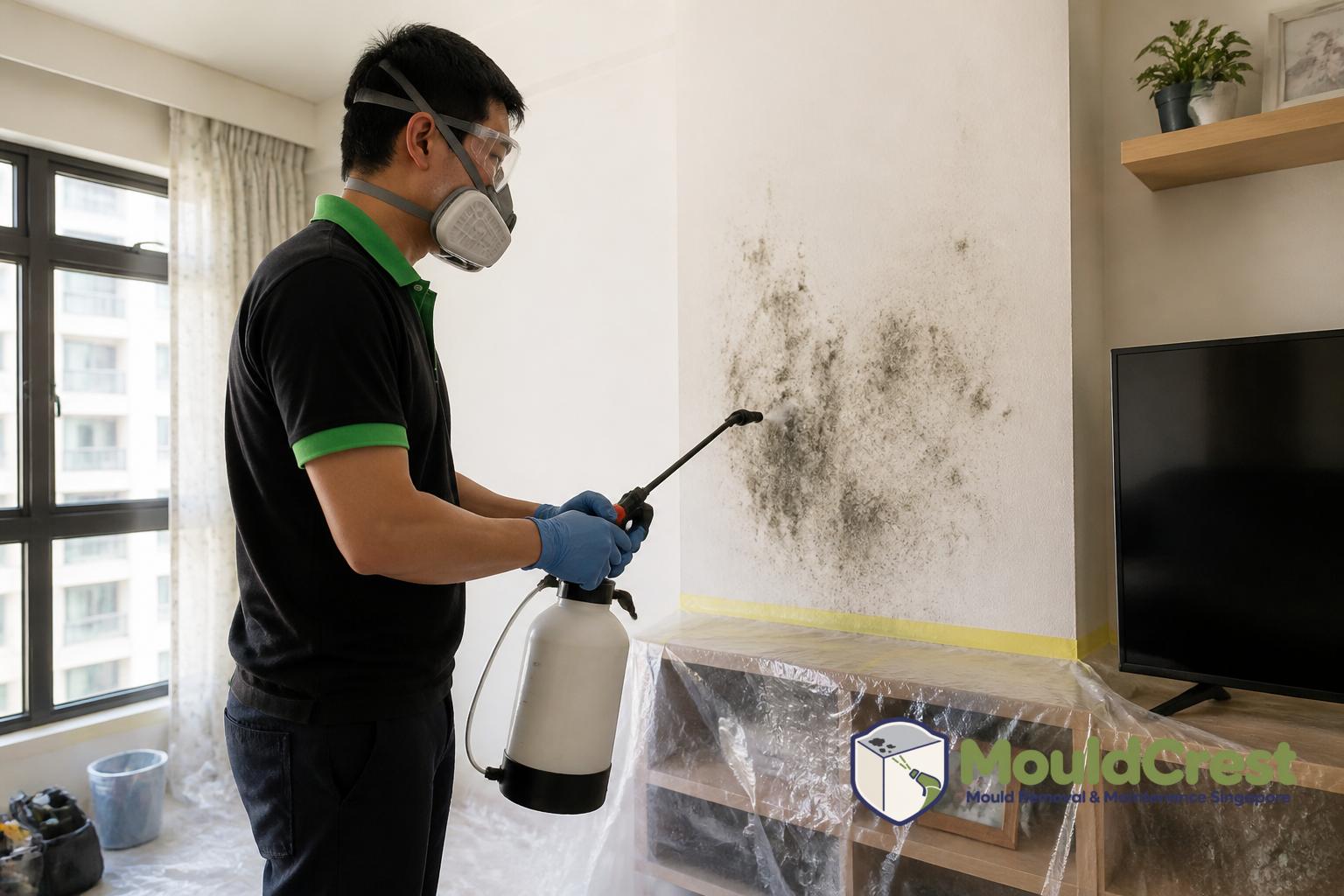
Wall mould removal is commonly requested for bedrooms, living rooms, corridors and walls beside bathrooms or kitchens. Vertical surfaces are often affected by condensation, minor seepage, or trapped humidity behind furniture. In Singapore homes, walls that are shaded, poorly ventilated or exposed to repeated moisture often show recurring spots or staining.
Before any treatment, a specialist will consider the wall finish. Painted plaster, wallpaper, skim coat and tile backing each behave differently. A surface treatment may be suitable where the mould is confined to the accessible wall finish and the material remains intact enough to be cleaned safely. If the wall is repeatedly damp, or the finish has deteriorated, the underlying moisture issue must be addressed as part of the wider remediation plan.
Useful practical steps during wall assessment include:
- Identifying whether the patch is on an exterior wall, internal partition or bathroom-adjacent wall
- Checking if furniture placement is blocking airflow and trapping humidity
- Reviewing whether the problem appears as dots, streaks, or larger irregular patches
Ceiling mould removal: overhead access and preparation
Ceiling mould removal is different from wall work because the surface is overhead, access is less convenient, and preparation must be more careful. In Singapore apartments, ceilings near bathrooms, kitchens, laundry areas or air-conditioning zones may show mould-like spotting or staining when moisture and ventilation conditions are not balanced.
Working overhead typically requires more thorough site preparation and personal protective equipment, because particles and cleaning residue can fall during treatment. The specialist must also consider whether the ceiling issue is linked to condensation, a nearby water source, roof-related moisture in landed properties, or inadequate ventilation. In some cases, the visible ceiling area is only the symptom; the true source may be above or adjacent to it.
Ceiling treatment is not the same as wall treatment because the approach must account for gravity, access limitations and the condition of overhead finishes. A careful inspection helps decide whether the surface can be treated directly or whether other maintenance steps are needed first.
Mould remediation and mould mitigation: what each one means
Mould remediation is broader than removal. It includes assessing the affected area, identifying the scope of growth, treating accessible materials appropriately, and addressing the moisture source as far as practical. It may involve a combination of surface treatment, targeted cleaning, drying, and recommendations for maintenance or ventilation improvements.
Mould mitigation focuses on reducing the conditions that allow mould to return. In Singapore, that often means managing humidity, improving air movement, and reducing condensation. Common mitigation measures include:
- Using ventilation more effectively in enclosed bathrooms, kitchens and utility spaces
- Reducing trapped moisture behind wardrobes, curtains or storage items
- Improving airflow in rooms that stay closed for long periods
- Addressing recurring condensation on cold surfaces or windows
Fogging or misting may be used as an additional method in some cases, but it is not a long-term solution on its own. It should never be presented as a guaranteed way to prevent regrowth if the underlying moisture issue remains.
When other trades may be involved
Some mould cases overlap with other home maintenance issues, but each trade has its own role. Plumbing work may be needed if there is a leaking pipe, fitting or concealed water pathway. Electrical services may be relevant where fixtures, switches or ventilation equipment need attention. Aircon servicing can matter when condensation forms around indoor units, drain lines or insulated pipework.
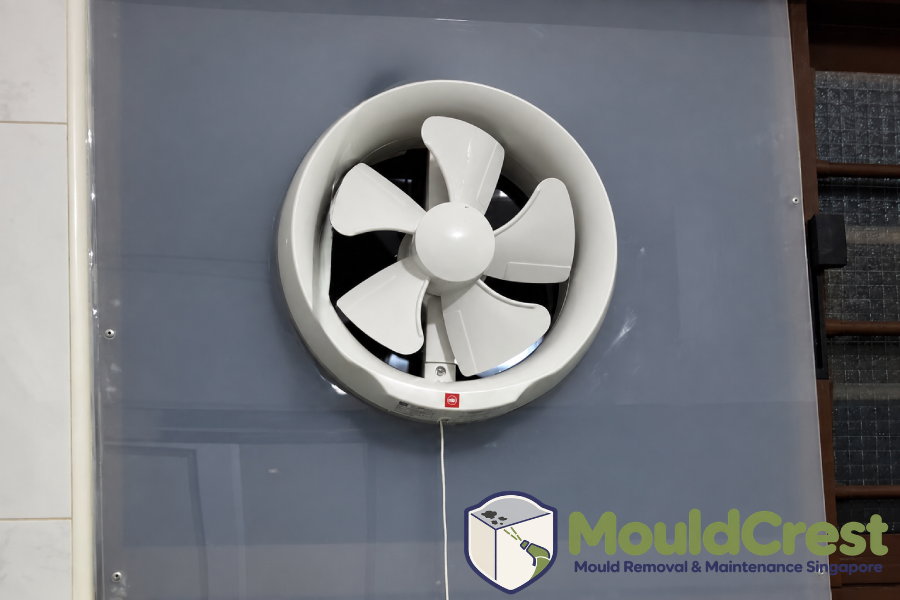
Property maintenance and handyman services can support related tasks such as sealant replacement, minor repairs, fixture adjustment or access preparation. Ventilation fan installation is a separate service that should be planned based on the room size, location and proper installation requirements, including safe electrical connection and suitable fan placement. In some homes, an acrylic panel or other fitting may be used to support a window fan setup where appropriate.
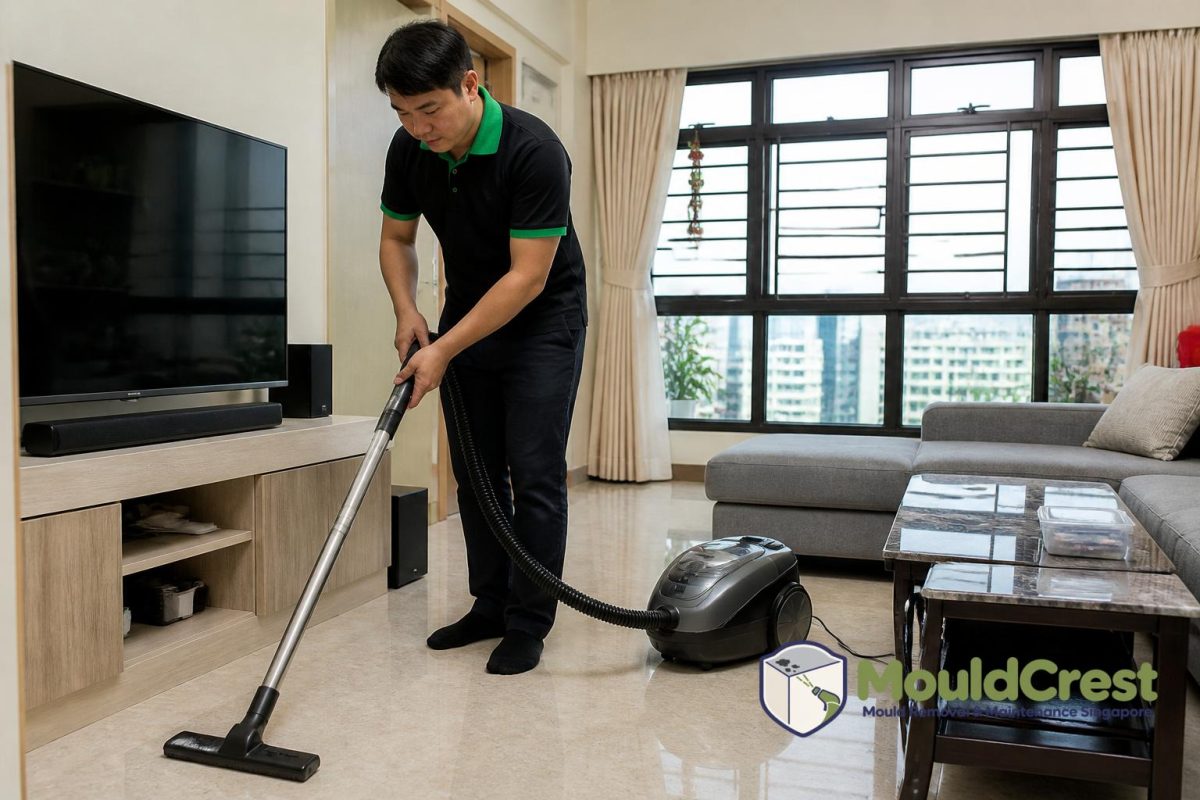
Cleaning services, mattress cleaning and sofa cleaning are also distinct from mould work. They may be useful for general hygiene or fabric care, but they should not be confused with wall or ceiling mould treatment. Fabric cleaning methods are different from treating painted surfaces, plaster or overhead finishes.
What homeowners can do before a specialist visit
If you notice visible mould or recurring damp patches, avoid scrubbing blindly with random products, as this may spread residue or make it harder to assess the area. Instead, note where the problem appears, when it worsens, and whether it is near a bathroom, window, ceiling edge, or aircon point.
Helpful steps before assessment include:
- Clear furniture slightly away from the affected wall if safe to do so
- Avoid painting over active dampness
- Do not seal over a recurring moisture issue without identifying the cause
- Keep the area ventilated where possible
A responsible specialist will explain what can be treated on the accessible surface, what may require further maintenance, and what moisture management steps may help reduce recurrence.
To discuss the mould concern covered here, WhatsApp MouldCrest with details of the affected surface and any moisture signs to request an assessment or quotation.
Conclusion
Finding the source of moisture is the key step in solving mould problems in Singapore homes. Visible mould on walls or ceilings should be assessed properly so the treatment matches the surface, the access conditions and the likely cause. Mould removal focuses on the affected accessible surface, while mould remediation looks at the wider scope and moisture source management. Mould mitigation then helps reduce the humidity and ventilation conditions that support future growth.
Whether the concern is wall mould removal, ceiling mould removal or a more general damp issue, the right approach is careful inspection, suitable treatment and practical moisture control. That is especially important in Singapore’s humid climate, where condensation and ventilation issues are common in HDB flats, condominiums, landed homes and commercial premises.
Choose MouldCrest Mould Removal & Maintenance Singapore
At MouldCrest Mould Removal & Maintenance Singapore, we provide mould removal to treat affected surfaces and restore their appearance. Our wall mould removal service addresses growth and marks on walls. For mould on ceilings, we offer ceiling mould removal. We also provide mould remediation for a more comprehensive approach to affected areas. To help manage the risk of mould returning, our mould mitigation service focuses on the conditions that encourage growth. We offer ventilation fan installation to improve airflow and help reduce moisture build-up. Our services also cover property maintenance, including handyman services for various repairs and installations, plumbing services to address plumbing issues, and electrical services for different electrical fittings. We also provide cleaning services such as mattress cleaning and sofa cleaning to freshen frequently used furnishings. Explore our blog for practical information and browse our completed projects to see our work. WhatsApp us today at +65 8241 0032 to enquire about our services and discuss your needs.
Frequently Asked Questions
How do mould specialists tell if the problem is condensation or a leak?
They look at the location, pattern and surrounding conditions. Condensation often appears on cooler surfaces with limited airflow, while leaks may show more localised dampness, staining or recurrence after rain or water use. A proper assessment considers both the visible growth and the nearby moisture sources.
Can mould removal be done without fixing the moisture source?
Surface treatment can remove visible growth from the accessible area, but if moisture remains, mould may return. That is why removal and moisture-source management are both important. The exact solution depends on the condition found during assessment.
Is ceiling mould treated the same as wall mould?
No. Ceiling work is different because it is overhead and may involve different access, preparation and moisture pathways. A ceiling issue may also be linked to ventilation, condensation, or sources above or adjacent to the area, so it needs separate evaluation.