
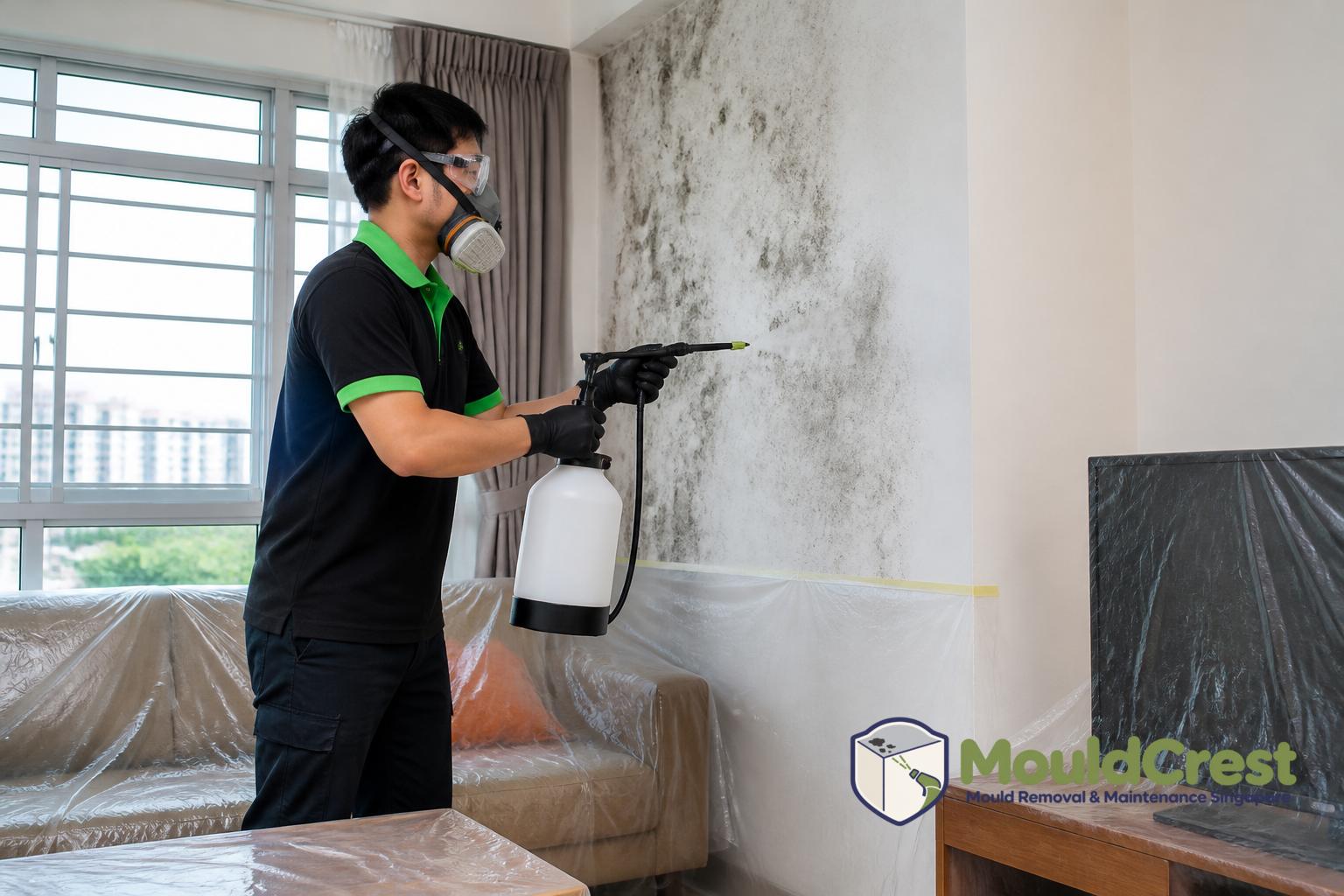
If you are asking how long professional mould removal takes for a Singapore home, the honest answer is: it depends on the size of the affected area, the type of surface, how accessible it is, and whether there is an ongoing moisture problem that needs attention. A small patch on a painted wall may be treated relatively quickly, while mould on a ceiling, behind fittings, or across multiple rooms usually takes longer because the preparation and access are more involved.
For Singapore homes, the timing also varies between HDB flats, condominiums and landed properties. A single-service visit may be enough for a localised issue, but larger or recurring cases often need a wider mould remediation approach rather than surface cleaning alone. The key is not just how fast the visible growth is addressed, but whether the cause of dampness, condensation or leakage is properly assessed.
What affects the time needed for professional mould removal?
Professional mould removal is usually faster when the affected area is clearly visible, easy to reach and limited to a stable surface such as painted plaster. It tends to take longer when mould has spread across multiple surfaces, when furniture needs to be moved, or when the area requires protection and careful preparation before treatment begins.
- Area size: a small patch is quicker to assess and treat than widespread growth.
- Surface type: painted walls, ceilings, grout, timber and other finishes may need different methods.
- Accessibility: overhead areas and tight corners usually require more setup time.
- Moisture condition: if dampness or condensation is present, the work may extend into mitigation planning.
- Material condition: some surfaces can be cleaned, while others may need replacement or deeper remediation.
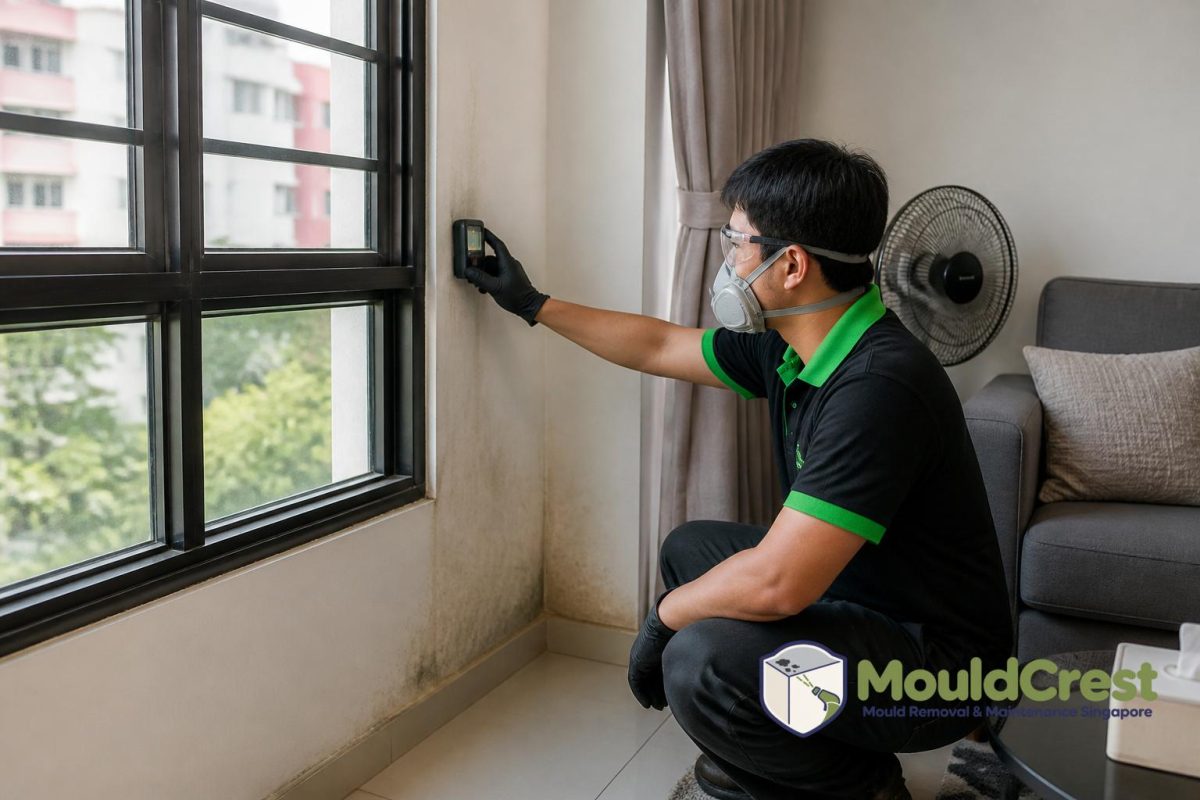
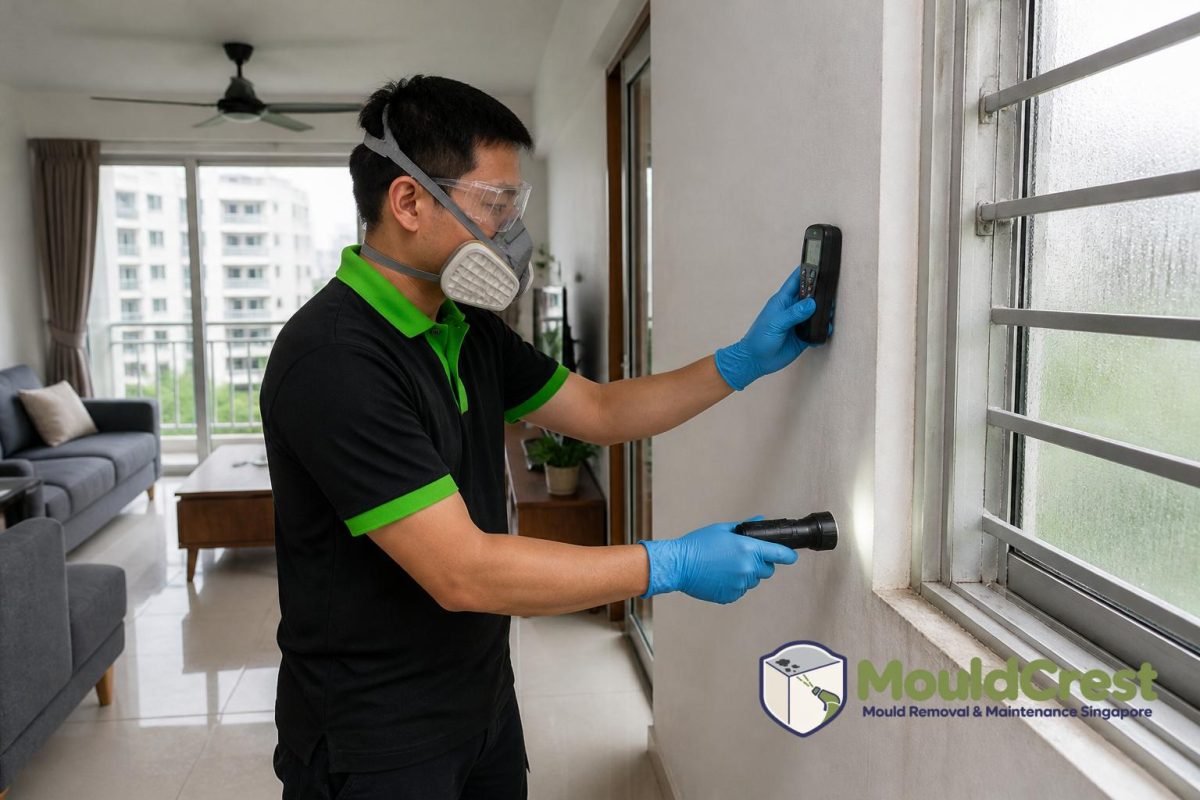
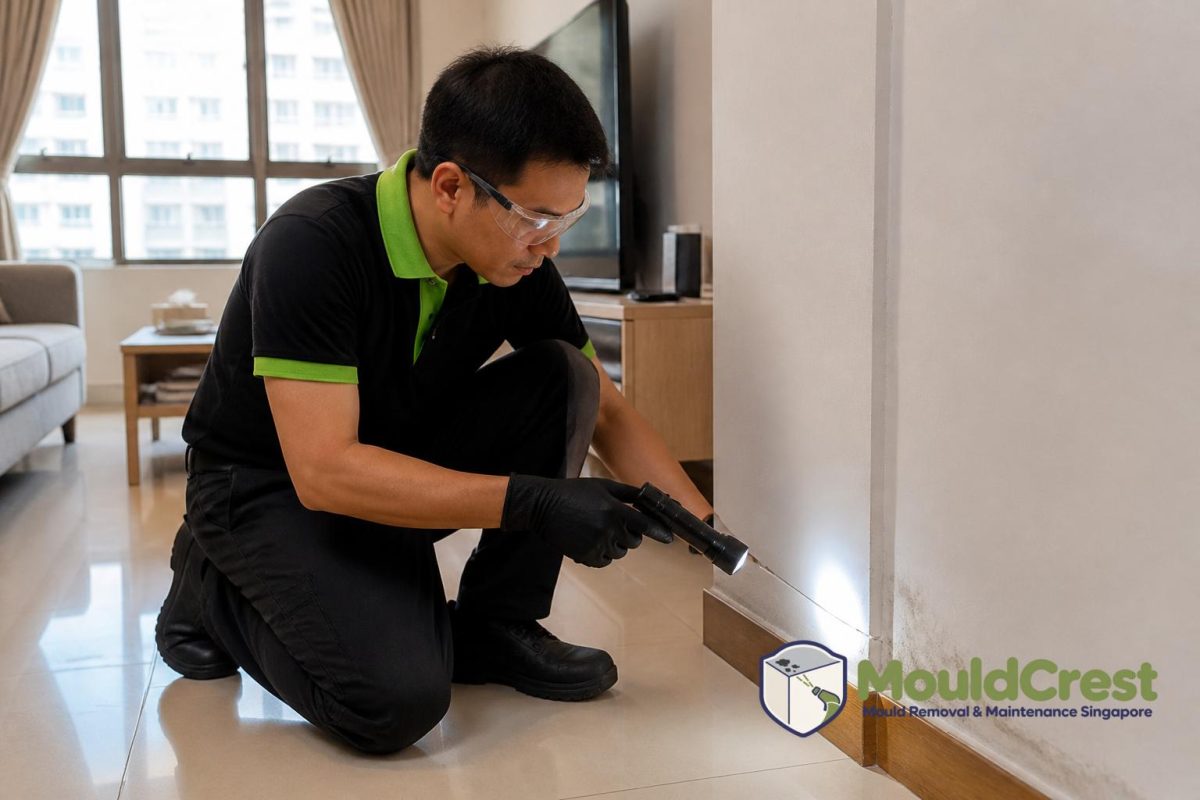
A proper site assessment is important because mould can appear similar on the surface while being driven by different causes. A responsible service focuses on the accessible, affected area and explains what can be treated, what may need monitoring, and what moisture-related issues should be addressed next.
Typical timeframes for common mould removal jobs
There is no fixed duration for every home, but the following gives a practical sense of what Singapore homeowners may expect in many ordinary cases. These are broad estimates only, not guarantees.
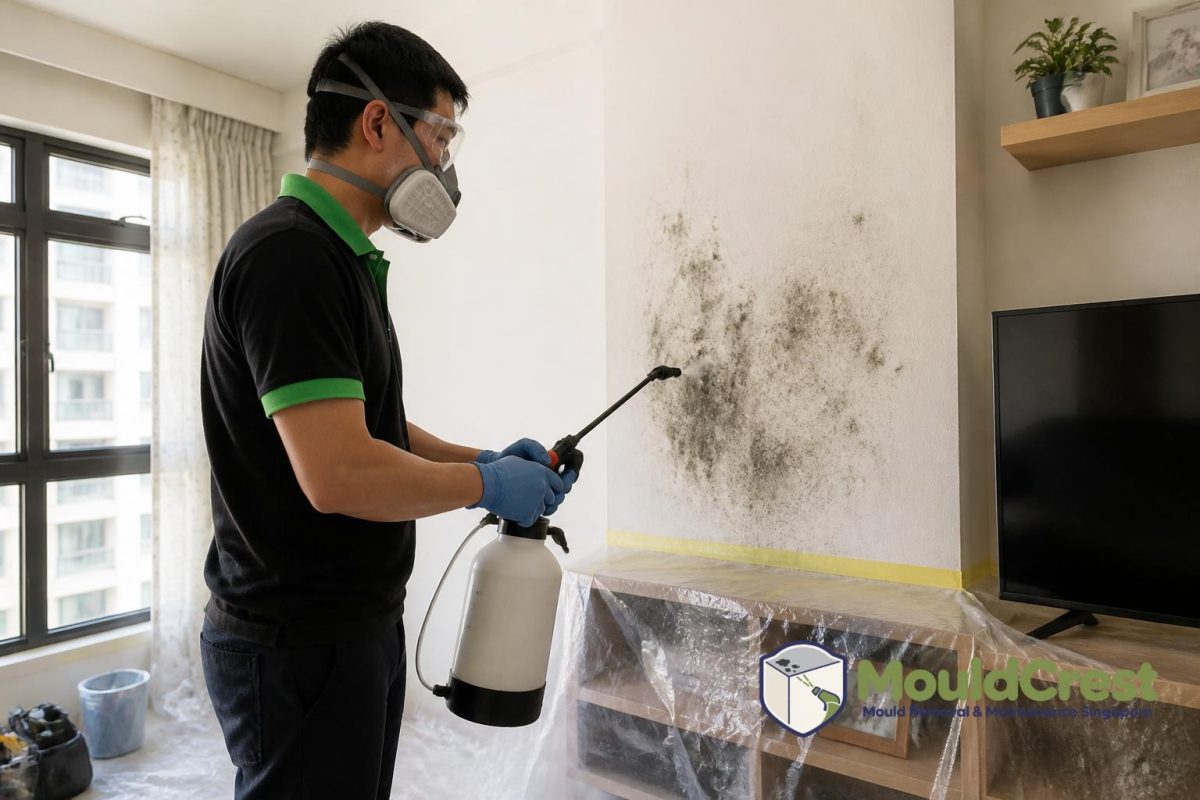
- Small visible patch on a wall: may take a shorter appointment for inspection, surface preparation and treatment.
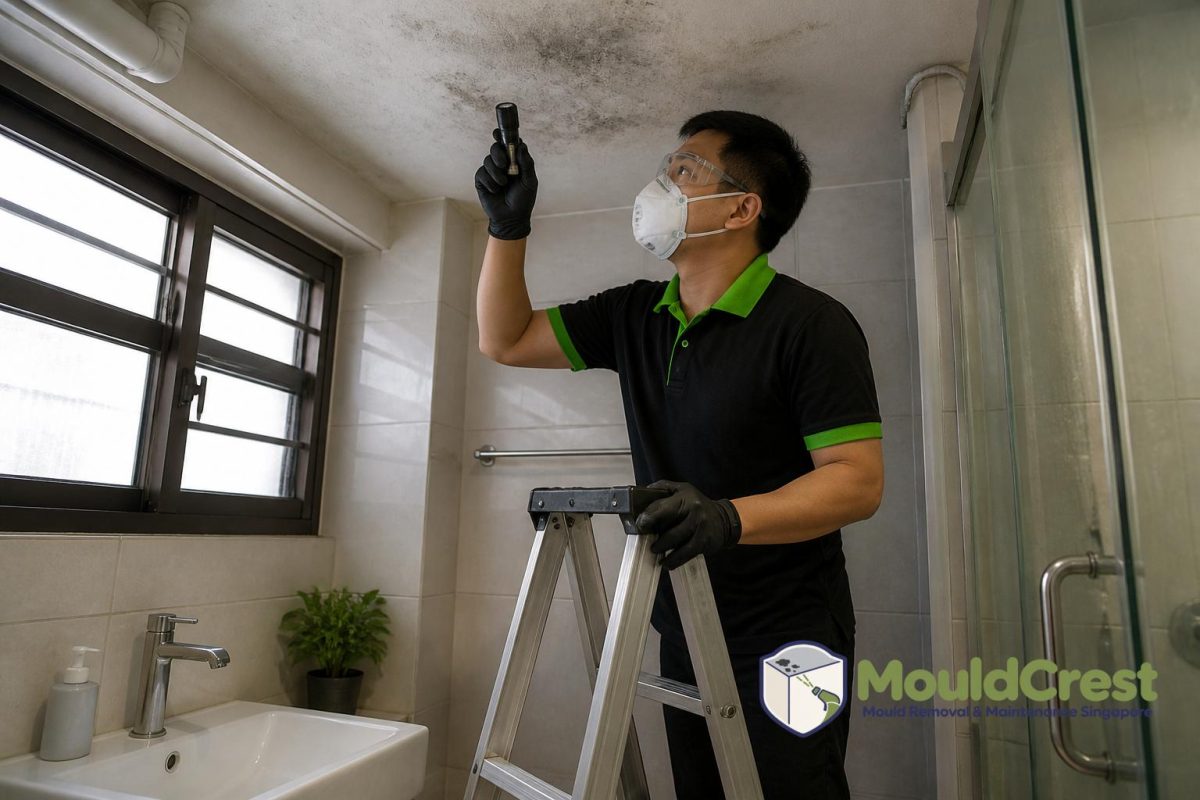
- Ceiling mould in one room: often takes longer because of overhead access, covering nearby items and working safely at height.
- Multiple wall or ceiling sections: can require several hours or more depending on preparation and drying needs.
- Recurring moisture-related mould: may need a follow-up plan beyond the initial removal visit.
In practice, the visible treatment itself is only one part of the job. Preparation, isolation of the work area, careful cleaning of the affected accessible surface, and post-treatment advice all add to the overall time. If the mould is linked to ventilation issues, pipe seepage or condensation, the overall process may extend into other trades or maintenance work.
Wall mould removal versus ceiling mould removal
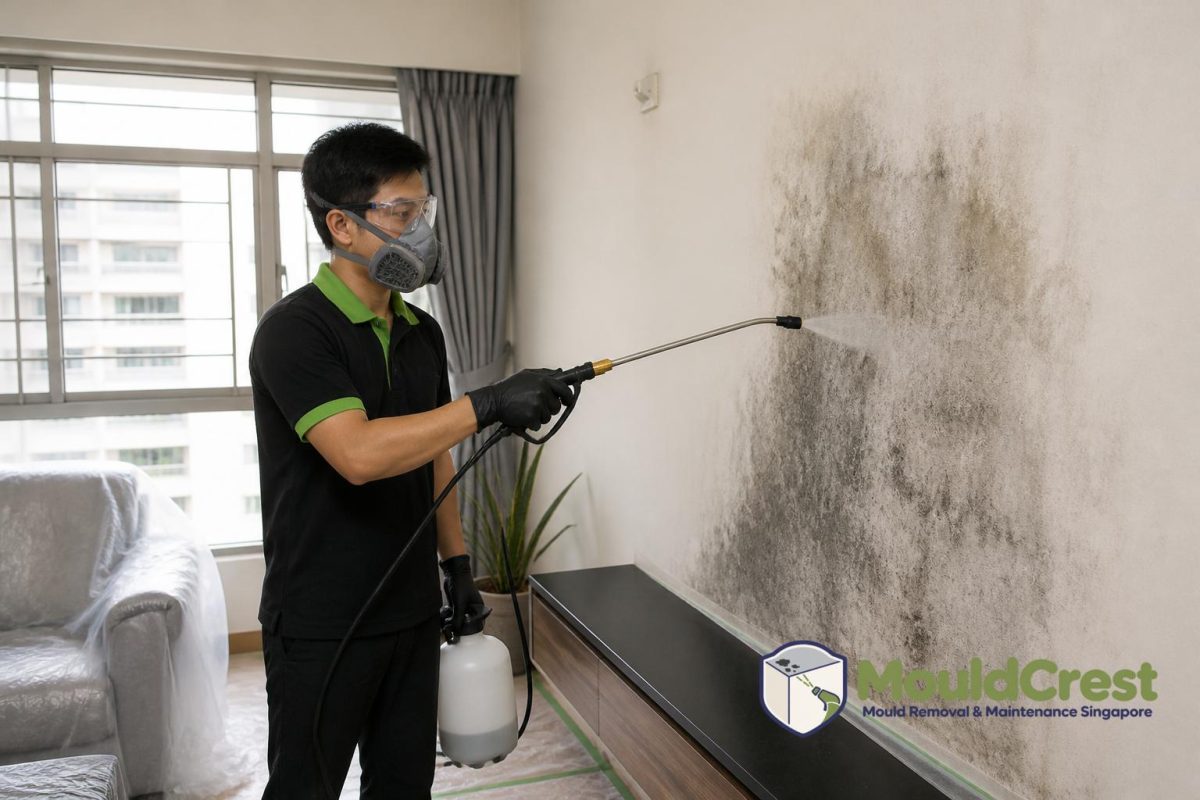
Wall mould removal and ceiling mould removal are not the same task. Wall growth is usually easier to inspect because the surface is vertical and directly accessible. Ceiling mould, on the other hand, often involves overhead work, more extensive protection of the area below, and careful handling to reduce mess and exposure during treatment.
For walls, the focus is often on painted plaster or other finished vertical surfaces. The technician can more easily examine the affected section, prepare the surface and carry out suitable treatment. For ceilings, access may require ladders or other safe working arrangements, and the surface must be assessed more carefully for paint condition, staining and moisture patterns.
In both cases, the source of dampness matters. A treated wall or ceiling can still develop mould again if the underlying condition remains unchanged. That is why mould removal should be paired with moisture-source awareness rather than treated as a one-step fix.
When mould remediation takes longer than simple mould removal
Mould remediation is broader than mould removal. It usually means assessing the scope of the affected area, considering whether materials are only surface-contaminated or more deeply affected, carrying out professional treatment, and addressing the moisture source where possible. This is especially relevant when the problem is not limited to a single visible patch.
Remediation may take longer when there are:
- Repeated outbreaks in the same room
- Signs of persistent condensation on cold surfaces
- Leakage from plumbing, windows, ceilings or exterior walls
- Inaccessible corners, cupboard backs or concealed junctions
- Concerns around material condition that require a more cautious approach
Depending on the findings, remediation may involve a combination of surface treatment, drying steps, ventilation improvements and coordination with other services. A careful approach is usually more effective than rushing through visible cleaning without understanding why the mould formed.
How preparation, PPE and access affect the job duration
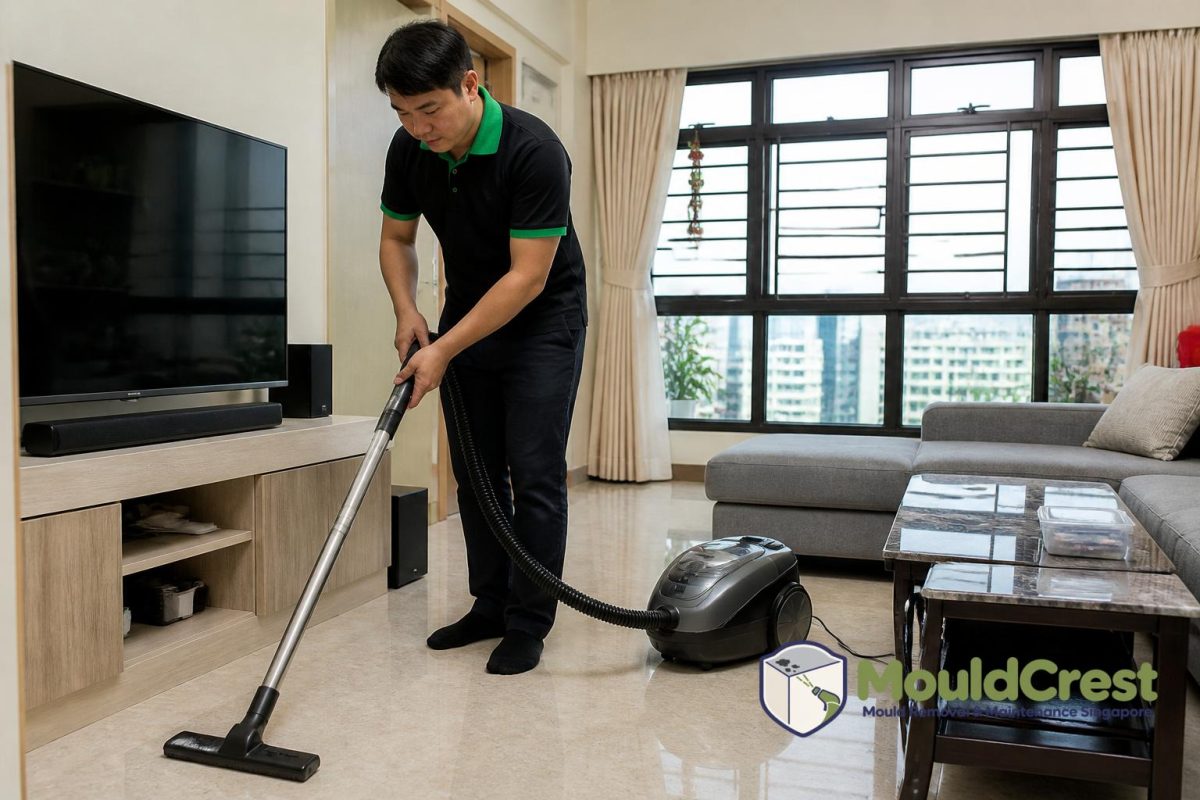
Professional mould work is not only about the treatment itself. Preparation can take time, especially in occupied Singapore homes where furniture, appliances and personal items need to be protected. This is particularly true for bedrooms, living rooms and enclosed service areas where airflow is limited.
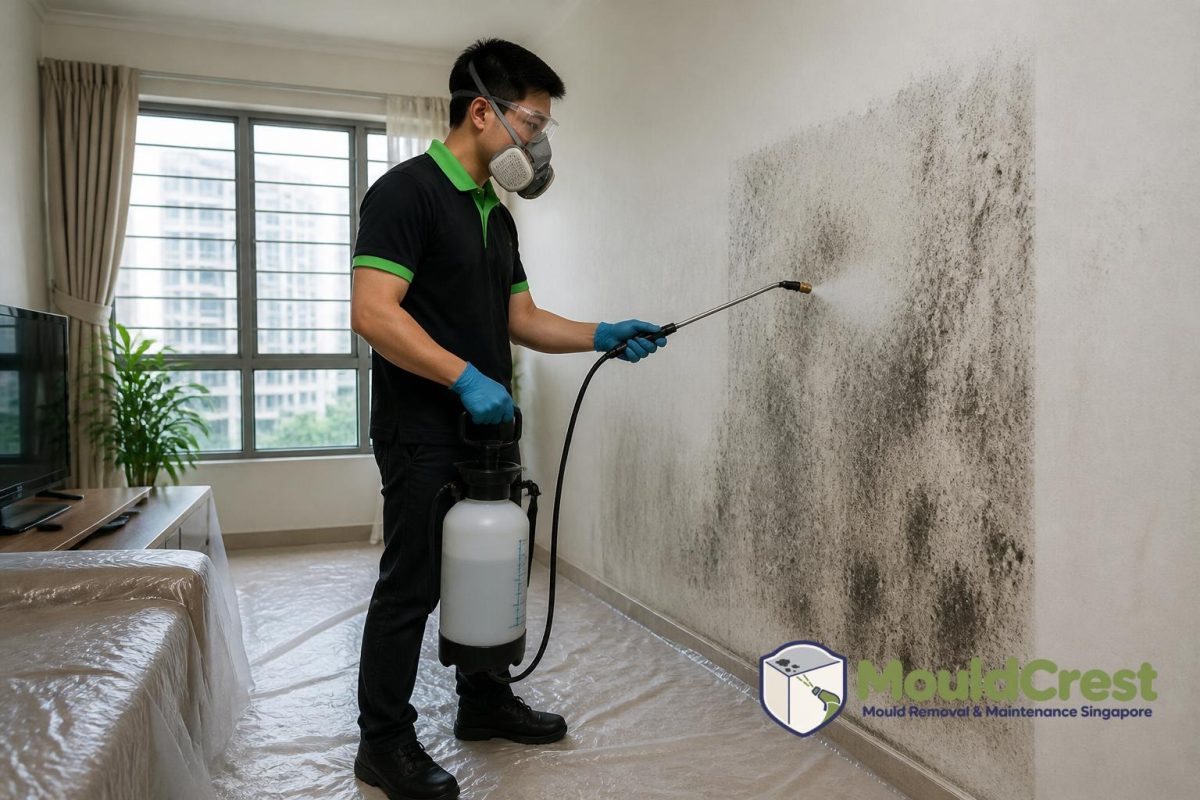
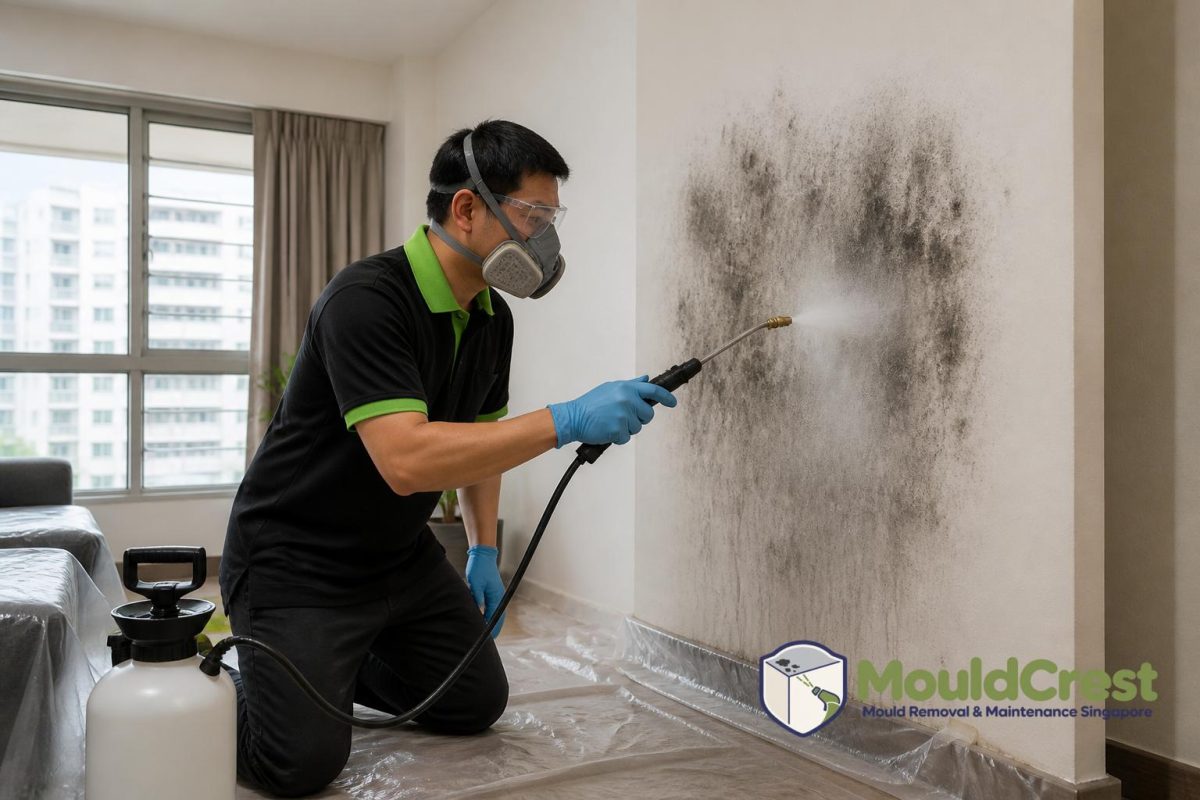
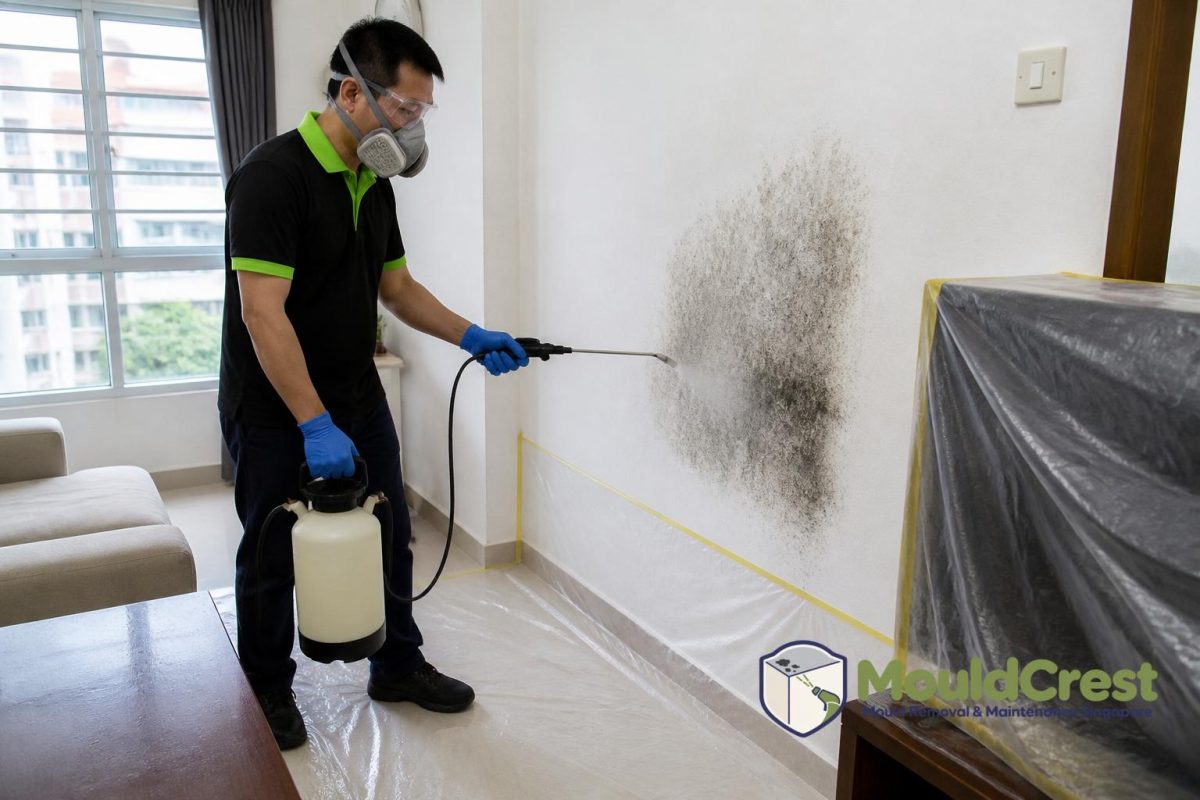
Technicians may use appropriate PPE, set up coverings, isolate the work zone and ensure that the treatment is performed safely for the specific area. These steps help keep the surrounding space cleaner and reduce unnecessary disturbance. For ceiling work, access and positioning are especially important because the surface is above head height and often closer to lighting points, fans or air-con fixtures.
That is why the same mould size can take different amounts of time depending on where it is found. A ceiling spot above a bed or cabinet often needs more preparation than a wall patch in an open hallway.
Can fogging or misting finish the job quickly?
ULV fogging or misting may sometimes be used as an additional method in a mould service, but it should not be seen as the only answer. It does not replace proper inspection, surface treatment or moisture management. In other words, a single spray is not a long-term solution if condensation, leakage or poor ventilation continues.
For Singapore homes, this point is especially important because humidity and indoor airflow are common factors. Even when the visible growth has been treated, mould can return if the room remains damp or poorly ventilated. A professional service should therefore explain what was treated, what was left untouched, and what conditions need improvement after the visit.
Where ventilation, plumbing, electrical and aircon services fit in
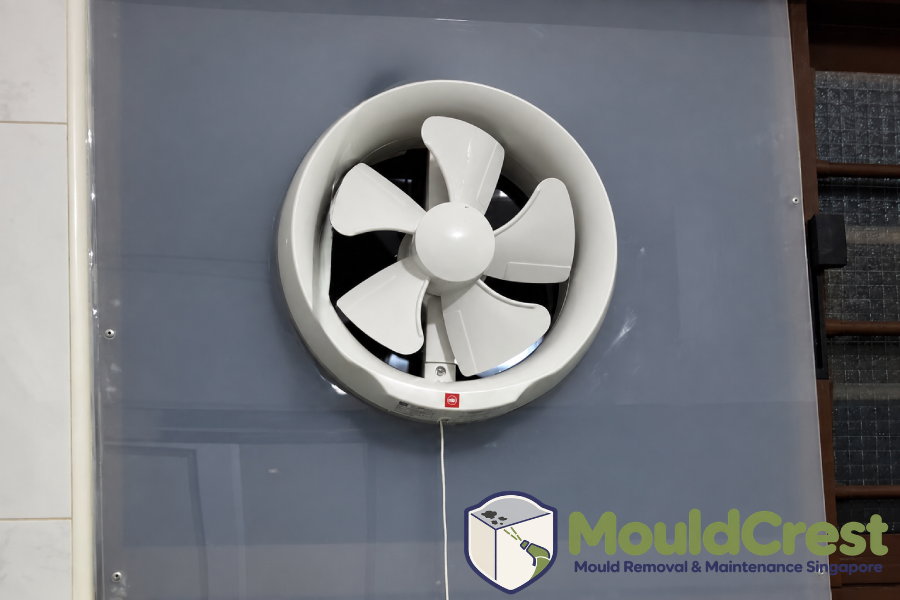
Mould work often sits alongside other property maintenance needs, but each trade has a distinct role. Ventilation fan installation is a separate fitting and electrical task that must be carried out properly, including suitable fan sizing, location selection and any required window acrylic panel work. It is not the same as mould removal, although better airflow can support mould mitigation.
Likewise, plumbing services are relevant when seepage or leaks are involved. Electrical services are needed for safe wiring or equipment-related work. Aircon servicing may help if condensation or poor unit maintenance is contributing to dampness, but air-con cleaning is not a substitute for mould remediation. Handyman and property maintenance work can help with access, minor repairs or reinstatement, while cleaning services, mattress cleaning and sofa cleaning are separate trades with their own methods and limitations.
Keeping these services distinct matters because the right solution depends on the actual cause. Mould on a wall is not solved in the same way as a plumbing leak, a ventilation shortfall or a stained upholstered item.
How mould mitigation helps prevent a repeat problem
Mould mitigation is about reducing the conditions that allow mould to grow again. In Singapore, that usually means better moisture management, condensation control and ventilation. It may also involve day-to-day habits such as improving airflow in closed rooms, managing indoor humidity and keeping affected areas dry after cleaning.
Mitigation is preventive rather than curative. It supports the result of mould removal, but it does not replace it. If the room continues to trap moisture, the issue may reappear on the same wall, ceiling or nearby surfaces. This is why a professional approach should include advice that is practical for the home’s layout and usage.
To discuss the mould concern covered here, WhatsApp MouldCrest with details of the affected surface and any moisture signs to request an assessment or quotation.
Conclusion
Professional mould removal for a Singapore home can take anywhere from a relatively short appointment for a small, accessible patch to a longer, more involved visit when ceilings, larger areas or moisture-related causes are involved. The real timeframe depends on the surface, access, preparation, and whether the issue is limited to visible growth or requires broader remediation.
The most reliable approach is one that treats the accessible mould properly, recognises the difference between walls and ceilings, and explains the moisture-related factors that may need follow-up. That is the most sensible way to plan work in HDB flats, condominiums, landed homes and other premises where dampness and ventilation can affect indoor conditions.
Choose MouldCrest Mould Removal & Maintenance Singapore
At MouldCrest Mould Removal & Maintenance Singapore, we provide mould removal to treat affected surfaces and restore their appearance. Our wall mould removal service addresses growth and marks on walls. For mould on ceilings, we offer ceiling mould removal. We also provide mould remediation for a more comprehensive approach to affected areas. To help manage the risk of mould returning, our mould mitigation service focuses on the conditions that encourage growth. We offer ventilation fan installation to improve airflow and help reduce moisture build-up. Our services also cover property maintenance, including handyman services for various repairs and installations, plumbing services to address plumbing issues, and electrical services for different electrical fittings. We also provide cleaning services such as mattress cleaning and sofa cleaning to freshen frequently used furnishings. Explore our blog for practical information and browse our completed projects to see our work. WhatsApp us today at +65 8241 0032 to enquire about our services and discuss your needs.
Frequently Asked Questions
Is mould removal usually a one-visit job?
Sometimes, if the affected area is small and accessible. However, if the mould is linked to ongoing dampness, poor ventilation or leakage, a single visit may not be enough to fully address the problem. The visible treatment can be completed in one session, but prevention may require additional steps.
Why does ceiling mould often take longer than wall mould removal?
Ceiling mould usually needs more preparation because it is overhead and may be harder to reach safely. The area below often needs protection, and the surface may be affected by ventilation or condensation patterns that need closer attention.
Does fogging alone stop mould from coming back?
No. Fogging or misting may be used as part of a broader service, but it should not be relied on by itself. Long-term control depends on proper treatment of the affected surface and management of the moisture source, airflow and humidity conditions.