
Ceiling mould in an HDB flat can be unsettling, especially when it appears above a bedroom, bathroom, or living area. In Singapore’s humid climate, it is often linked to condensation, poor airflow, bathroom moisture, air-conditioning drip issues, or water seepage from above. What happens next depends on what is actually affected, how accessible the ceiling is, and whether the problem is limited to visible surface growth or connected to a moisture source that needs attention.
What ceiling mould removal typically involves
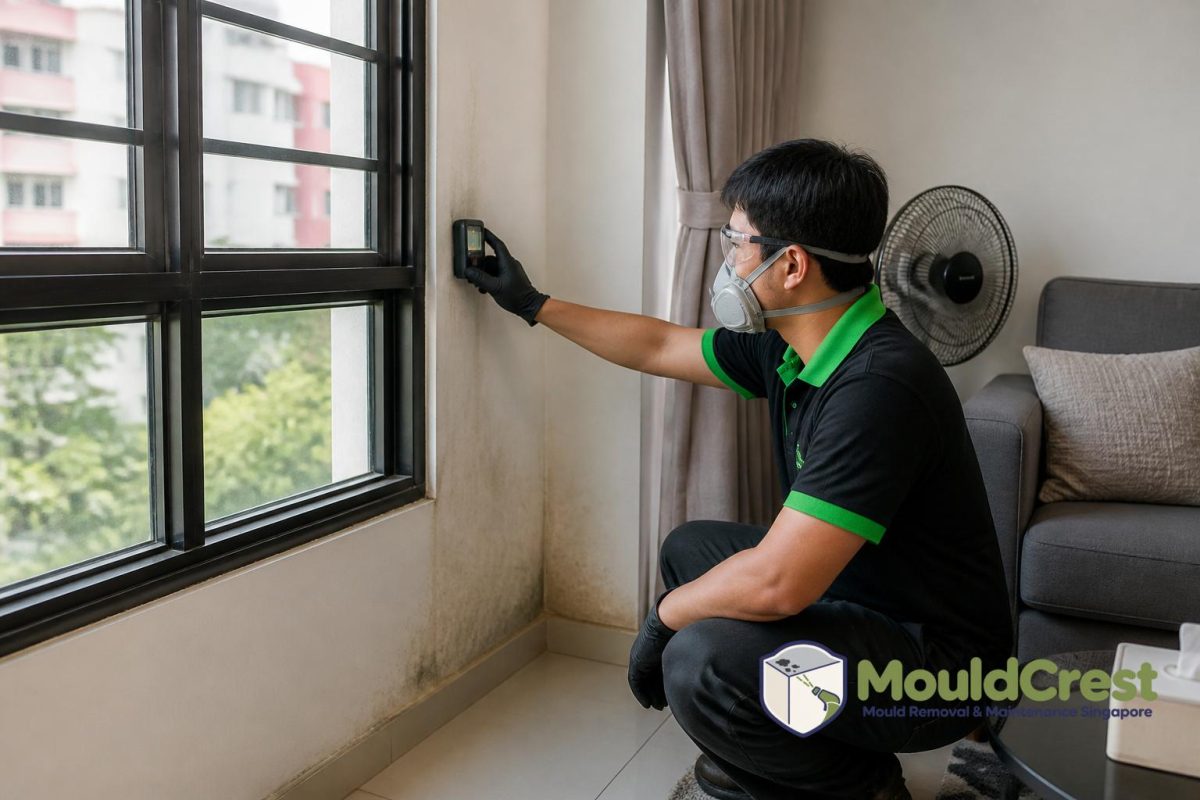
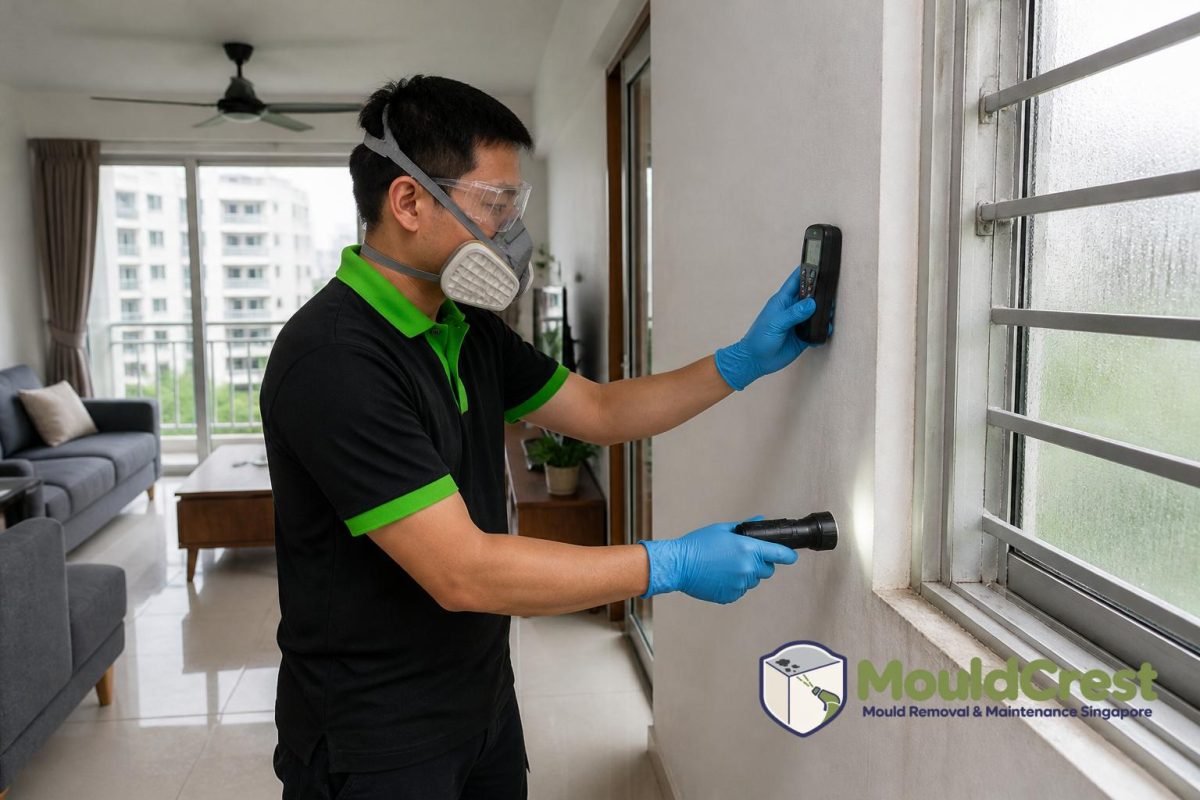
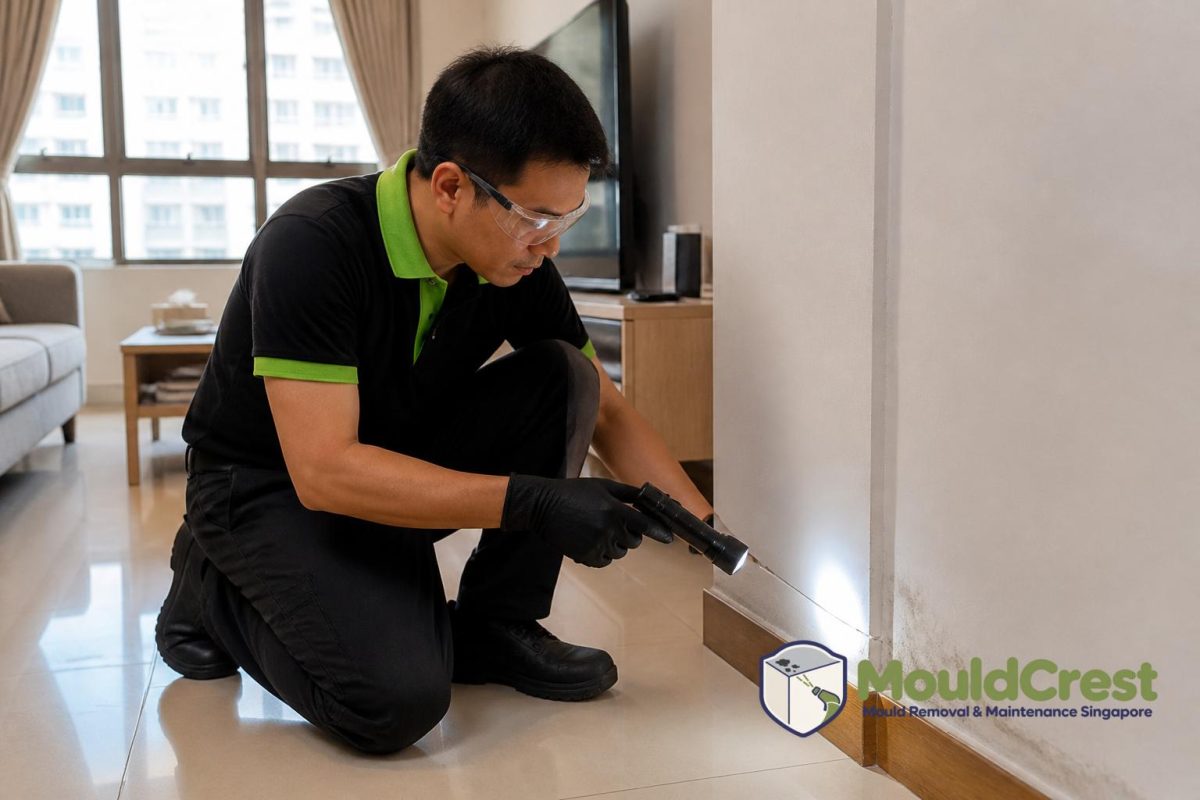
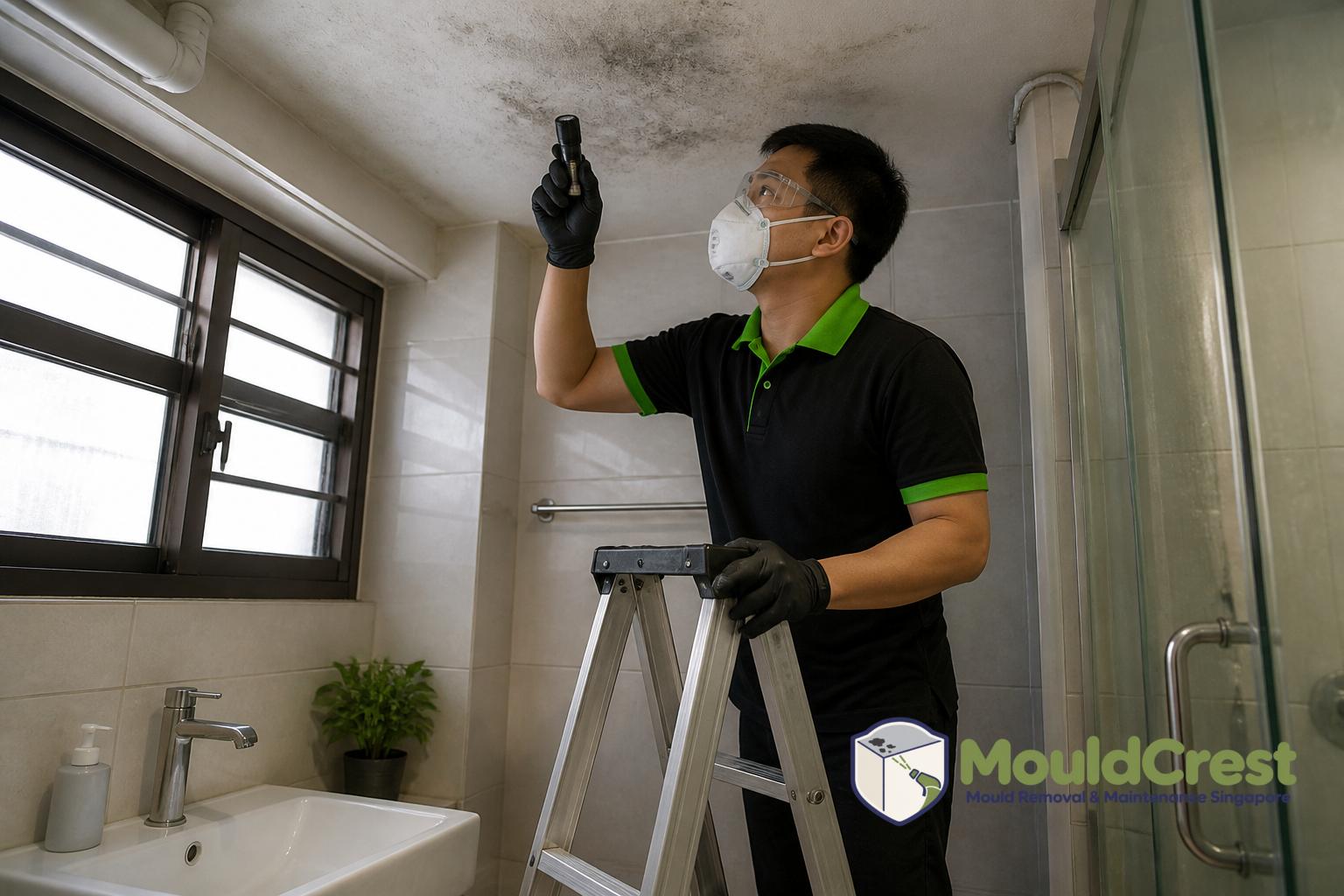
Ceiling mould removal is different from wall mould removal because the work is overhead and usually requires more careful preparation. A technician will first assess the visible affected ceiling surface, note the size and spread of the growth, and look for signs of staining, peeling paint, bubbling, or recurring dampness. This helps determine whether the work is suitable for surface treatment alone or whether a wider mould remediation scope is needed.
For an HDB flat, ceilings may include painted concrete, plasterboard, or kitchen and bathroom ceiling areas that have been exposed to steam or condensation. The method used should suit the surface condition. A stable, accessible ceiling with surface mould may be treated differently from a ceiling with soft paint, ongoing dampness, or suspected seepage. The aim is to address the accessible visible growth and the contributing conditions as far as practical, without overpromising a full structural solution when that is not the case.
Why ceiling mould appears in Singapore homes
Ceiling mould usually develops where moisture lingers. In Singapore, common causes in HDB flats include:
- High indoor humidity and poor ventilation
- Steam build-up from bathrooms and kitchens
- Air-conditioning condensation or insufficient drainage
- Water seepage from the unit above
- Roof or plumbing-related moisture in top-floor or affected areas
- Condensation caused by cool surfaces meeting warm, humid air
It is important to distinguish between the visible mould patch and the reason it formed. Cleaning the ceiling surface can improve appearance, but if moisture continues, mould may return. That is why mould mitigation focuses on humidity control, airflow, and fixing or managing the moisture source where possible.
Preparation before ceiling mould treatment
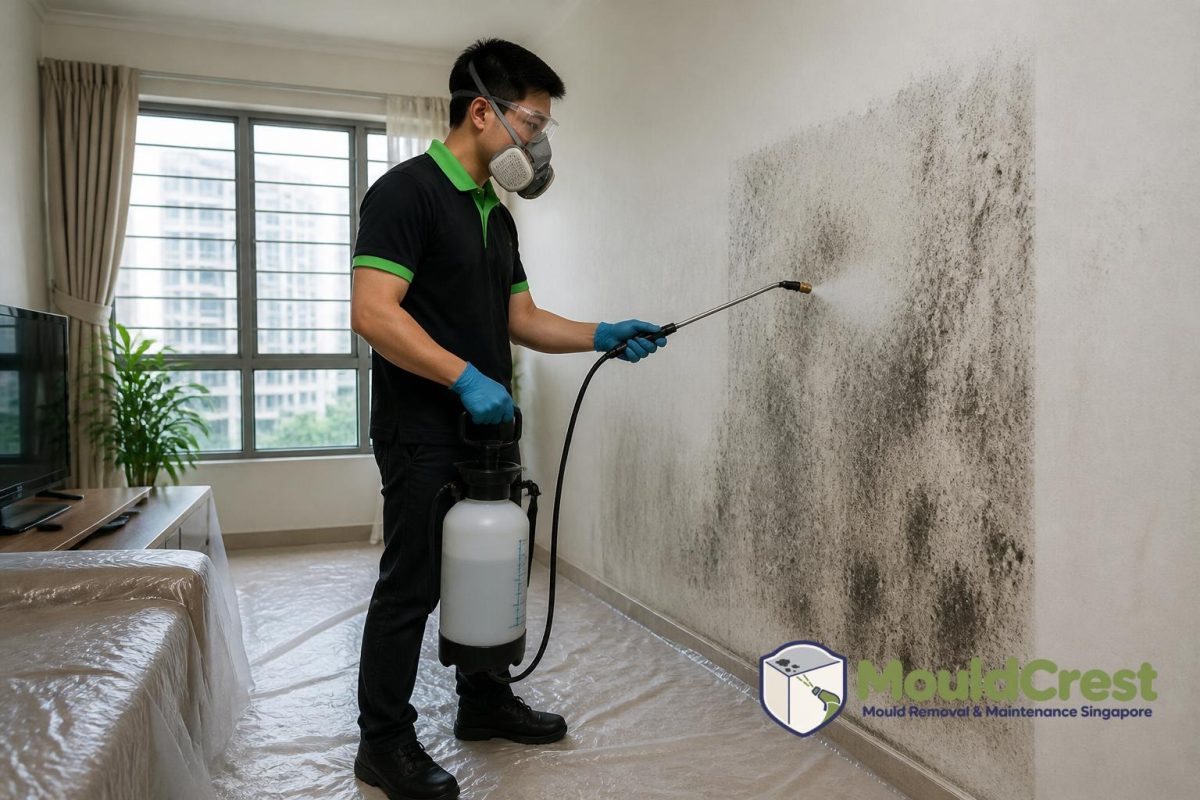
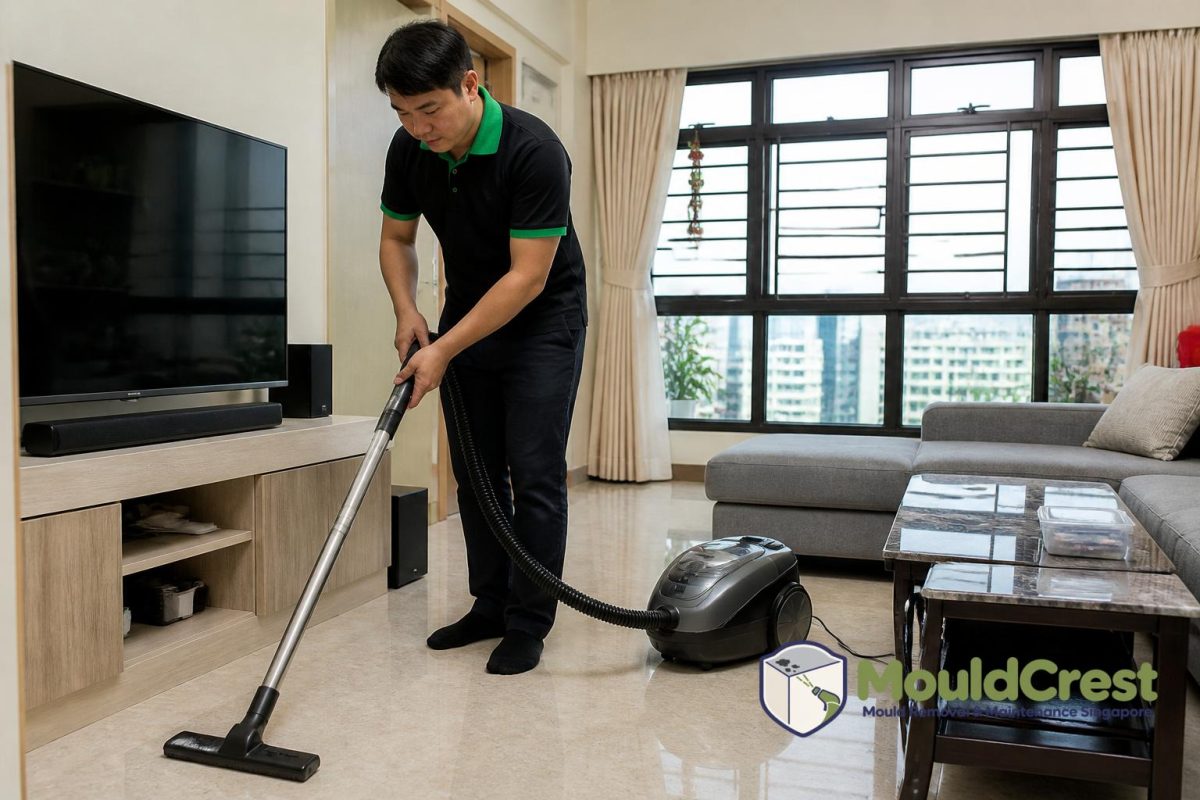
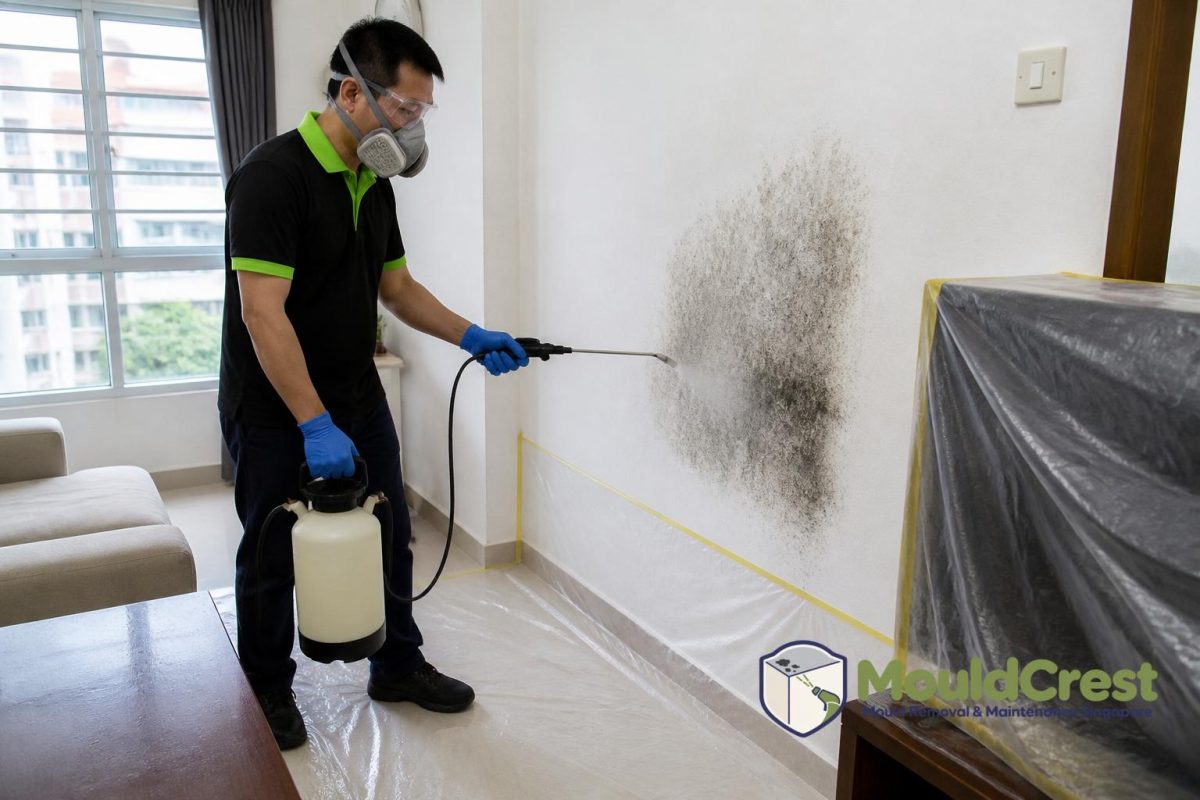
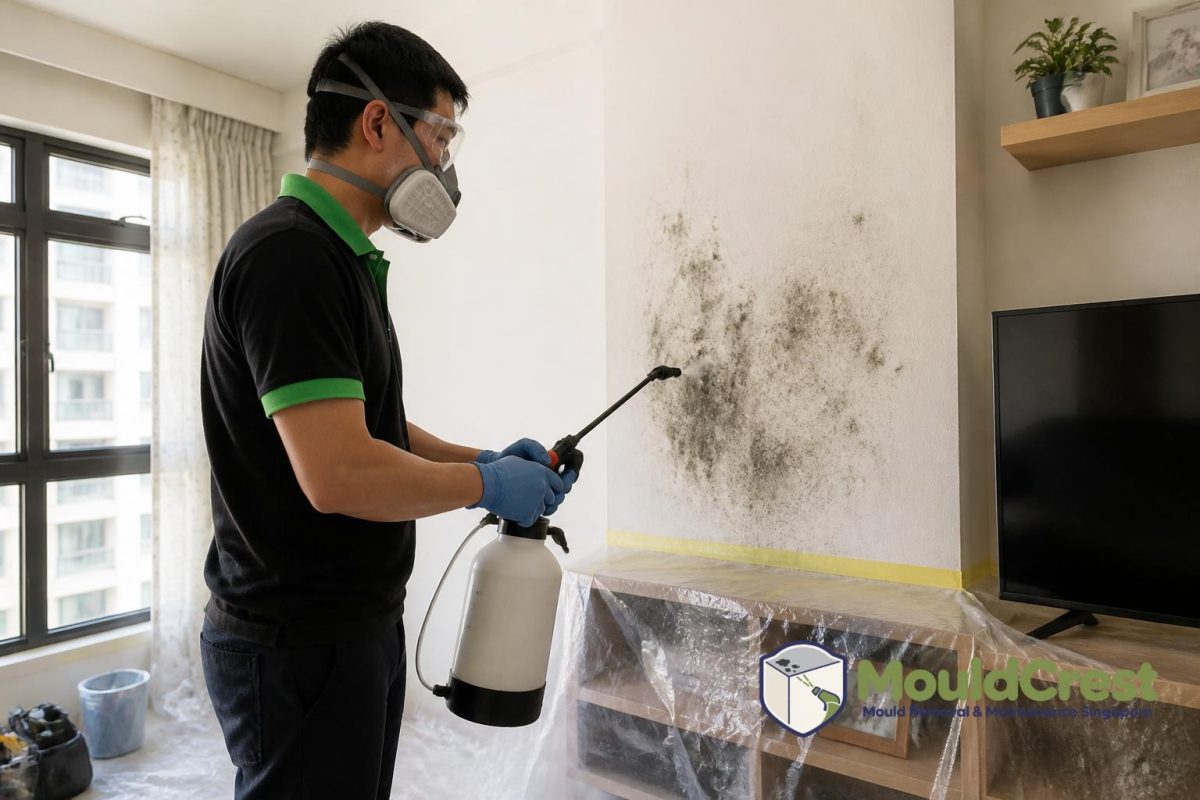
Because the work is overhead, proper preparation matters. The surrounding area may need to be cleared or protected with coverings, especially if the ceiling is above furniture, beds, or electrical fixtures. Technicians usually take care to minimise disturbance and avoid spreading loosened debris onto nearby surfaces.
Personal protective equipment is also important. Depending on the condition and extent of the growth, the work may involve masks or respirators, gloves, eye protection, and suitable clothing. This is especially relevant when dealing with dusty surfaces, older paint layers, or spaces with limited airflow. Ceiling work is not the same as a standard wall wipe-down, so access, posture, and overhead application all need to be handled with care.
How professional ceiling mould removal is carried out
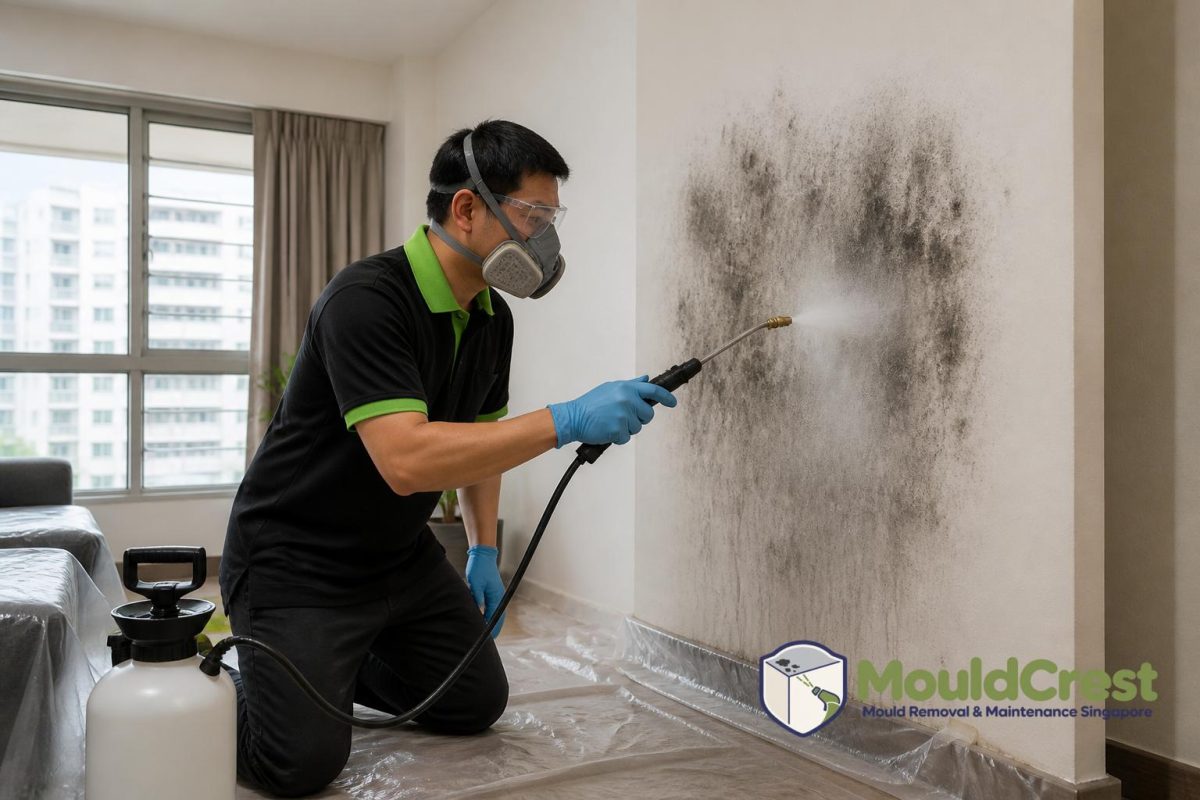
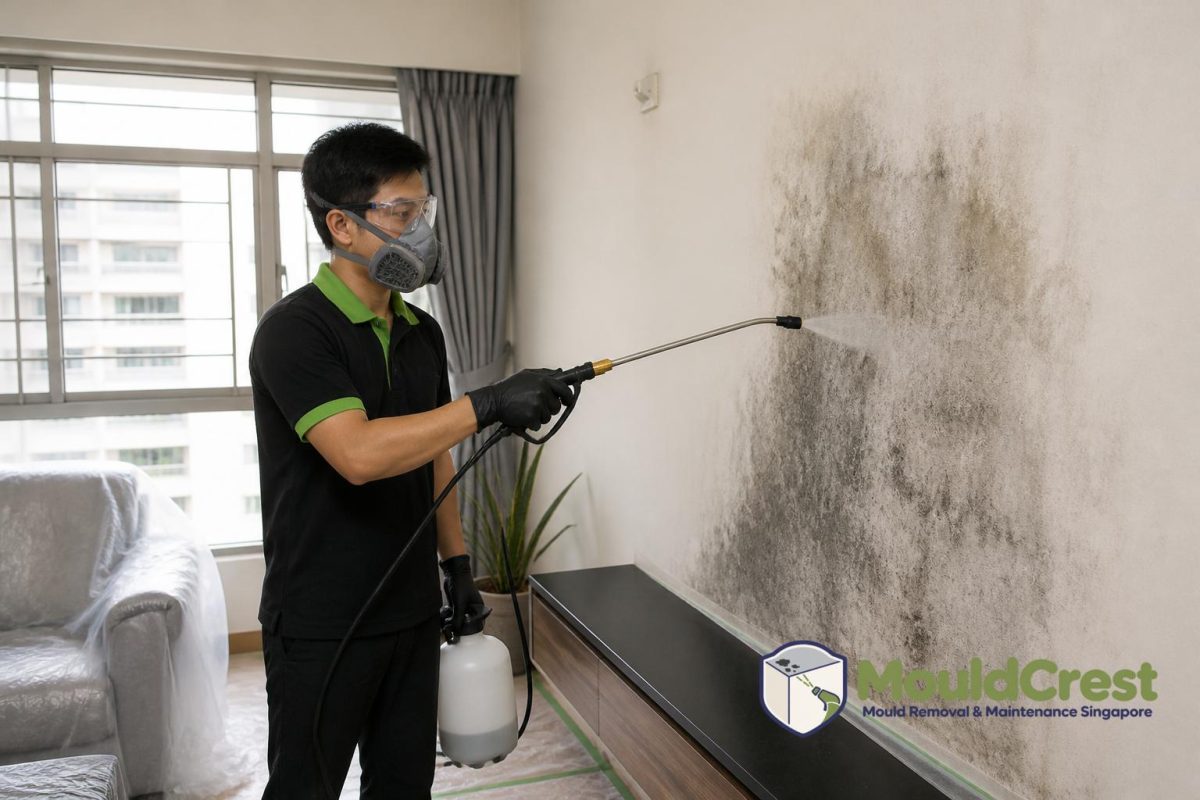
Professional mould removal for a ceiling usually begins with an assessment of the accessible visible area. The technician may identify whether the surface is painted, porous, or already compromised by moisture. On suitable surfaces, treatment typically includes cleaning the affected area with appropriate products and methods for the condition of the ceiling. The intention is to remove visible growth and reduce the remaining contamination on the accessible surface.
In some cases, an additional ULV fogging or misting step may be used as part of the broader process, but it should not be viewed as a stand-alone solution or a guarantee against regrowth. Spraying alone does not resolve ongoing dampness, hidden moisture, or poorly ventilated conditions. If the ceiling remains damp or the source is not addressed, mould can return even after a thorough clean.
Where the ceiling is badly marked, repeatedly affected, or linked to a persistent moisture problem, mould remediation may be more appropriate than simple removal. Remediation looks at the broader scope, including affected materials, the extent of surface contamination, and practical moisture-source management. This can include recommending follow-up work by other trades if plumbing, drainage, or air-conditioning issues are contributing to the problem.
When ceiling mould needs more than surface cleaning
Not every ceiling mould issue is the same. A small patch near a bathroom vent may be limited to surface growth caused by condensation. A larger patch, repeated staining, or peeling paint may suggest a more persistent moisture issue. In such cases, it may be necessary to consider:
- Whether the paint or plaster has already been weakened
- Whether the area is repeatedly exposed to steam or humidity
- Whether water is entering from above
- Whether ventilation is adequate for the room’s use
- Whether adjacent wall surfaces are also affected
Where hidden dampness is suspected, a ceiling-only treatment is unlikely to be enough. The right approach is to assess the visible surface, understand the likely cause, and decide whether remediation, maintenance, or another trade is required. This keeps the work practical and avoids misleading assumptions about what mould removal can achieve on its own.
Mould mitigation after ceiling treatment
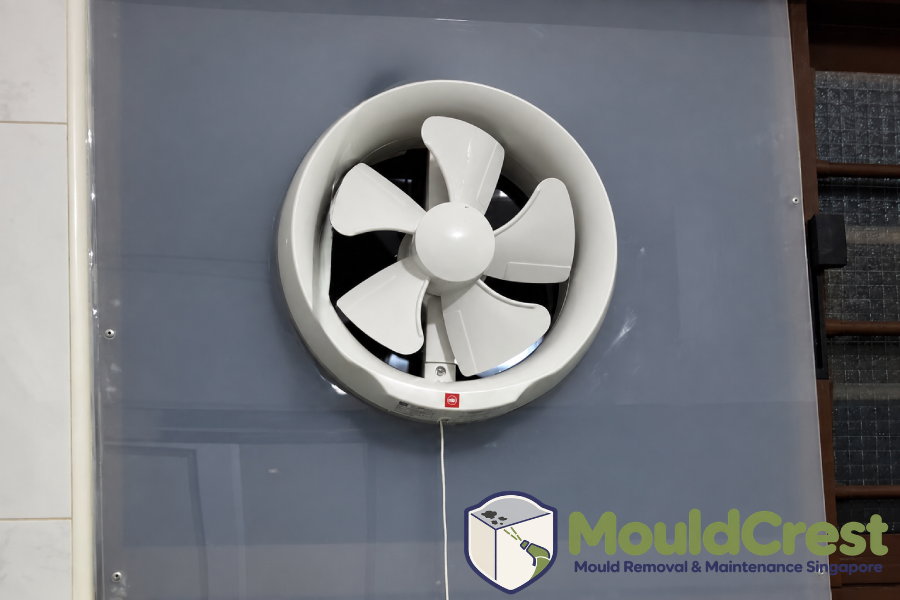
Mould mitigation is about reducing the conditions that help mould return. In Singapore homes, this often means managing indoor humidity, improving ventilation, and limiting moisture build-up in problem areas. Common steps include using extractor fans correctly, opening windows when weather permits, drying wet areas promptly, and keeping air-conditioning systems well maintained so condensation does not worsen the issue.
For ceiling areas, prevention can also depend on how the room is used. Bathrooms with weak airflow, kitchens with frequent steam, and bedrooms with closed windows and limited circulation are more prone to condensation. If the home has a history of recurring mould, practical prevention is often more effective than repeated cosmetic cleaning alone.
How ceiling mould removal differs from wall mould removal
Ceiling mould removal and wall mould removal are related, but they are not identical. Wall mould is easier to access and may be associated with vertical surfaces affected by splashback, rising damp, or condensation near windows and corners. Ceiling mould is overhead and may be associated with steam, air movement patterns, or moisture entering from above.
This difference matters because the treatment approach, preparation, and inspection points are not the same. Ceiling work often requires more careful safety planning and attention to overhead access. Wall work may allow more direct surface treatment and closer inspection of plaster or painted finishes. In both cases, the moisture cause should be considered so the visible mould is not treated in isolation.
Where other trades may be needed
Sometimes a mould issue points to a separate maintenance problem. In an HDB flat or condominium, the following services may be relevant, but they should remain distinct from mould removal:
- Plumbing services: for leaking pipes, fittings, or drainage issues
- Electrical services: for safe work around lights, fans, or wiring near the affected area
- Aircon servicing: for drainage, condensate, or unit maintenance concerns
- Ventilation fan installation: for proper fan sizing, location, and safe installation, including suitable window panel fitting where required
- Handyman or property maintenance: for patching, minor repairs, and non-specialist support work
- Cleaning services, mattress cleaning, and sofa cleaning: for separate soft furnishing or general cleaning needs
Keeping these services separate is important because each addresses a different problem. Mould removal deals with visible growth on accessible surfaces; remediation expands the scope; mitigation reduces future risk; and the other trades resolve their own specific issues.
To discuss the mould concern covered here, WhatsApp MouldCrest with details of the affected surface and any moisture signs to request an assessment or quotation.
Conclusion
For an HDB flat in Singapore, ceiling mould removal should begin with a proper assessment of the visible affected surface, the material involved, and the likely moisture source. A suitable treatment can improve the condition of the ceiling, but long-term results depend on airflow, humidity control, and any necessary follow-up maintenance. In some homes, surface treatment is enough; in others, broader remediation or another trade may be needed to deal with the cause. The most practical approach is to match the service to the actual condition of the ceiling, rather than assuming one spray or one cleaning method will solve every mould problem.
Choose MouldCrest Mould Removal & Maintenance Singapore
At MouldCrest Mould Removal & Maintenance Singapore, we offer mould removal services to address mould growth and improve the condition of affected spaces. We provide wall mould removal to treat growth and marks on walls and mould on ceilings can be addressed through our ceiling mould removal service. For a more comprehensive approach, our mould remediation service addresses mould concerns across the affected area. We also offer mould mitigation to help reduce the risk of recurring growth. As airflow is an important part of managing moisture, we provide ventilation fan installation to improve air circulation and help reduce the likelihood of mould growth.
Our services also cover property maintenance, which includes handyman services for repairs and installations, plumbing services for leaking taps and fixture issues, and electrical services for switches, sockets and light fittings. To refresh frequently used furnishings, we offer cleaning services that include mattress cleaning and sofa cleaning to remove accumulated dirt. Visit our blog for helpful insights and browse our completed projects to see our work. WhatsApp us today at +65 8241 0032 to enquire about our services and to discuss your requirements.
Frequently Asked Questions
Is ceiling mould removal different from cleaning a wall?
Yes. Ceiling mould removal usually requires overhead access, more careful preparation, and attention to condensation or seepage sources above the affected area. Wall mould is easier to reach and may relate to different moisture patterns.
Will spraying the ceiling stop mould from coming back?
Not by itself. Cleaning or spraying can treat visible mould on the accessible surface, but recurrence depends on whether moisture, humidity, and ventilation issues are addressed. That is why mould mitigation is an important follow-up.
When is mould remediation needed instead of simple removal?
Mould remediation is more suitable when the problem is wider than a small visible patch, when materials are repeatedly affected, or when a moisture source needs broader management. It involves a bigger scope than surface treatment alone.