
When homeowners search for mould removal in Singapore, the first question is often about cost. The short answer is that the price depends on what is affected, how accessible the mould is, whether the issue is limited to a visible surface, and whether there is an underlying moisture problem that needs to be addressed. In Singapore homes, mould commonly appears on painted walls, ceilings, bathroom areas, wardrobe backs, and other spots where humidity, condensation, or water ingress can persist.
If you are comparing services, it helps to understand that mould removal, mould remediation, wall mould removal, ceiling mould removal, mould mitigation, ventilation fan installation, and general property maintenance are not the same thing. A proper quote should reflect the actual scope of work rather than a one-size-fits-all price. This is especially important in HDB flats, condominiums, and landed homes, where the cause of the problem and the access conditions may differ significantly.
What affects the price of mould removal in Singapore?
There is no fixed national rate for mould removal because every case is different. A reputable provider will usually assess the affected accessible surface first and then explain the appropriate treatment. The main factors that influence pricing include:
- Size of the affected area: A small patch on a wall is different from widespread growth across multiple rooms or ceiling sections.
- Location and access: Ceiling mould often takes more preparation and overhead work than a wall surface because access, masking, and safety setup are more involved.
- Surface type: Painted plaster, gypsum board, cement render, timber, and bathroom sealant each require different approaches.
- Severity and recurrence: Light surface growth is not the same as repeated mould caused by ongoing condensation or a leak.
- Moisture source: If the cause involves plumbing, air-conditioning drainage, poor ventilation, or water ingress, the scope may need broader remediation or maintenance work.
- Additional services: Some situations may require handyman work, plumbing repairs, electrical support, aircon servicing, or ventilation fan installation.
In practical terms, a simple accessible surface treatment will usually cost less than a broader mould remediation job that includes inspection, protective preparation, treatment, and moisture-source management. Hidden or enclosed materials are not priced the same as a visible surface, because they may need a different scope altogether.
Difference between mould removal and mould remediation
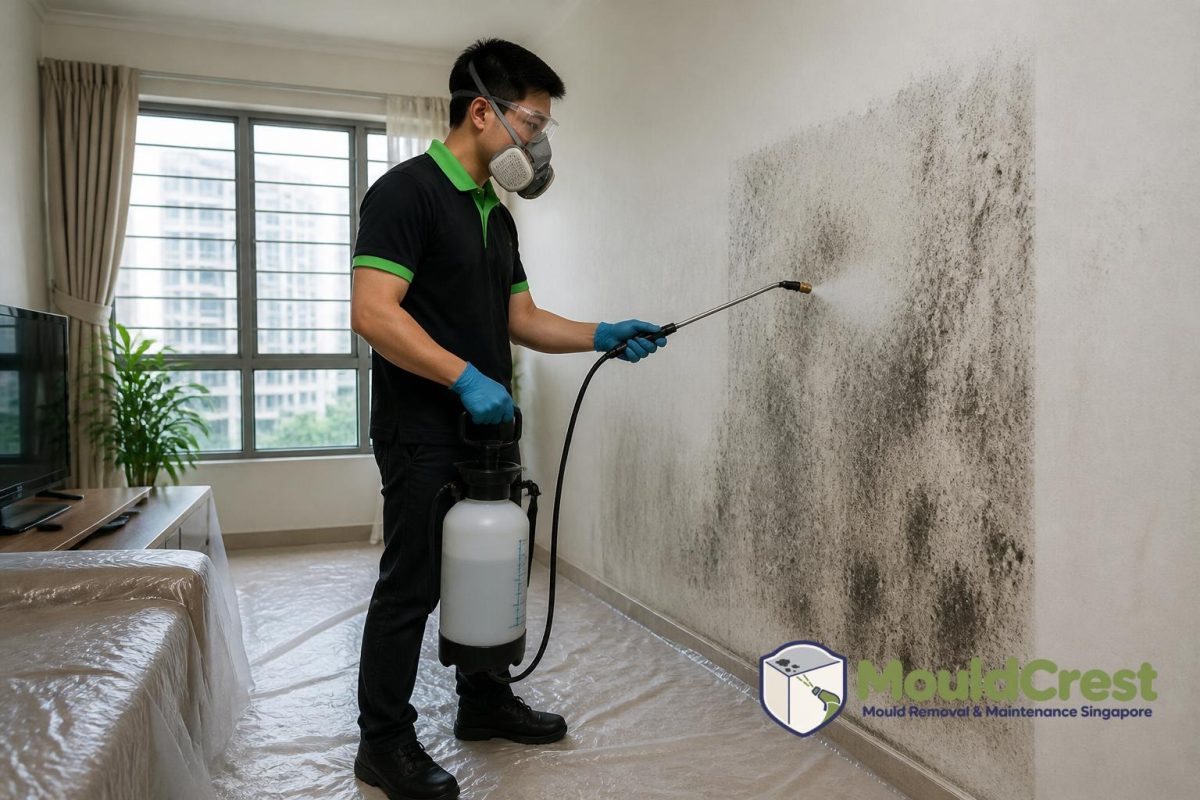
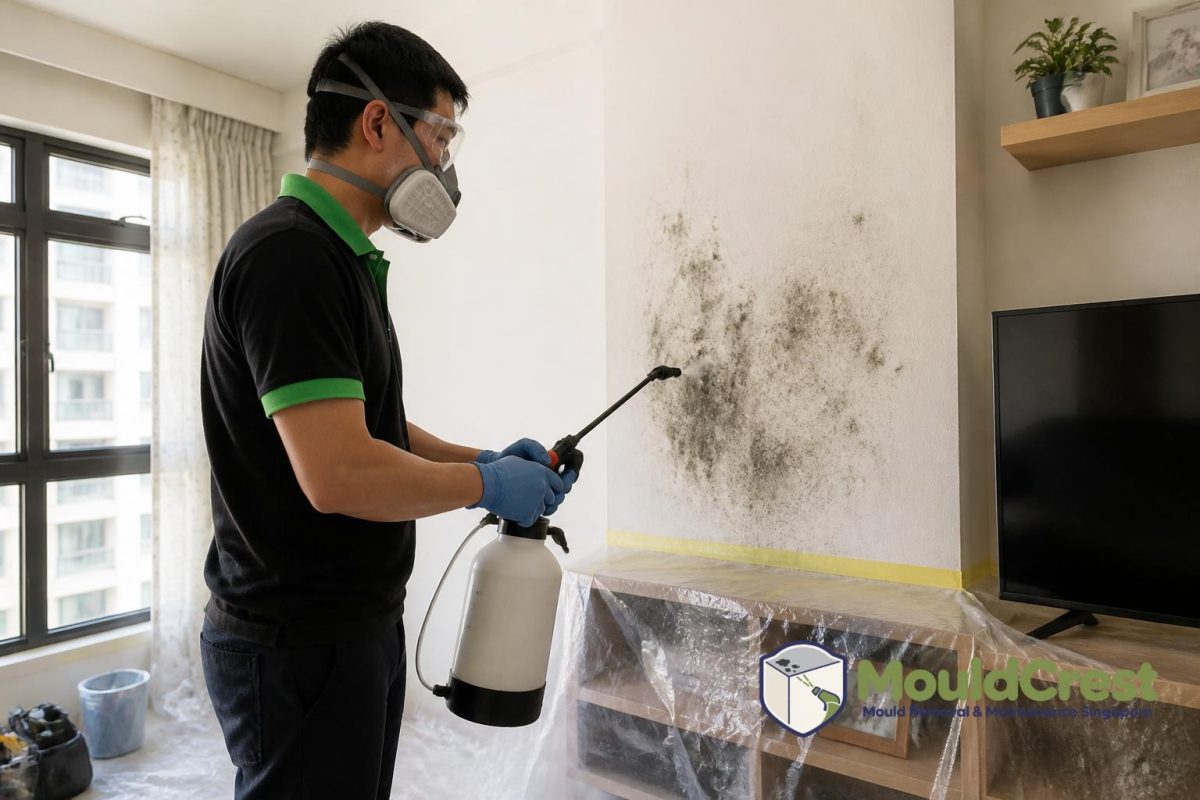
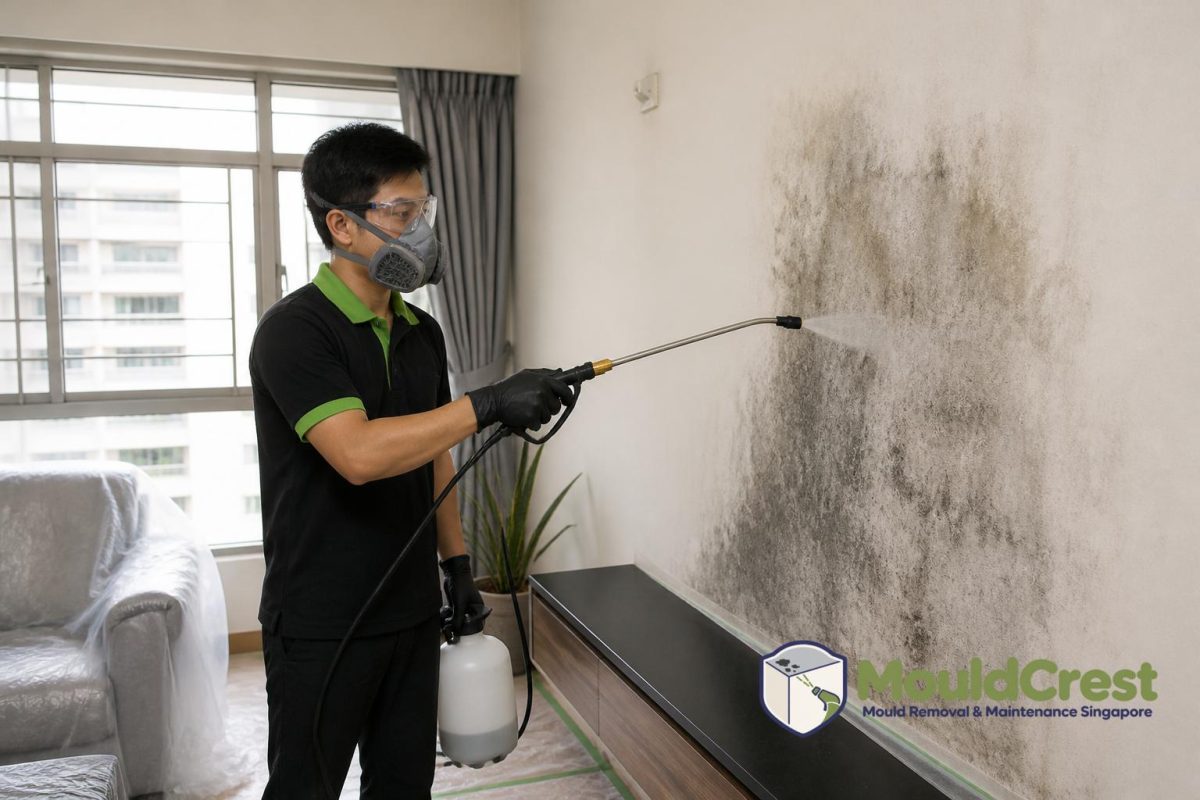
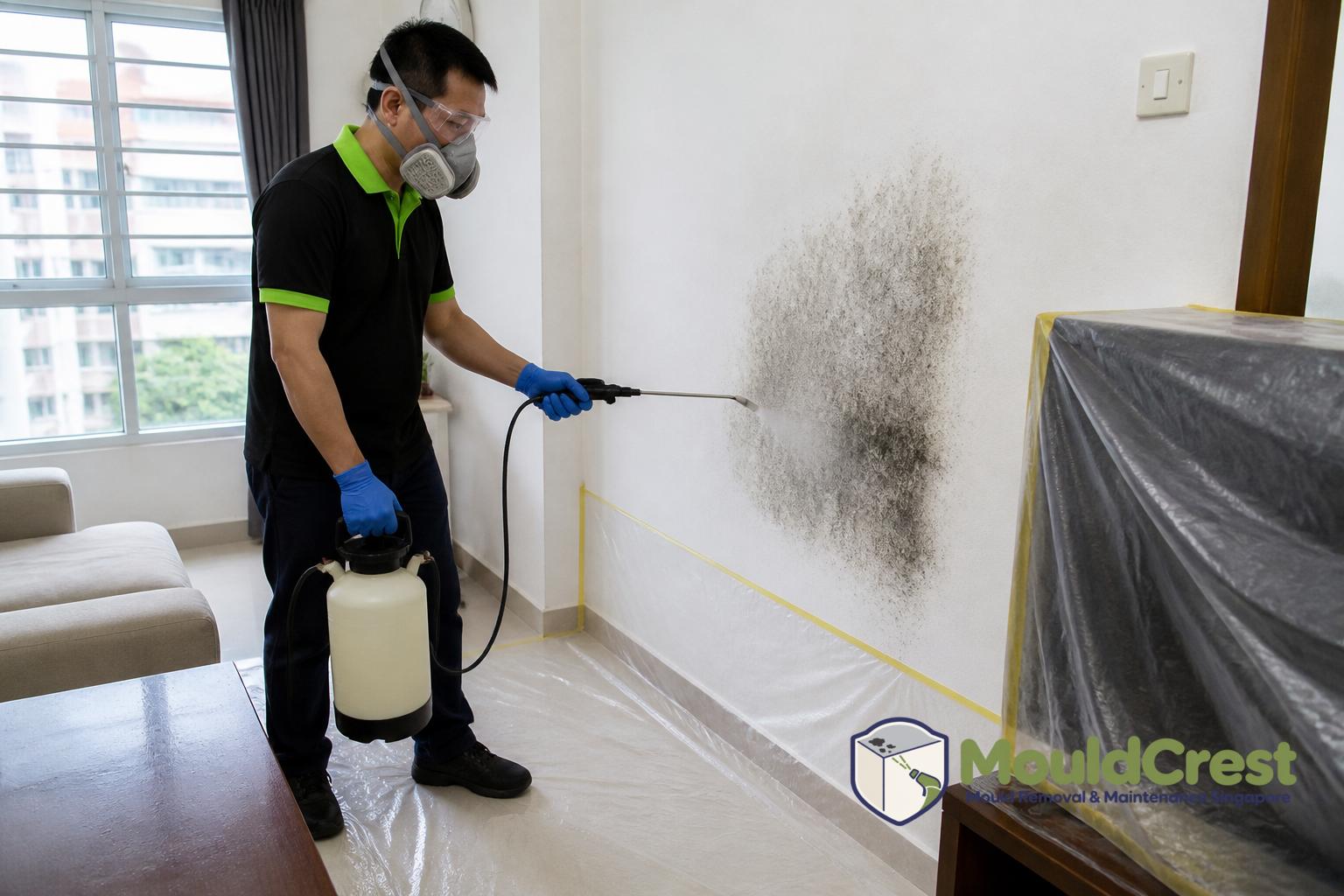
Mould removal refers to assessing the visible, accessible affected surface and treating the growth with suitable methods. This may include cleaning, controlled application of treatment products, and careful wiping or removal of surface contamination where appropriate. It does not mean that a single spray will solve every case or prevent recurrence on its own.
Mould remediation is broader. It usually involves assessing the scope of the issue, looking at the affected materials, applying professional treatment, and considering what is causing the moisture. In Singapore homes, this might mean checking for:
- condensation around cold surfaces or air-con areas
- leaks from plumbing or bathroom fittings
- poor ventilation in enclosed rooms or kitchens
- water ingress from external walls, windows, or ceilings
- high humidity in wardrobes, storage areas, or corners with low air movement
Remediation is usually more appropriate when mould has returned more than once, when the source is unclear, or when the affected area is more extensive. In other words, the treatment method matters, but the moisture source matters just as much.
Wall mould removal: what homeowners should know
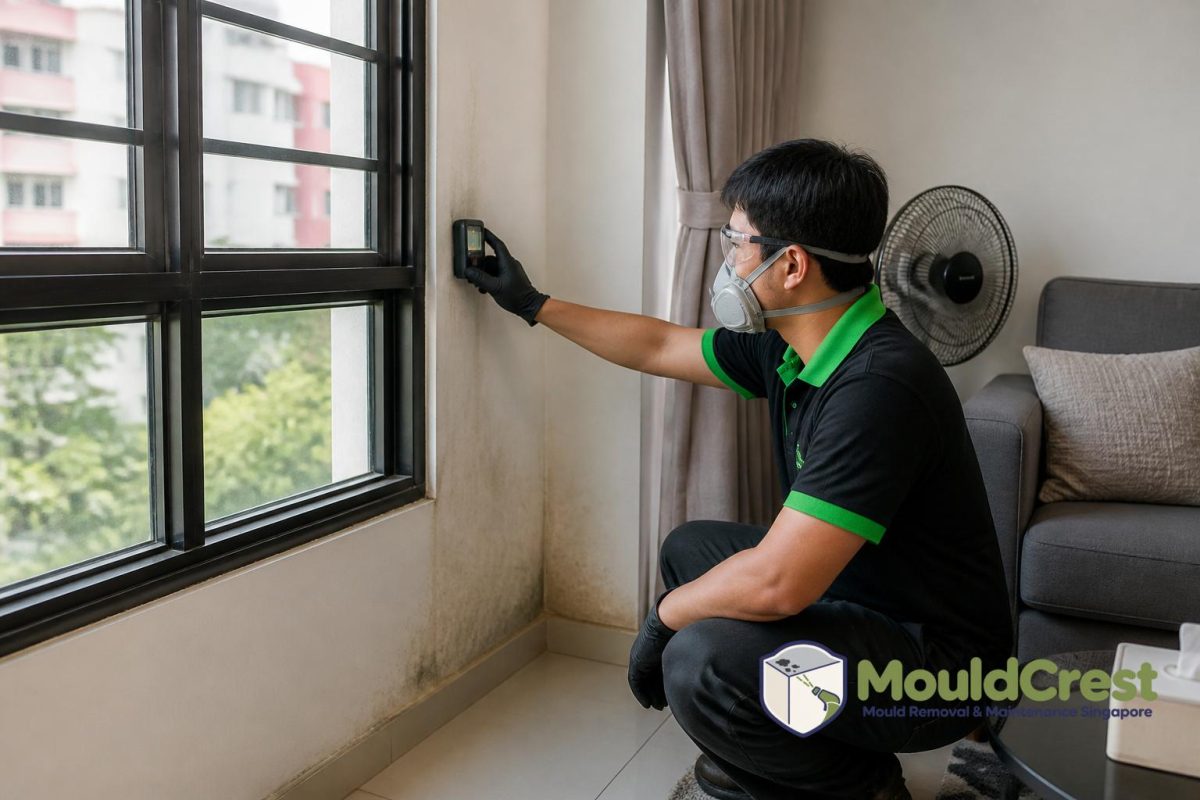
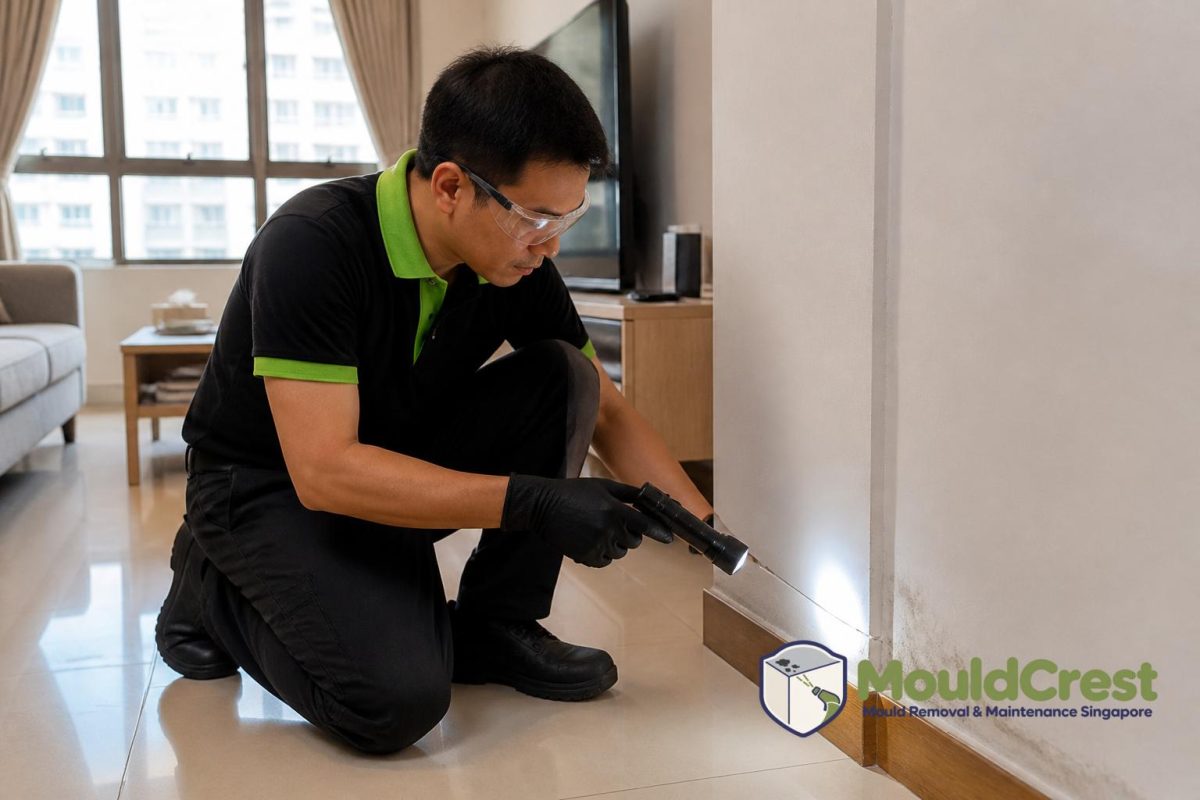
Wall mould removal focuses on vertical plastered or painted surfaces. These are common in Singapore homes, especially in bedrooms, living rooms, and areas around windows or external walls. Wall conditions matter because not every mark is the same. Some areas may only show surface staining and visible mould, while others may be affected by persistent dampness behind the paint layer.
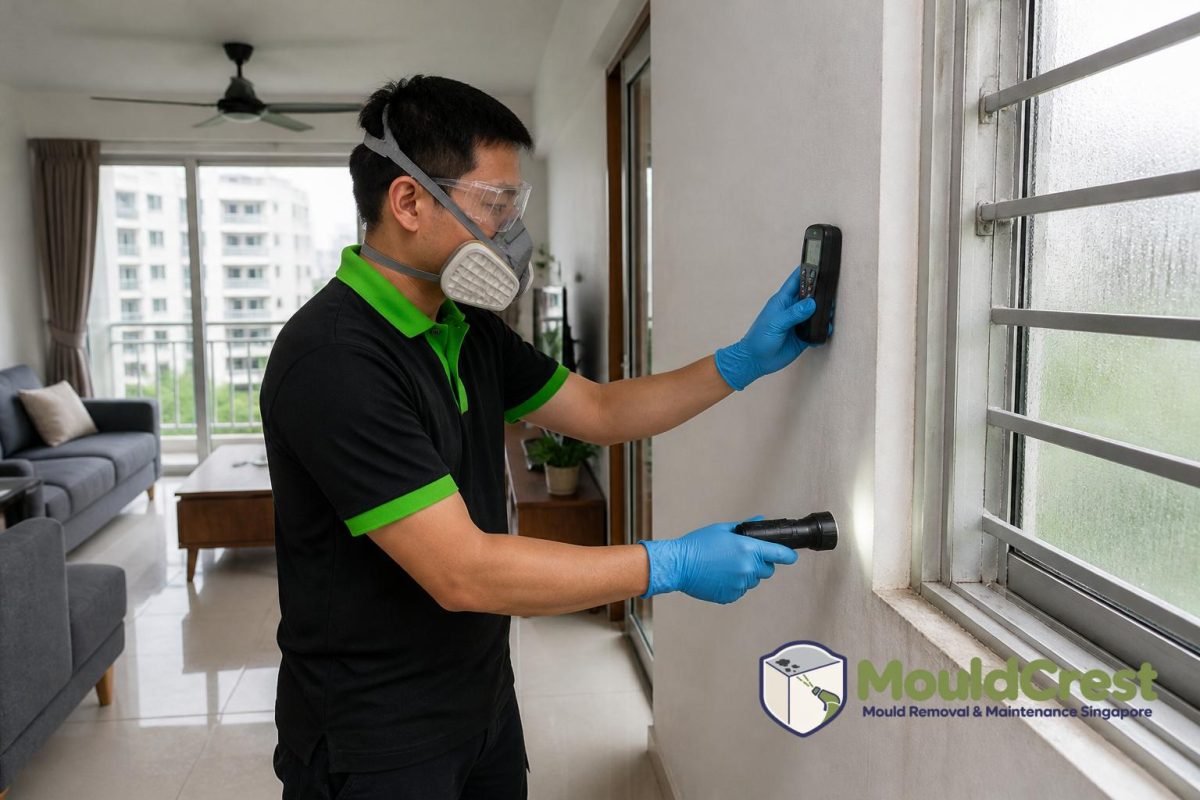
Before treating a wall, a professional should assess whether the surface is sound, whether the paint is peeling, and whether there is any sign of recurring moisture. Suitable surface treatment may include controlled cleaning, mould-specific treatment, and preparation of the area so the finish is not damaged unnecessarily. If the wall is repeatedly affected, simply cleaning it without addressing the moisture cause is unlikely to be a lasting solution.
For homeowners, it is also sensible to ask whether nearby plumbing, window seals, air-con lines, or room ventilation could be contributing to the problem. A proper wall mould removal service should explain the visible issue and the likely moisture source without making unrealistic promises.
Ceiling mould removal: why it is different from wall treatment
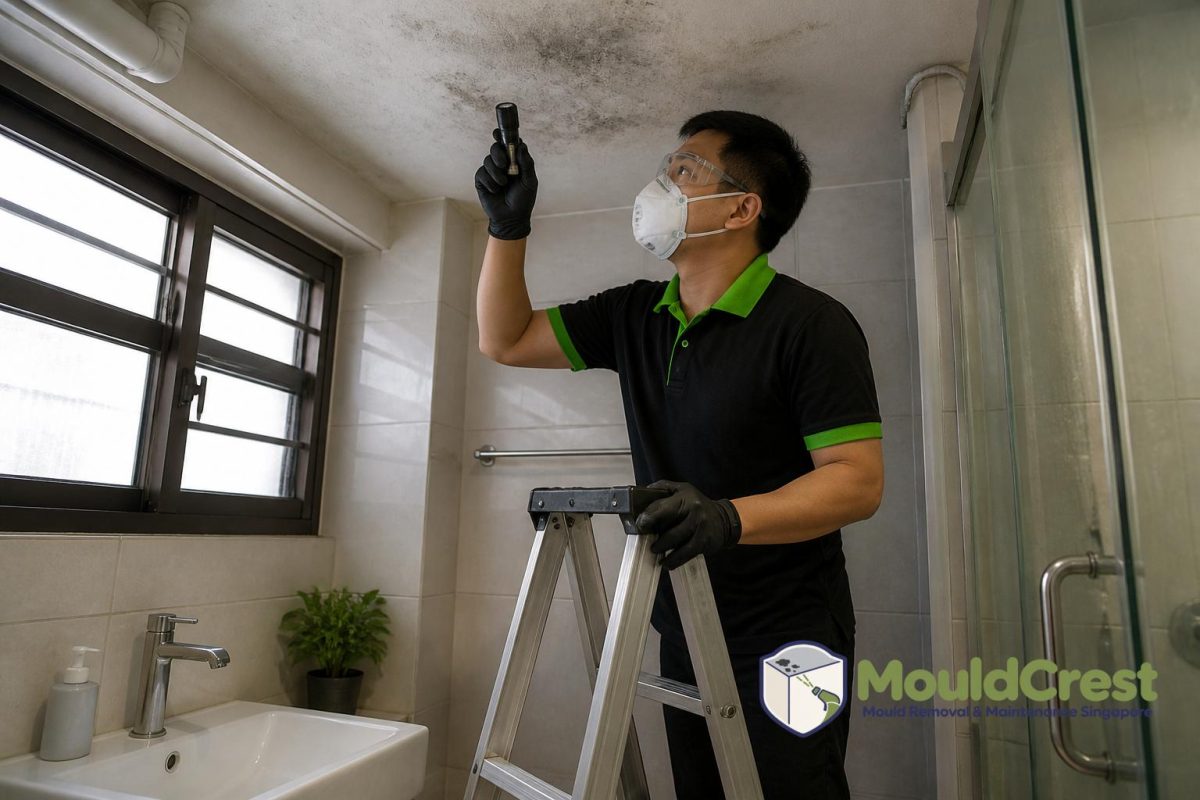
Ceiling mould removal is a separate task from wall work because overhead access is more demanding. Ceilings may require ladders, extended reach tools, more careful masking of surrounding surfaces, and additional protective equipment. The work area often needs to be prepared so dust, droplets, or debris do not fall onto furniture and fittings below.
Ceiling mould often appears near bathrooms, kitchens, air-con routes, or top-floor areas where humidity or condensation may build up. In some homes, poor ventilation or condensation from cold surfaces can contribute. In others, the issue may relate to a leak above the ceiling line. The right approach depends on the surface, the accessibility, and the suspected cause.
Because ceilings are overhead, professional handling is especially important. A careful job should consider worker safety, occupant safety, and the condition of the surface being treated. Distinguishing ceiling mould from wall mould matters because the access method, preparation, and treatment approach are not identical.
How mould mitigation helps reduce recurrence
Mould mitigation is about prevention and control rather than a one-off clean. It focuses on moisture management, condensation control, ventilation, and making the environment less favourable for regrowth. In Singapore, this is often just as important as the removal itself because humidity levels can remain high for much of the year.
Mitigation measures may include:
- improving air circulation in enclosed rooms
- using suitable ventilation in bathrooms, kitchens, and utility areas
- reducing condensation on cold surfaces
- managing leaks or seepage promptly
- keeping furniture slightly away from damp-prone walls
- maintaining air-con systems so drainage and airflow remain in good condition
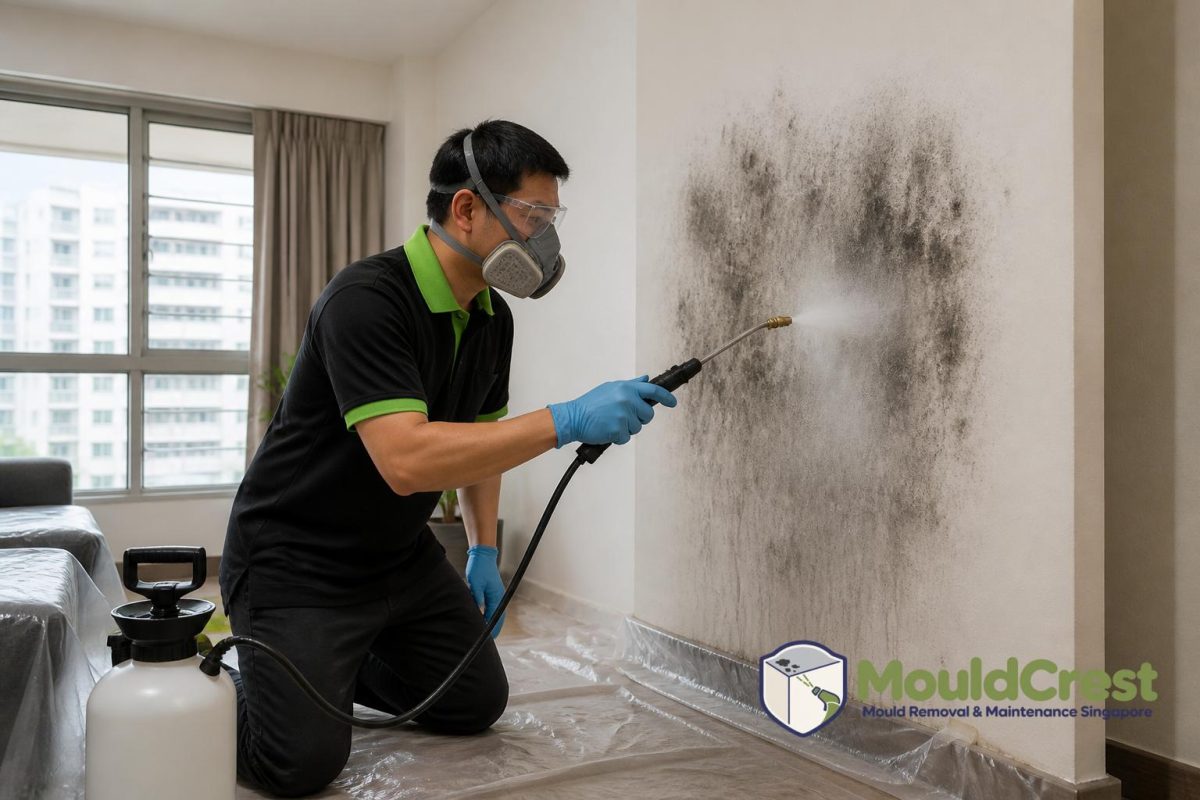
ULV fogging or misting may be used as an additional method in some cases, but it should not be treated as the only solution. It does not replace cleaning, surface treatment, or moisture-source control. If the conditions that caused mould remain in place, regrowth can still occur.
When ventilation fan installation or other trades may be needed
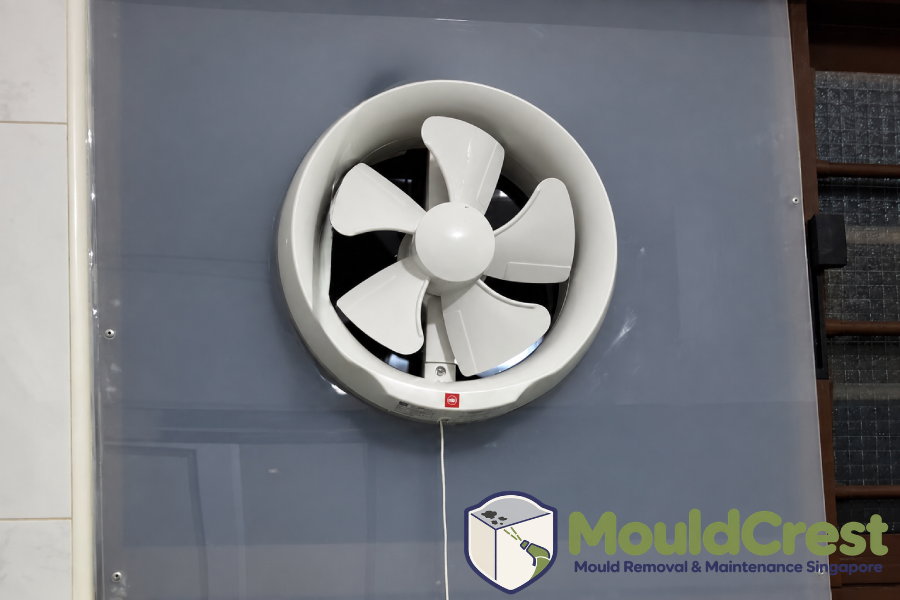
Sometimes mould-related work is not just about cleaning. A room may benefit from ventilation fan installation, especially where airflow is poor and moisture builds up after showering, cooking, or laundry use. This is a separate fitting and electrical task that should be sized and positioned properly for the room. In some cases, a window acrylic panel may be needed to support a suitable fan installation without compromising the window opening.
Other trades may also be relevant, but they should remain distinct from mould removal:
- Plumbing: for leaks, dripping fittings, or drainage issues contributing to dampness
- Electrical services: for safe power connections tied to fan installation or related fittings
- Aircon servicing: for drainage, condensation, and maintenance issues around cooling systems
- Handyman and property maintenance: for sealant touch-ups, minor repairs, and general upkeep
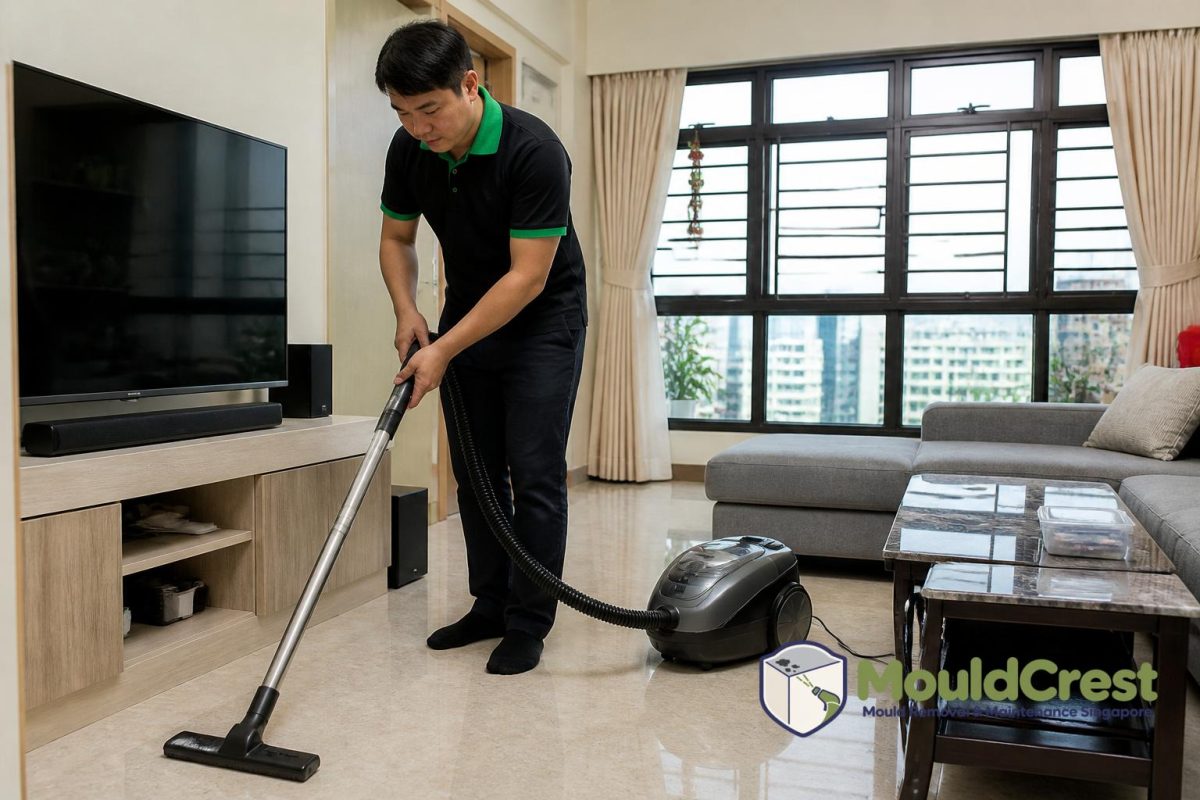
- Cleaning services: for general housekeeping, separate from mould-specific treatment
- Mattress cleaning and sofa cleaning: for upholstery and fabric care, which are different from mould remediation on walls or ceilings
Keeping these services separate helps ensure the right method is used for the right problem. It also avoids overpromising outcomes that one service alone cannot deliver.
What to expect from a proper quote
A sensible mould removal quote in Singapore should explain the scope clearly. It should tell you what is being treated, whether the area is a wall or ceiling, whether the work is limited to an accessible surface, and whether the issue appears linked to moisture or ventilation. If the provider recommends broader remediation, they should explain why the added scope is needed.
Good practice is to expect the following in a quotation or assessment:
- identification of the affected surface and access conditions
- description of the treatment method proposed
- mention of any moisture-related concerns
- separation of mould work from other trades such as plumbing or electrical
- clear explanation of what is included and what is not
Be cautious of pricing that sounds unusually low but does not explain the scope, or of claims that a single spray will solve everything. Mould control is most effective when the visible growth is treated properly and the contributing conditions are addressed with equal care.
To discuss the mould concern covered here, WhatsApp MouldCrest with details of the affected surface and any moisture signs to request an assessment or quotation.
Conclusion
The cost of mould removal in Singapore depends on the size of the affected area, the surface type, access, severity, and whether a moisture source must also be managed. Wall mould removal and ceiling mould removal are different jobs because the access, preparation, and treatment conditions are not the same. If the issue is recurring or more widespread, mould remediation and mould mitigation may be more appropriate than simple surface cleaning alone.
For homeowners, landlords, and businesses, the best way to approach mould is to understand the problem first, then match the service to the condition. A clear assessment, suitable treatment, and practical moisture control usually provide a more reliable result than relying on a single product or quick fix.
Choose MouldCrest Mould Removal & Maintenance Singapore
At MouldCrest Mould Removal & Maintenance Singapore, we offer mould removal services to address mould growth and improve the condition of affected spaces. We provide wall mould removal to treat growth and marks on walls and mould on ceilings can be addressed through our ceiling mould removal service. For a more comprehensive approach, our mould remediation service addresses mould concerns across the affected area. We also offer mould mitigation to help reduce the risk of recurring growth. As airflow is an important part of managing moisture, we provide ventilation fan installation to improve air circulation and help reduce the likelihood of mould growth.
Our services also cover property maintenance, which includes handyman services for repairs and installations, plumbing services for leaking taps and fixture issues, and electrical services for switches, sockets and light fittings. To refresh frequently used furnishings, we offer cleaning services that include mattress cleaning and sofa cleaning to remove accumulated dirt. Visit our blog for helpful insights and browse our completed projects to see our work. WhatsApp us today at +65 8241 0032 to enquire about our services and to discuss your requirements.
Frequently Asked Questions
Is mould removal the same as mould remediation?
No. Mould removal usually refers to treating visible, accessible growth on a surface. Mould remediation is broader and may include scope assessment, treatment of affected materials, and attention to the moisture source contributing to the problem.
Why does ceiling mould often cost more than wall mould removal?
Ceiling work often requires overhead access, more preparation, and additional safety measures. The access and working position are different from a wall, so the labour and setup can be more involved.
Will a spray alone stop mould from coming back?
Not necessarily. A spray or fogging method may be part of the treatment, but recurrence depends on whether the underlying moisture, ventilation, or condensation issue is addressed. Prevention usually requires more than surface treatment alone.