
In Singapore, mould problems often start quietly: a damp corner behind a wardrobe, a ceiling patch near a bathroom, or dark spots along a wall that gets little air movement. Professional mould removal is not just about making the surface look cleaner. It is about assessing the visible affected area, treating it properly, and addressing the moisture conditions that allow mould to return.
For HDB flats, condominiums, landed homes and even small business premises, the right approach depends on where the mould is found, what surface is affected, and whether the issue is linked to condensation, leakage, or poor ventilation. That is why mould removal, mould remediation, wall mould removal, ceiling mould removal and mould mitigation are related but not identical services.
What professional mould removal actually covers
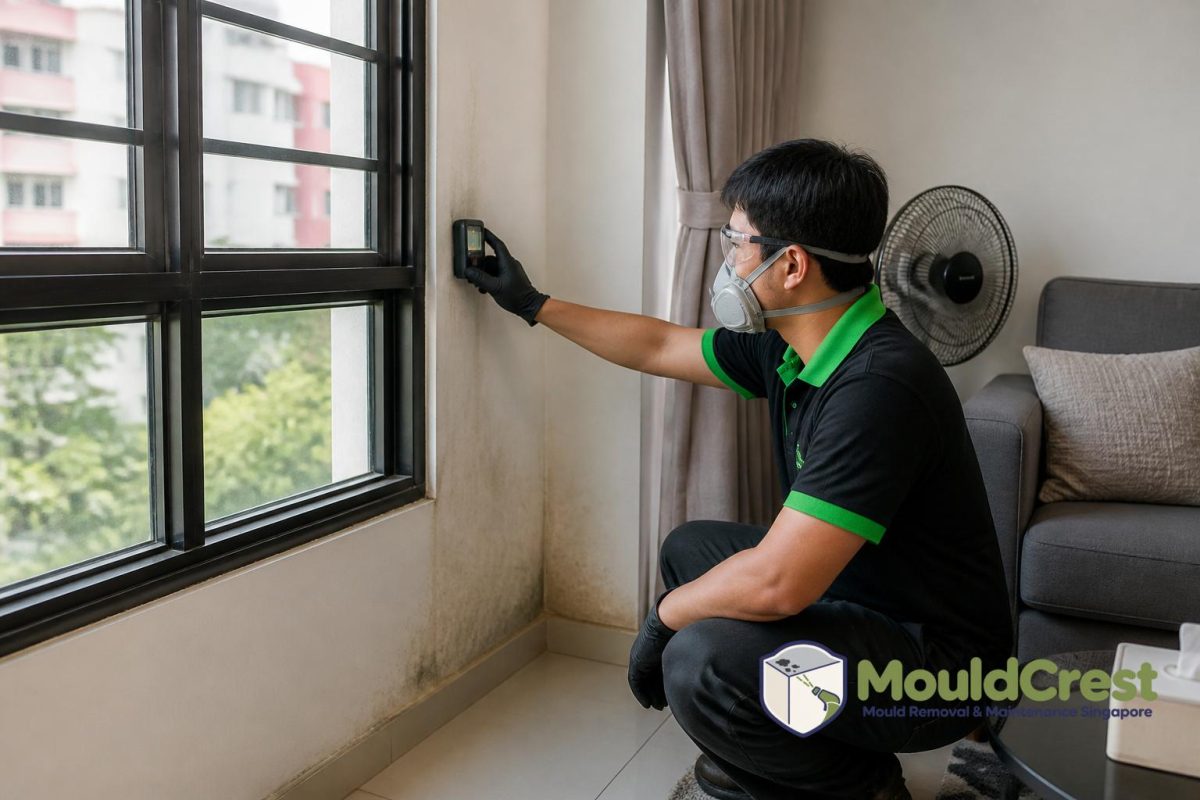
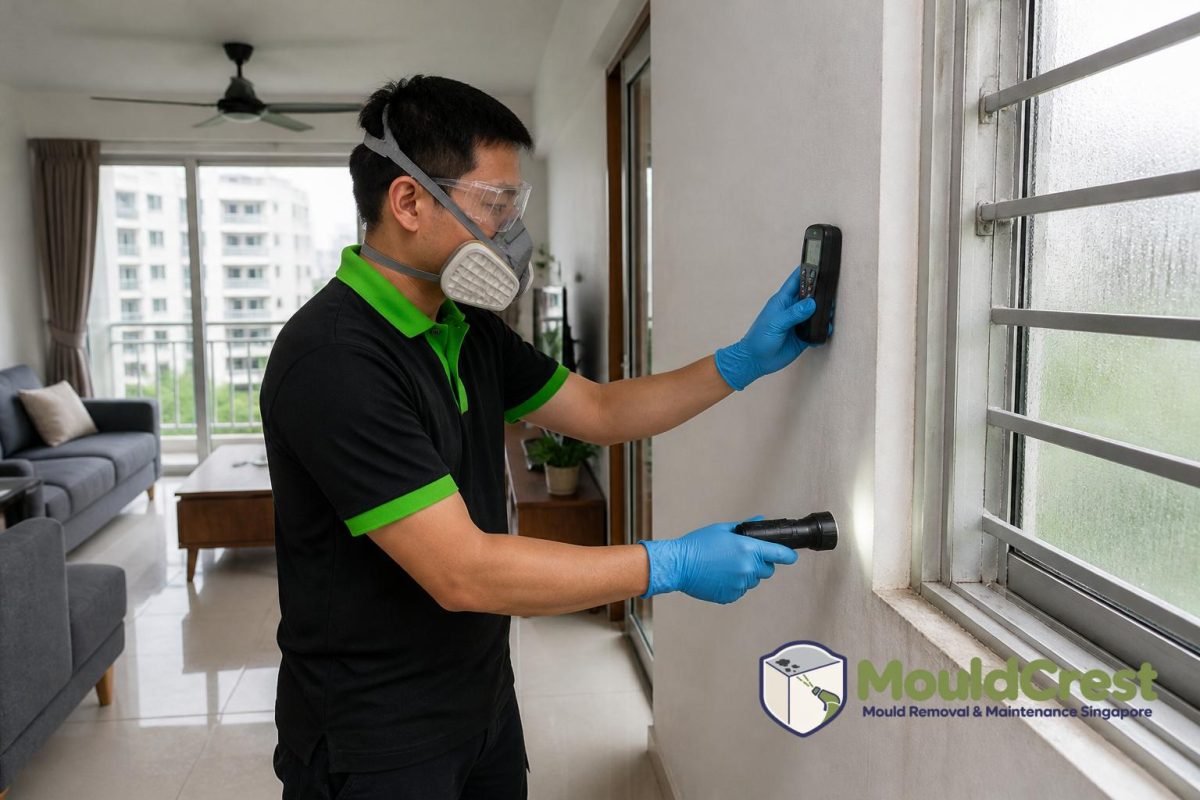
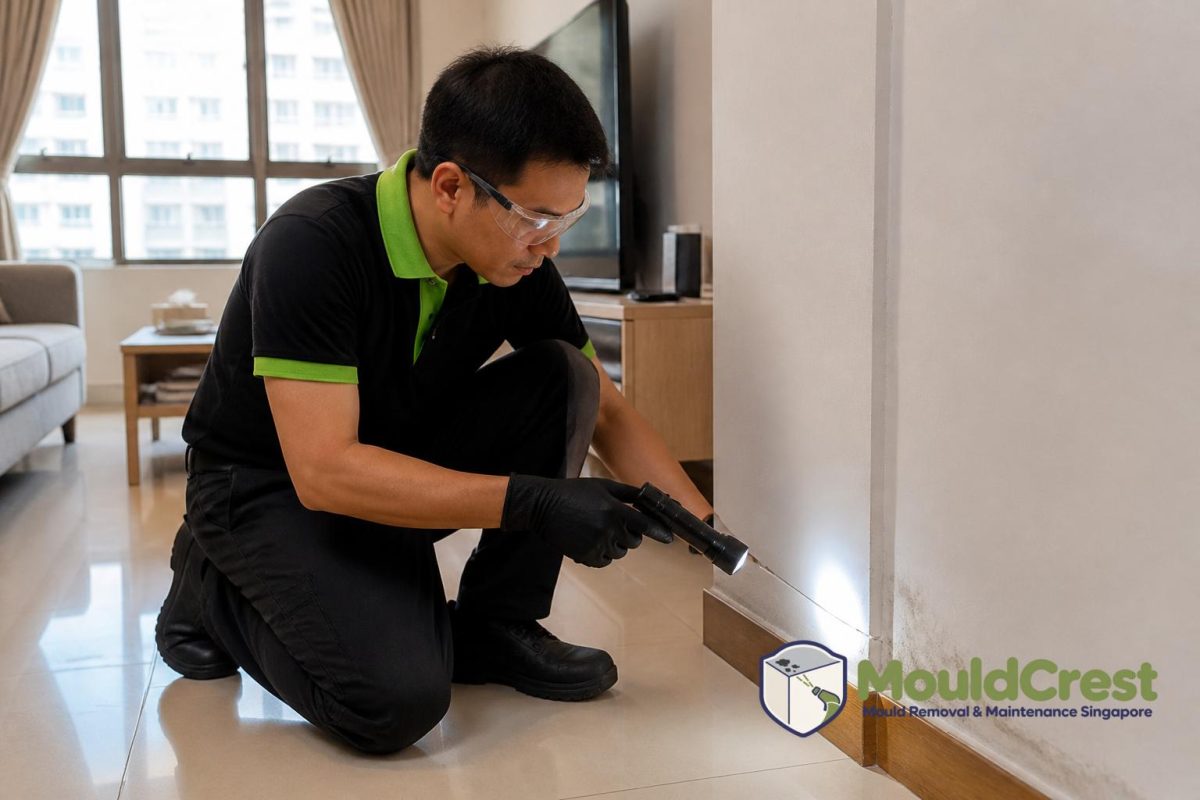
Professional mould removal focuses on accessible, visible growth on surfaces such as painted walls, ceilings, plaster, tiles, sealant lines and other reachable materials. The first step is an assessment of the affected area so the technician can understand the extent of the visible growth and the surface condition.
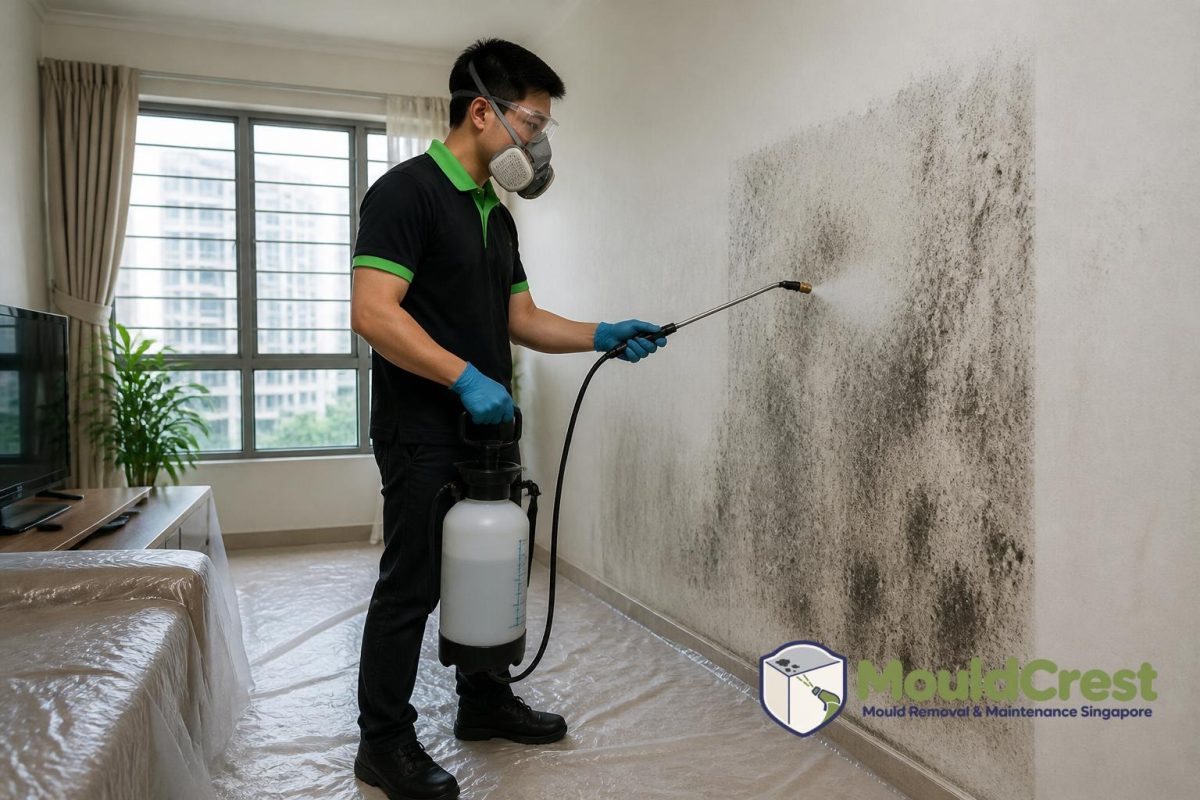
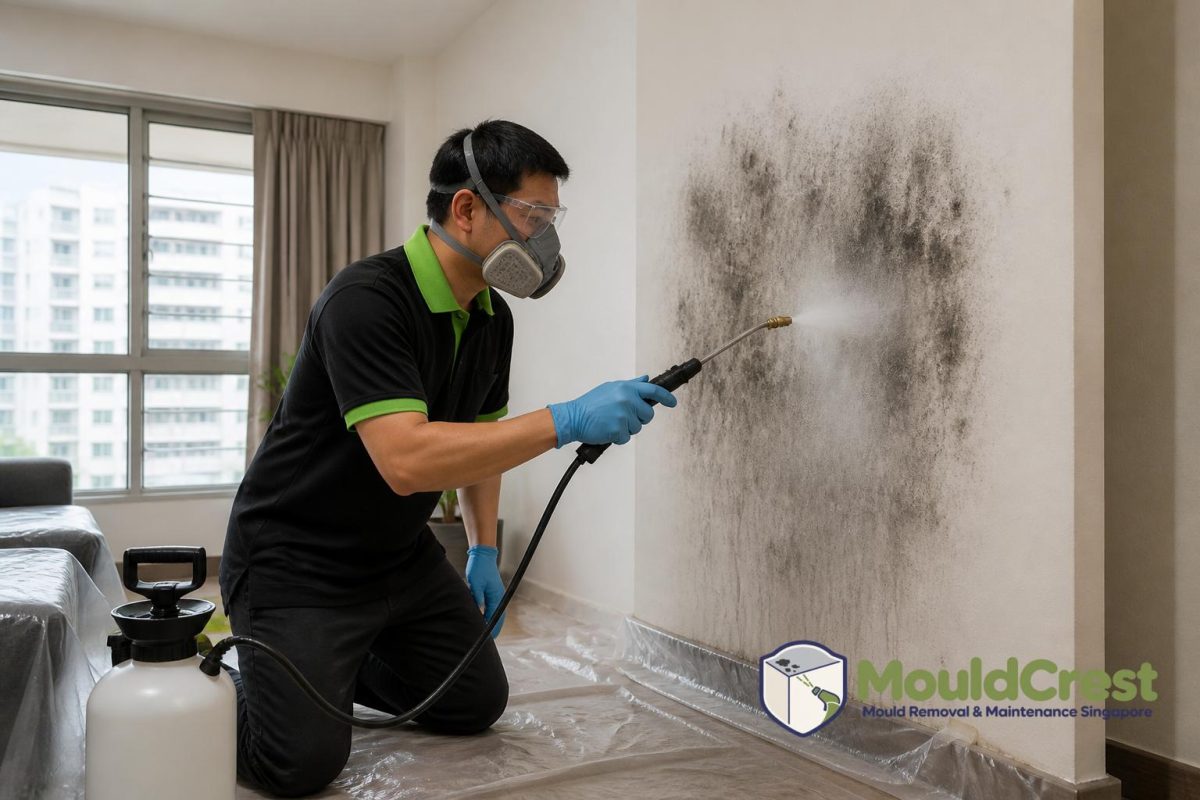
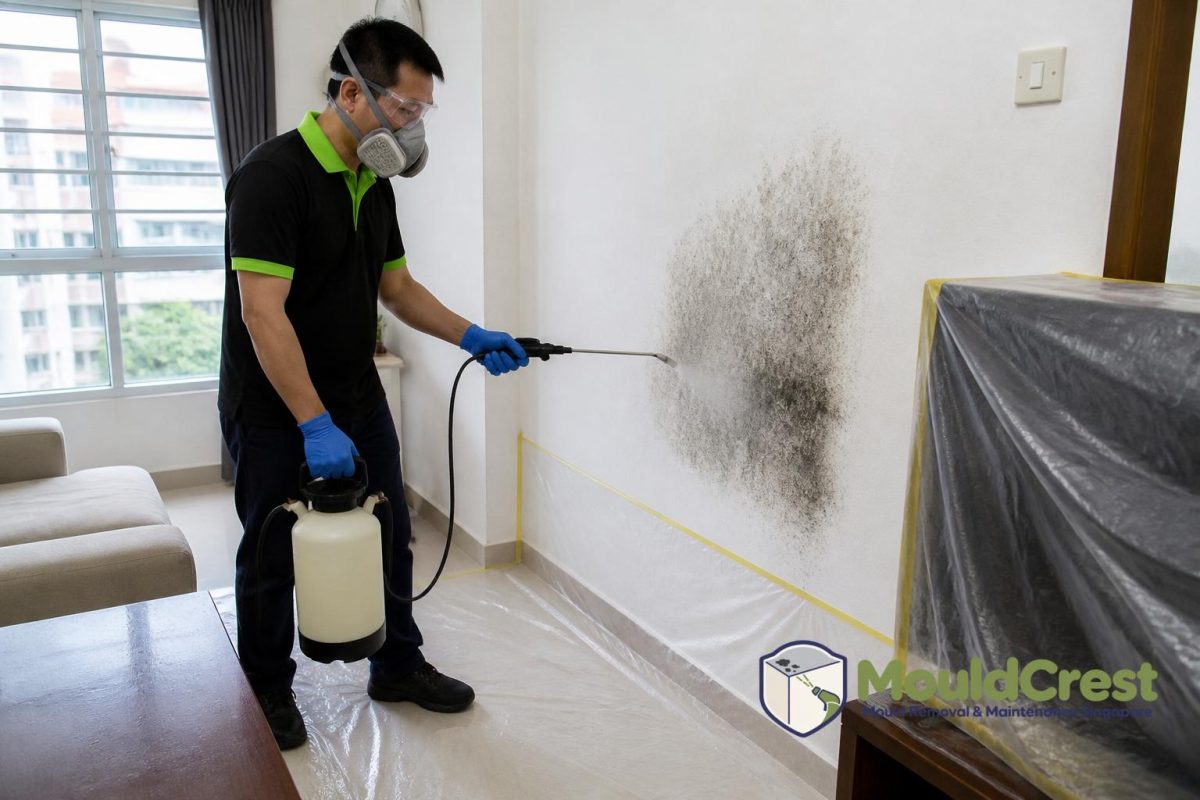
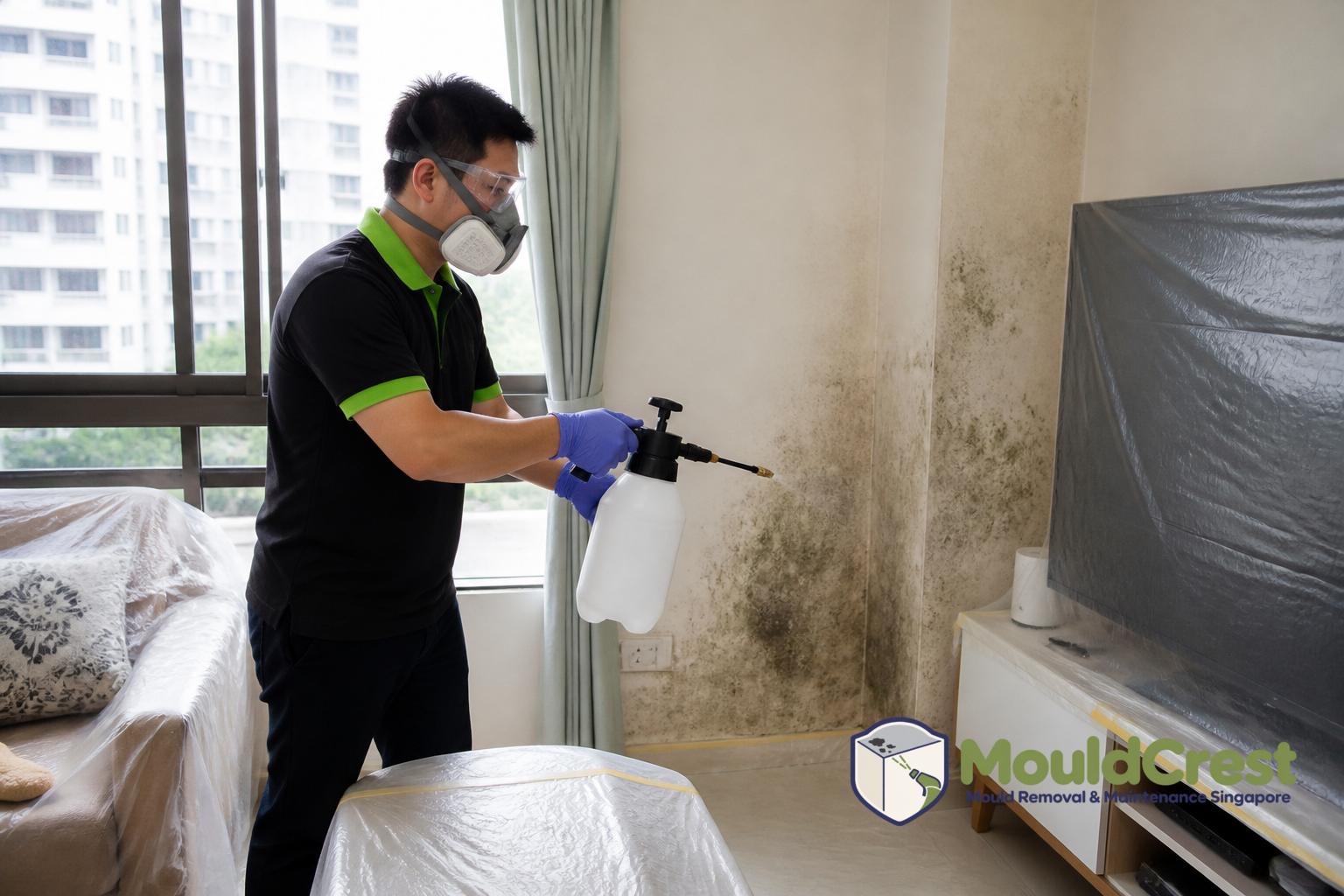
After that, the treatment is selected based on the material and the type of surface staining or growth observed. This may include careful cleaning, surface treatment and containment of the work area where needed. The aim is to remove visible mould from the accessible surface without damaging the surrounding finish unnecessarily.
- Inspect the visible affected area and note surface condition
- Check whether the mould is on paint, plaster, grout, sealant or another reachable surface
- Use the appropriate cleaning and treatment method for that surface
- Review likely moisture contributors such as condensation, leaks or poor airflow
It is important not to assume that one spray or one fogging treatment will prevent mould from returning. Surface treatment can help with visible growth, but long-term results depend on controlling moisture and airflow conditions.
How mould remediation is different from simple removal
Mould remediation is broader than a straightforward surface clean. It usually begins with a scope assessment to determine how much of the affected area is visible, what materials are involved, and whether the mould seems to be limited to the surface or linked to a moisture issue that should be addressed.
In practical terms, remediation may involve more detailed preparation, protective measures, cleaning of affected surfaces, and advice on managing the source of dampness. If certain materials are deteriorated or too heavily affected for surface treatment alone, the scope may need to be adjusted rather than forcing a one-method solution.
This is especially relevant in Singapore homes where repeated condensation can appear around bathrooms, laundry areas, external walls or air-conditioned rooms. A proper remediation plan should not exaggerate what can be achieved by cleaning alone. It should combine treatment of the visible issue with sensible moisture-source management.
Wall mould removal: why vertical surfaces need a specific approach
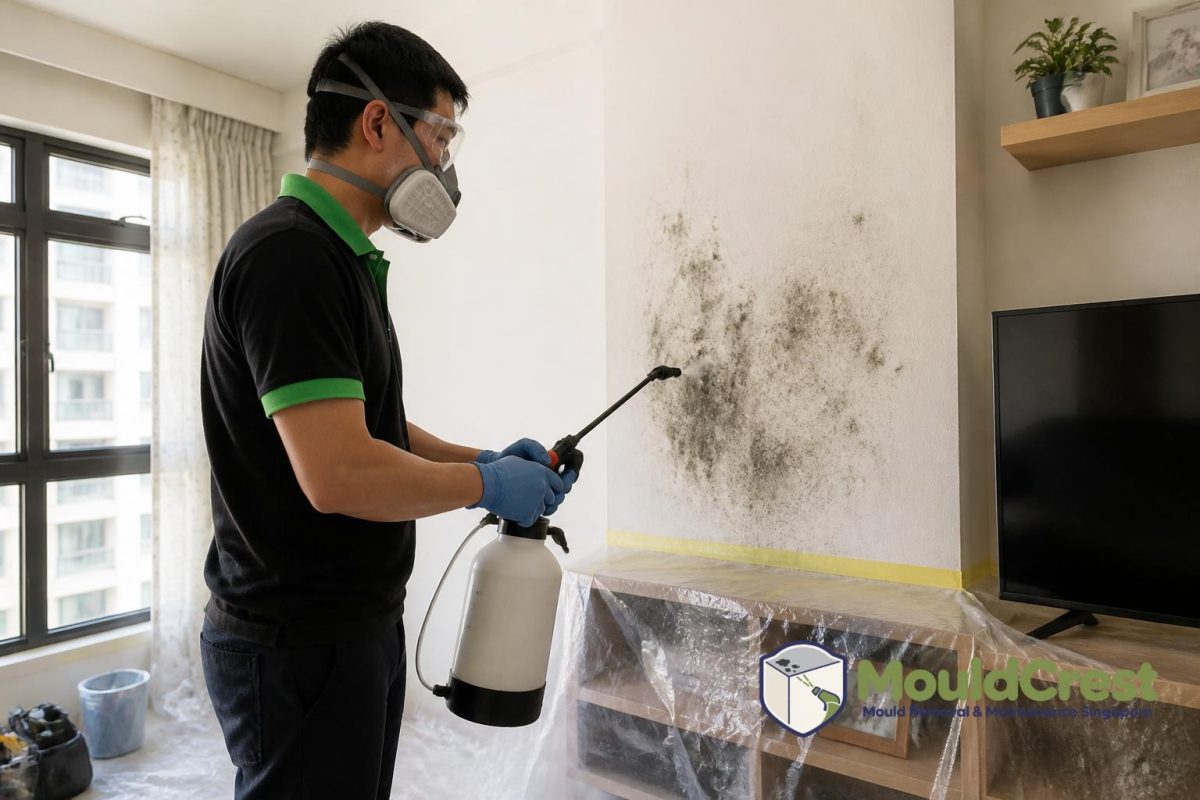
Wall mould removal is not the same as treating other areas. Painted or plastered walls can be affected by condensation, slow leaks, furniture blocking airflow, or moisture entering from an adjacent space. Because walls are vertical surfaces, the pattern of growth and the access needed for treatment can differ from that of ceilings or floors.
Before treatment, the wall condition should be checked carefully. Flaking paint, soft plaster, damp staining or bubbling finish may affect how the surface is handled. On suitable surfaces, professional wall mould removal may involve cleaning the visible growth and then considering whether repainting or follow-up surface restoration is needed.
However, wall treatment alone should not be mistaken for full prevention. If the underlying cause is poor ventilation, repeated condensation or a moisture source behind cabinetry or within the wall line, the mould may return unless the conditions are changed.
Ceiling mould removal: access, preparation and moisture factors
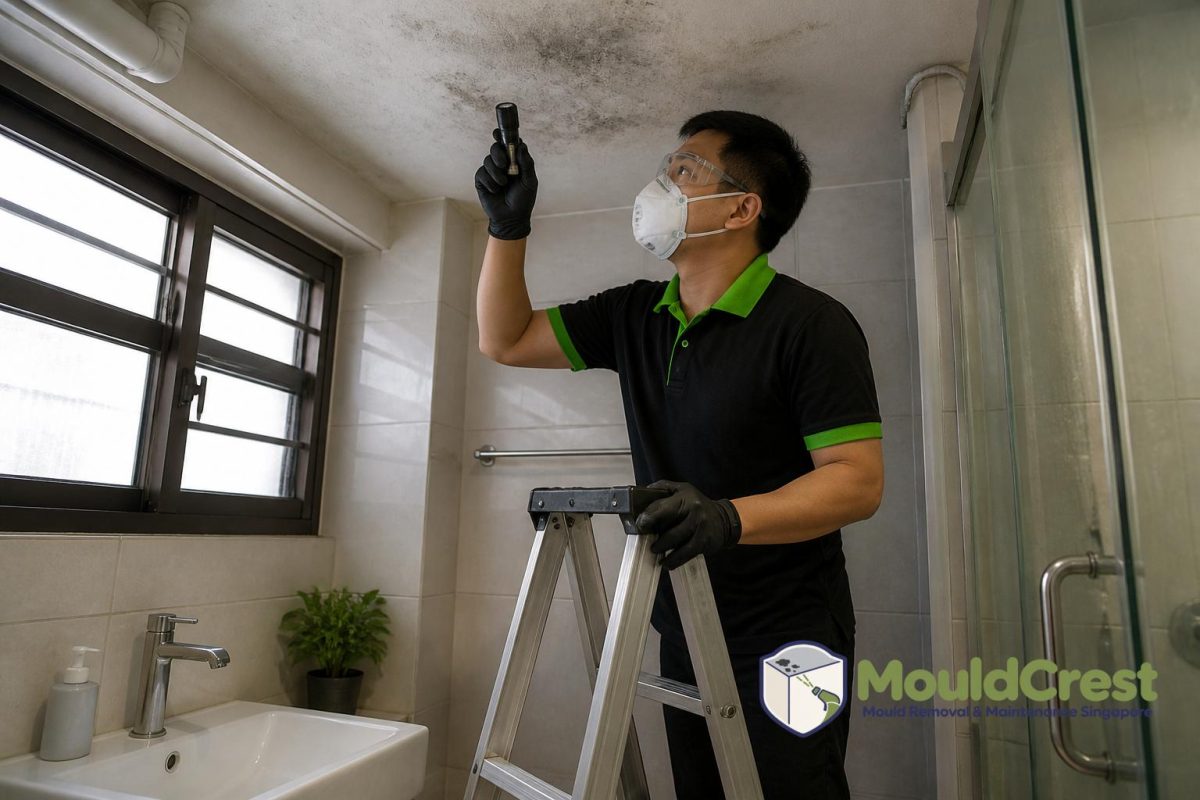
Ceiling mould removal requires different preparation from wall work because the affected area is overhead. That means safe access, proper setup and personal protective equipment are more important, particularly where the surface is high, awkwardly positioned or close to lighting points, fans or air-conditioning features.
Ceiling mould is often linked to condensation, roof or upper-level moisture, bathroom humidity, or poor ventilation in enclosed spaces. In Singapore homes, ceilings in toilets, kitchens and service areas are common places where these conditions show up. The treatment approach should consider both the visible surface and the moisture pattern that led to the growth.
Ceiling work should not be treated as merely “wall mould on a higher surface”. Overhead access, falling debris risk and the need to protect adjoining fixtures can make the job more involved. A careful inspection and safe preparation are part of the process.
Mould mitigation: preventing recurrence through moisture control
Mould mitigation is about reducing the conditions that support mould growth. This includes moisture management, condensation control and improved ventilation. It is not a one-off cosmetic fix. The goal is to make the environment less favourable for regrowth.
In Singapore, indoor humidity can be high for much of the year, and air-conditioned rooms can create condensation on cooler surfaces. Mitigation may therefore involve adjusting airflow, reducing trapped moisture, and improving the way wet areas dry out after use. In some cases, a ventilation fan installation may form part of the solution.
- Improve airflow in enclosed wet areas
- Reduce condensation on cold surfaces
- Keep problem areas dry after showering or cleaning
- Address visible moisture sources rather than relying only on surface treatment
- Use fogging or misting only as an additional method, not the sole solution
Fogging or misting may be used alongside other methods in some situations, but it should never be presented as a long-term guarantee against recurrence. Sustainable mitigation always depends on moisture control.
When ventilation fan installation helps
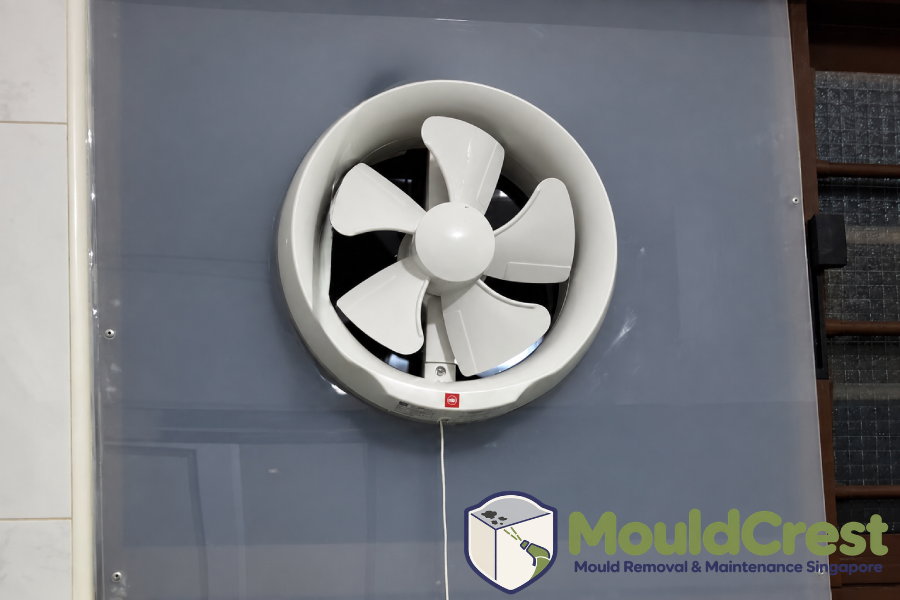
A ventilation fan can help in spaces where stagnant air and moisture build-up are part of the problem, such as bathrooms, laundry areas or enclosed utility zones. Good fan sizing and correct location matter, because a fan that is poorly matched to the space or placed badly will not move air effectively.
In some homes, an acrylic window panel may be used to support a fan installation where appropriate. Safe electrical installation is also essential, and the work should be handled according to the requirements of the site and the electrical setup involved. This is a separate task from mould cleaning itself, even if it supports mould mitigation.
It is best to treat ventilation as part of the overall moisture-management plan rather than as a standalone cure. A fan can help reduce humidity build-up, but it does not replace proper assessment of leaks, seepage or recurring condensation.
How related services differ from mould work
Some homeowners look for a single contractor to handle mould and other maintenance concerns, but the trades should remain distinct. Property maintenance covers broader upkeep issues. Handyman work may include minor repairs or fittings. Plumbing addresses water supply and drainage issues. Electrical services involve wiring, fixtures and power-related tasks. Aircon servicing focuses on the cooling system and its performance, which can affect indoor humidity but is not a mould treatment in itself.
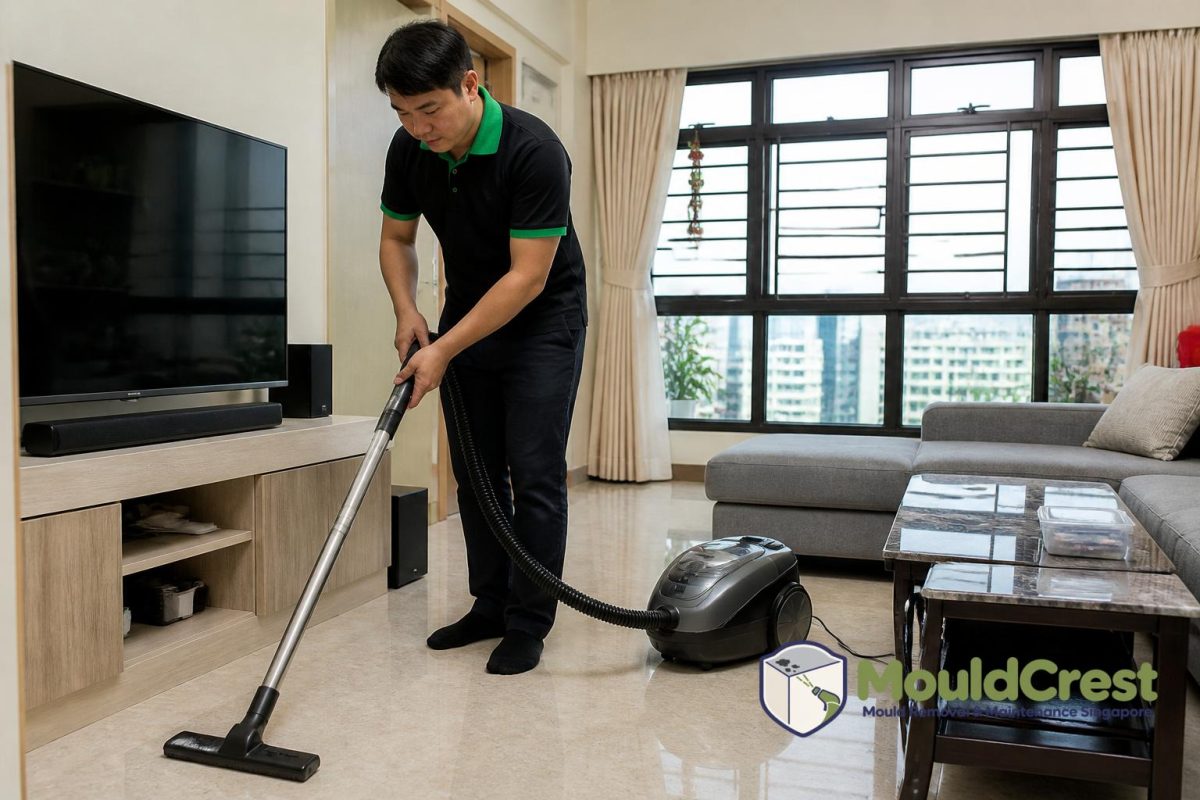
Cleaning services, mattress cleaning and sofa cleaning are also separate from mould removal. These services may help with general hygiene or surface freshness, but they do not replace proper mould assessment or moisture-source management when visible mould is present on walls, ceilings or other building surfaces.
- Property maintenance: general upkeep and repairs
- Handyman: small practical fixes and installations
- Plumbing: leaks, drainage and water-related faults
- Electrical services: safe work on electrical points and fittings
- Aircon servicing: system cleaning and performance maintenance
- Cleaning services: general cleaning tasks
- Mattress cleaning and sofa cleaning: fabric and upholstery care
What homeowners should look for before treatment
If you are arranging mould work in an HDB flat, condominium or landed property, it helps to identify where the problem is appearing and whether it keeps coming back after cleaning. Repeated mould on the same wall or ceiling often suggests an ongoing moisture issue, not just a dirty surface.
You do not need to diagnose the cause yourself, but you can note useful details such as whether the area is near a bathroom, external wall, aircon outlet, window, wardrobe or service yard. This helps the professional decide whether the work is simple surface treatment or a wider remediation plan.
A careful approach is usually more effective than a rushed one. The right contractor should explain what is visible, what treatment is appropriate for that surface, and whether further moisture management is needed.
To discuss the mould concern covered here, WhatsApp MouldCrest with details of the affected surface and any moisture signs to request an assessment or quotation.
Conclusion
Professional mould removal for Singapore homes is best understood as a process, not a single product or spray. It starts with assessing the visible affected surface, then using the correct treatment for walls, ceilings or other reachable areas, and finally dealing with the moisture conditions that encourage regrowth.
Whether the issue is limited to a painted wall, an overhead ceiling patch, or a broader damp problem needing remediation, the most practical approach is one that treats the surface properly and supports long-term mould mitigation through better ventilation and moisture control.
Choose MouldCrest Mould Removal & Maintenance Singapore
At MouldCrest Mould Removal & Maintenance Singapore, we provide mould removal to treat affected surfaces and restore their appearance. Our wall mould removal service addresses growth and marks on walls. For mould on ceilings, we offer ceiling mould removal. We also provide mould remediation for a more comprehensive approach to affected areas. To help manage the risk of mould returning, our mould mitigation service focuses on the conditions that encourage growth. We offer ventilation fan installation to improve airflow and help reduce moisture build-up. Our services also cover property maintenance, including handyman services for various repairs and installations, plumbing services to address plumbing issues, and electrical services for different electrical fittings. We also provide cleaning services such as mattress cleaning and sofa cleaning to freshen frequently used furnishings. Explore our blog for practical information and browse our completed projects to see our work. WhatsApp us today at +65 8241 0032 to enquire about our services and discuss your needs.
Frequently Asked Questions
Is mould removal the same as mould remediation?
Not exactly. Mould removal usually refers to treating visible mould on accessible surfaces. Mould remediation is broader and may include scope assessment, treatment of affected materials, and steps to manage the moisture source that contributed to the problem.
Why does mould keep returning on the same wall or ceiling?
Recurring mould usually means the underlying moisture condition has not been resolved. Common causes in Singapore homes include condensation, poor ventilation, slow leaks, or humidity trapped in enclosed spaces. Surface cleaning alone may not be enough.
Can ventilation fan installation help prevent mould?
A properly selected and installed fan can help reduce moisture build-up in the right space, especially in bathrooms or enclosed wet areas. However, it is only one part of mould mitigation and should be combined with moisture control and proper treatment of visible mould.