
When a property in Singapore shows signs of mould, the right response depends on where it is growing, what material is affected, and whether there is an ongoing moisture problem behind it. What does mould remediation involve for a property in Singapore? In practical terms, it is not just about cleaning a visible patch. It usually involves assessing the affected area, identifying the accessible materials involved, treating the mould appropriately, and addressing the source of moisture so the issue does not return too quickly.
For HDB flats, condominiums, landed homes and commercial premises, mould often appears in places that stay damp or poorly ventilated. Bathrooms, kitchen ceilings, bedroom wardrobes, external walls, aircon-adjacent areas and window edges are common examples. A proper approach considers both the surface condition and the building context, rather than assuming every mould spot can be handled in exactly the same way.
What mould remediation means in a Singapore property
Mould remediation is broader than simple mould removal. Mould removal usually refers to assessing the visible, accessible growth on a surface and applying the appropriate treatment to that surface. Remediation goes further by looking at the extent of the issue, the materials affected, and the likely moisture conditions contributing to it.
In Singapore, higher humidity, condensation, air-conditioning use, and limited airflow in certain rooms can all contribute to repeated mould growth. A remediation job may therefore include:
- Inspecting visible mould on accessible surfaces
- Identifying whether the affected material is painted, porous, or non-porous
- Removing or treating affected surface growth using suitable methods
- Checking for signs of dampness, leaks, condensation or poor ventilation
- Recommending moisture-control steps to reduce recurrence
This is why spraying a product alone is rarely enough on its own. It may help treat visible growth, but it does not by itself solve the reason mould developed in the first place.
How assessment is carried out before treatment
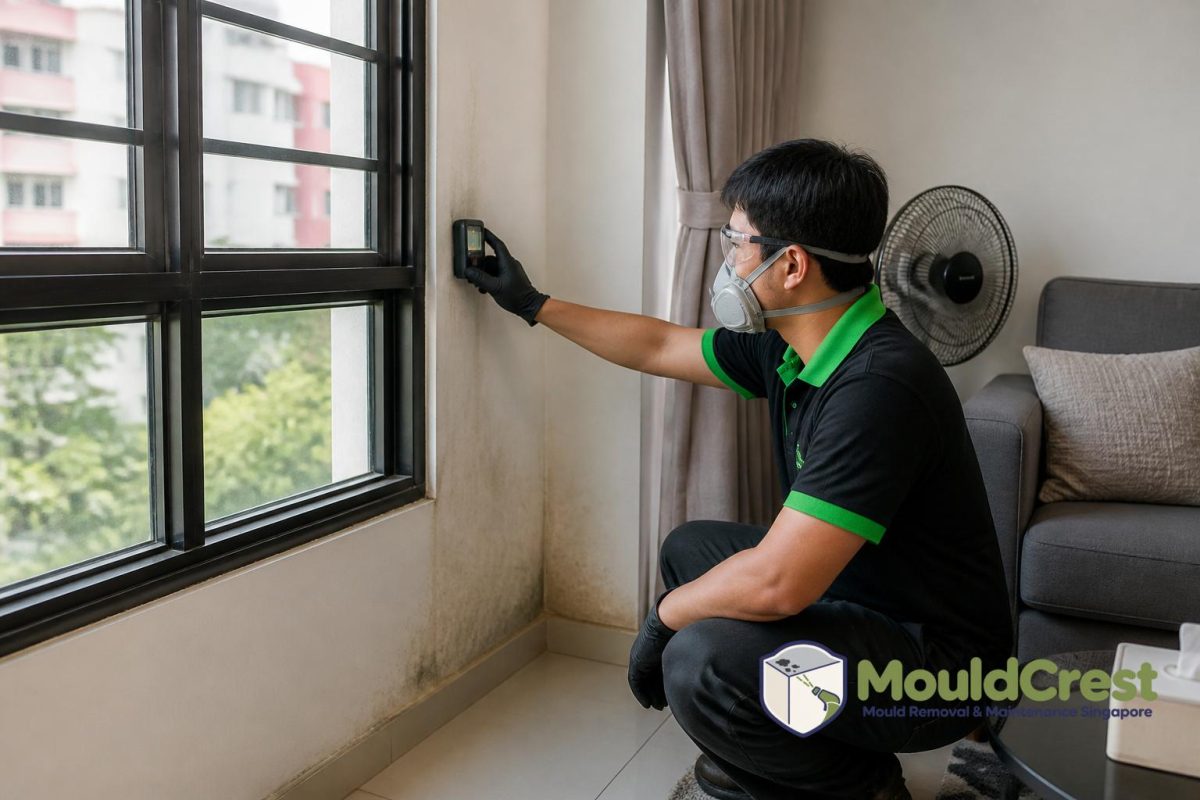
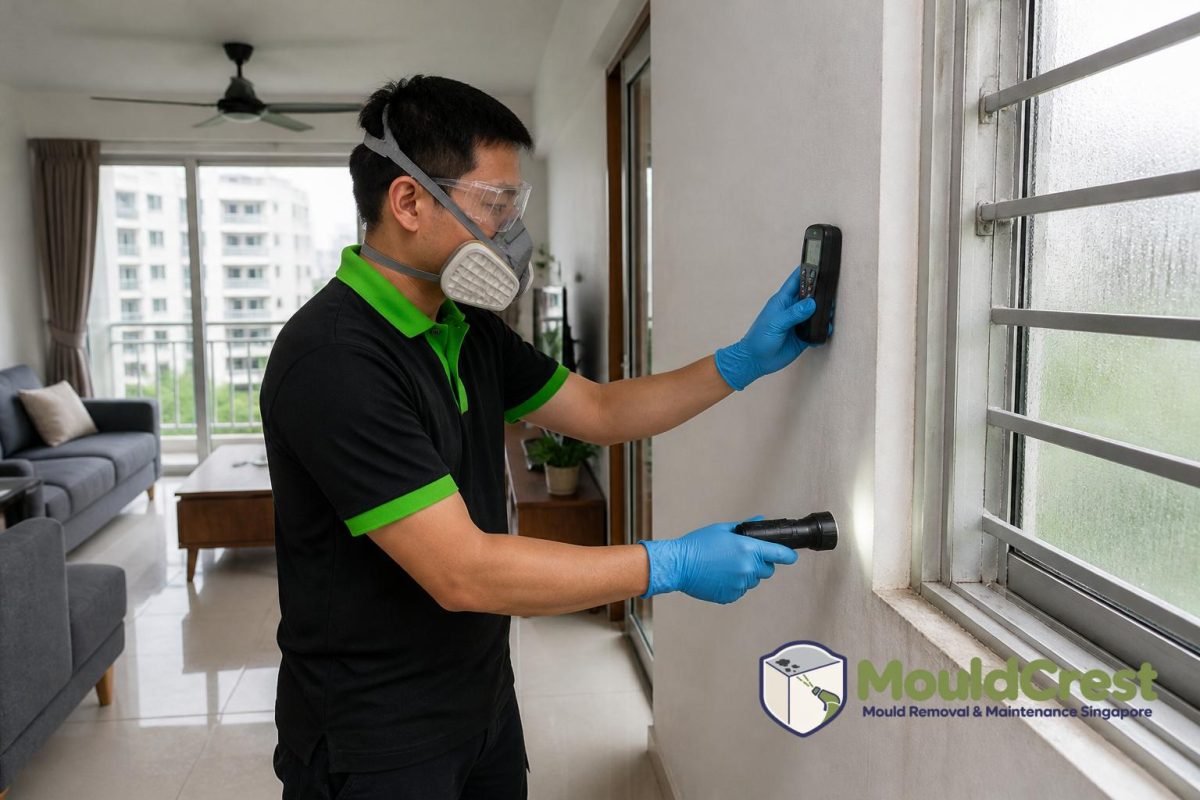
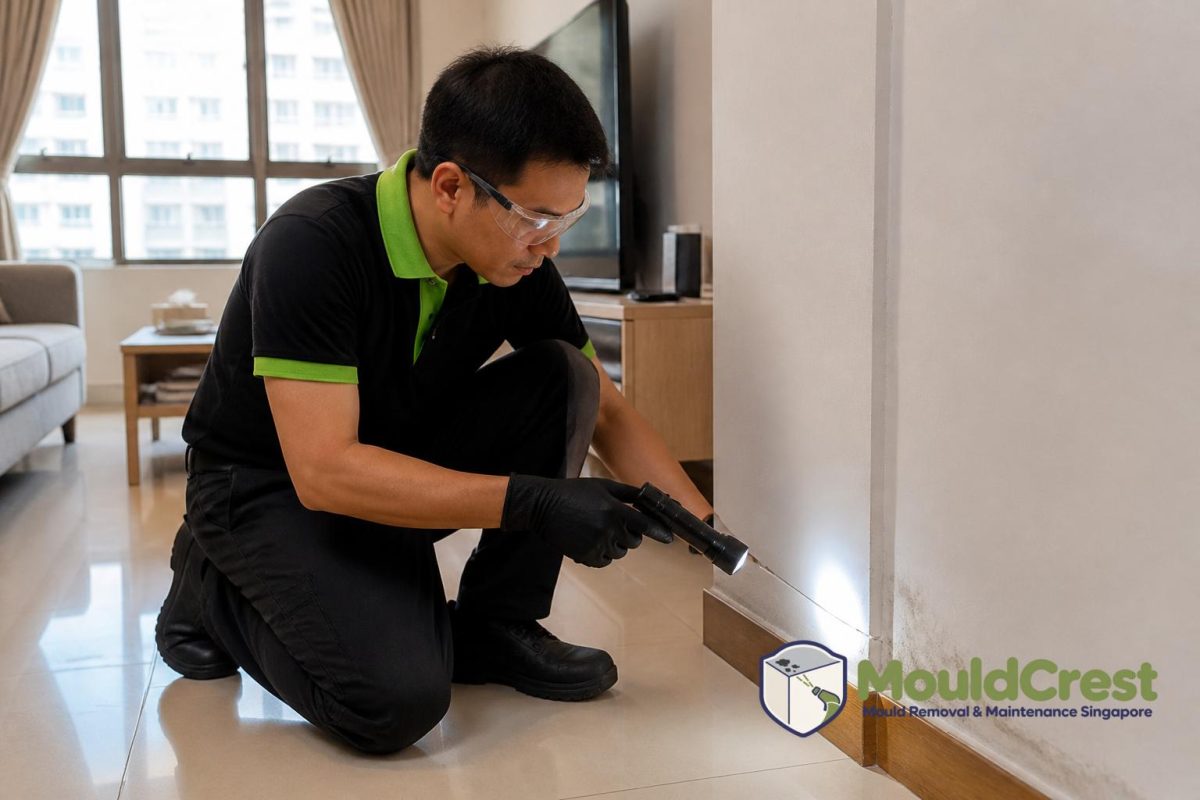
A sensible mould assessment begins with what can be seen and safely accessed. The technician will usually check the type of surface, the spread of visible growth, and whether the area is suitable for surface treatment or whether some materials may need more careful handling.
For example, mould on a painted wall surface is different from mould on a ceiling board, a wardrobe panel, or a silicone edge near a shower. Some surfaces can be cleaned and treated effectively if the growth is limited to the finish. Others may require replacement or further investigation if the material itself has absorbed moisture.
Assessment also matters because the source may be nearby but not immediately obvious. Condensation on cold surfaces, water seepage from external walls, plumbing leaks, or trapped humidity in closed rooms can all create similar visible symptoms.
Wall mould removal: why vertical surfaces need specific handling
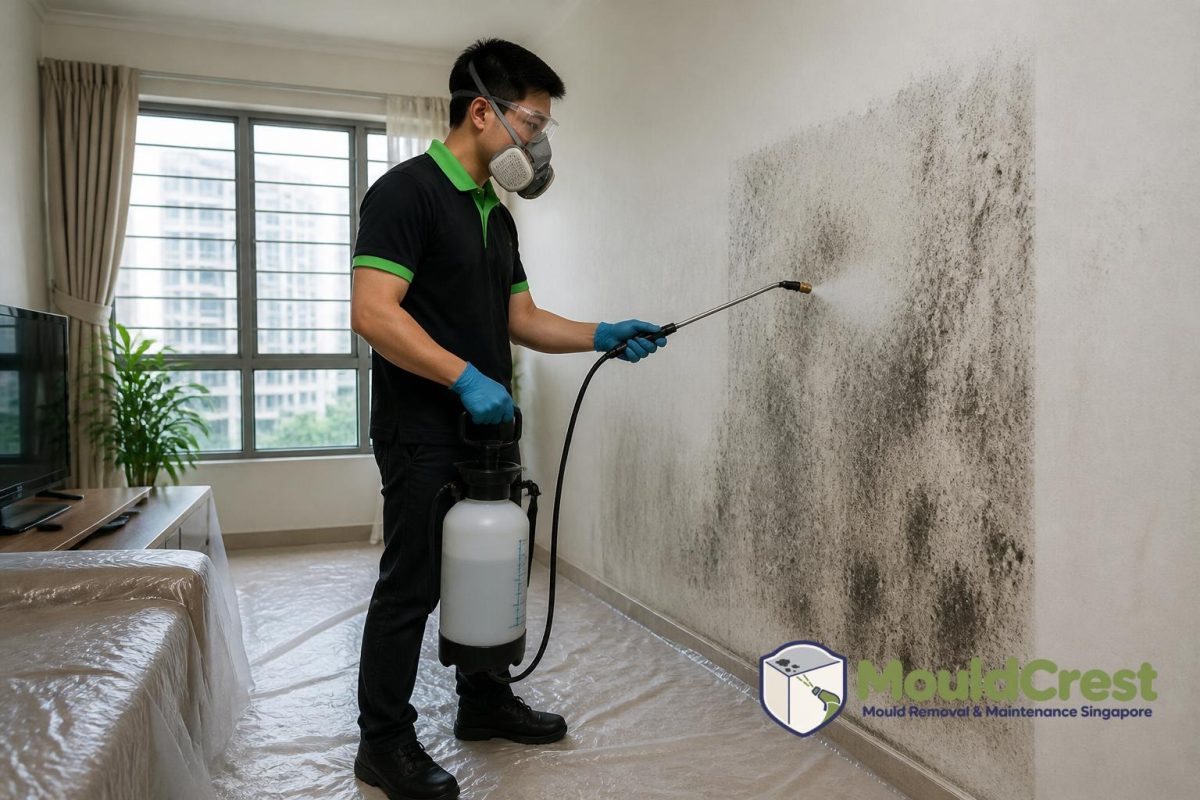
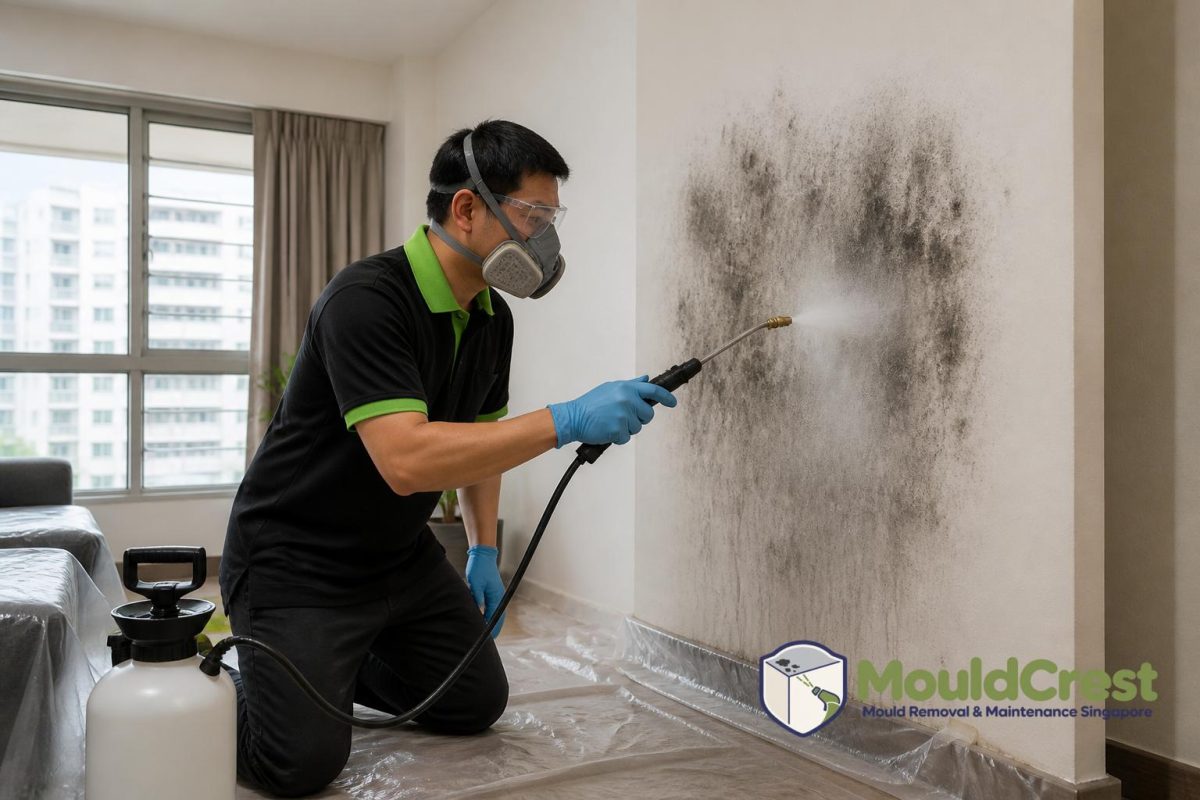
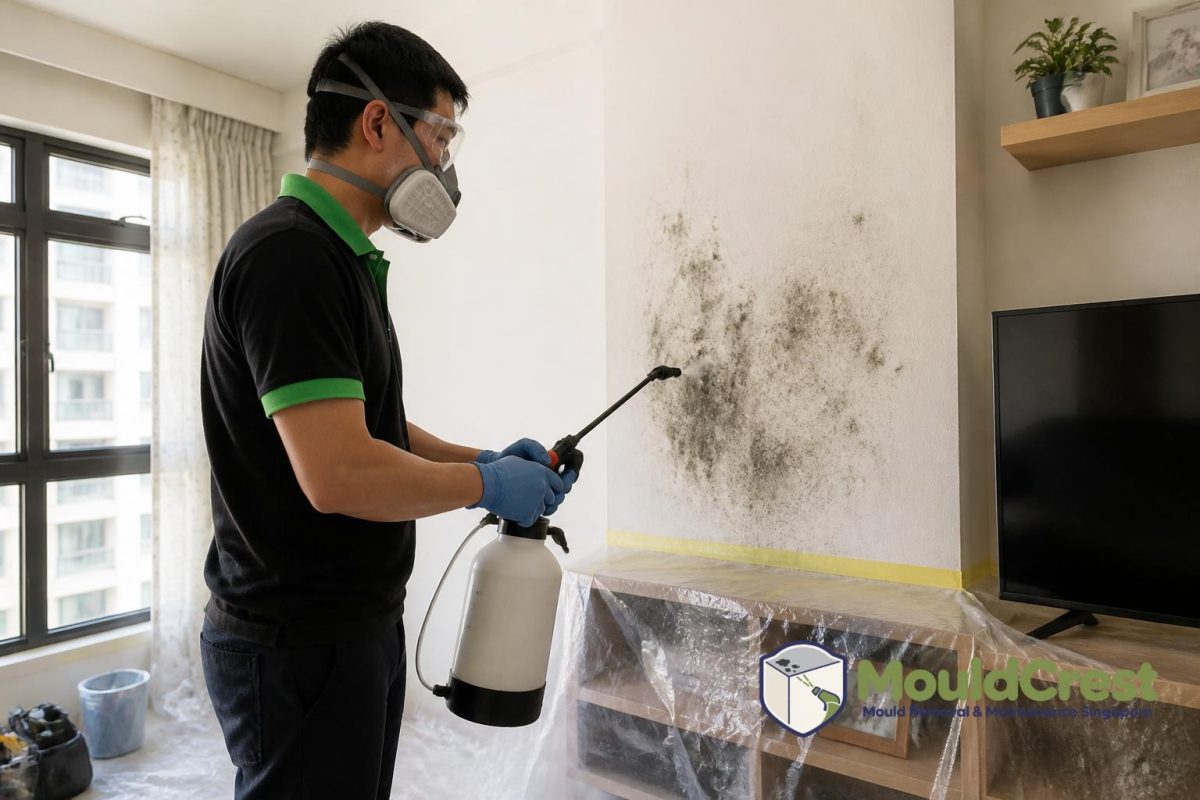
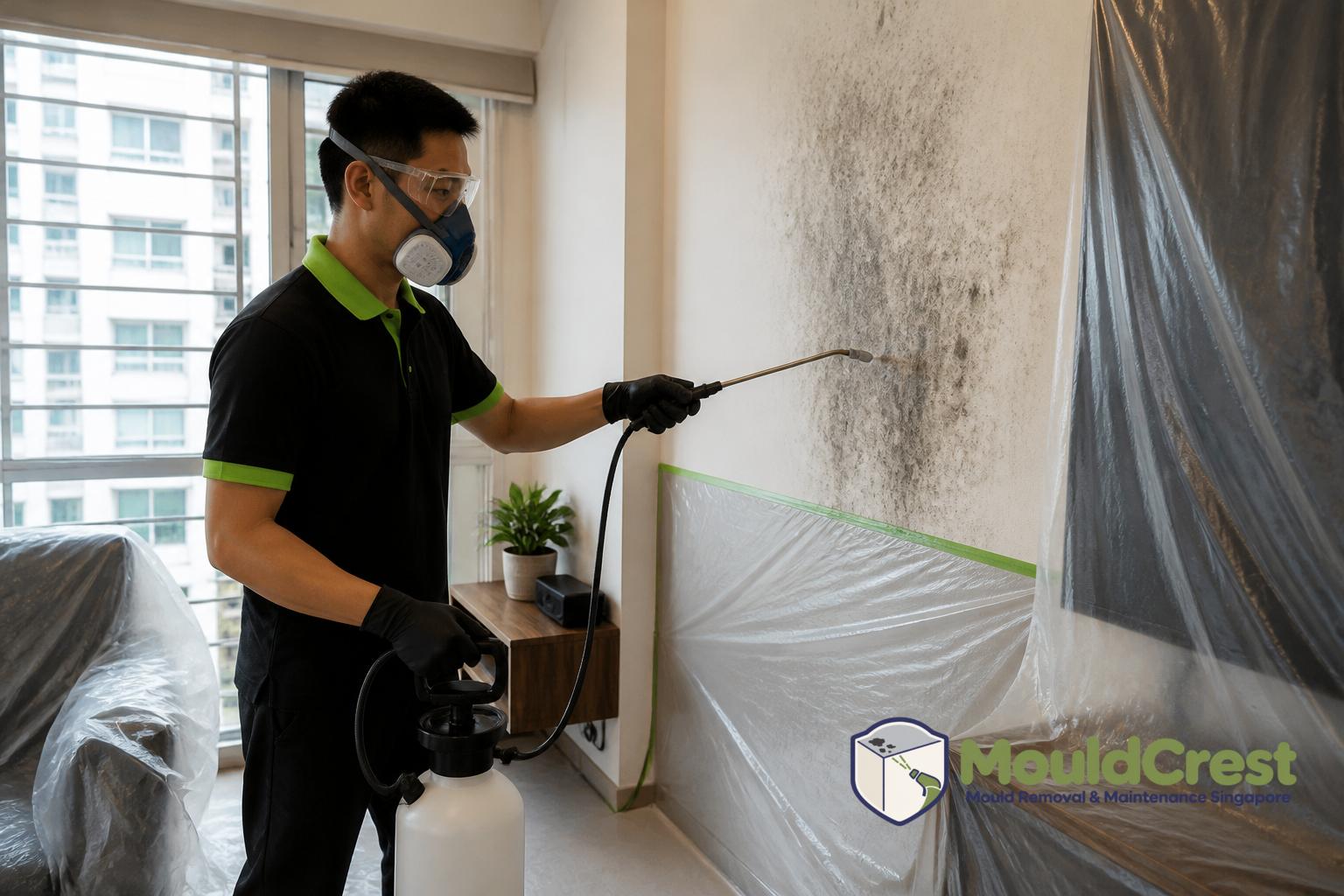
Wall mould removal focuses on vertical plaster or painted wall conditions. Walls often show mould as patchy spotting, streaking, or a powdery film near corners, skirting lines, wardrobes, or external-facing sections. The treatment method depends on whether the paint is intact, whether the plaster is stable, and whether moisture is still affecting the wall.
On a stable painted wall, surface treatment may be suitable once the cause of moisture is considered. However, if the wall has bubbling paint, soft patches, staining, or repeated return of growth, the problem may be linked to damp within or behind the wall. In that case, cleaning alone is not enough.
Good wall mould removal should therefore include:
- Checking the extent of visible growth on the painted or plastered surface
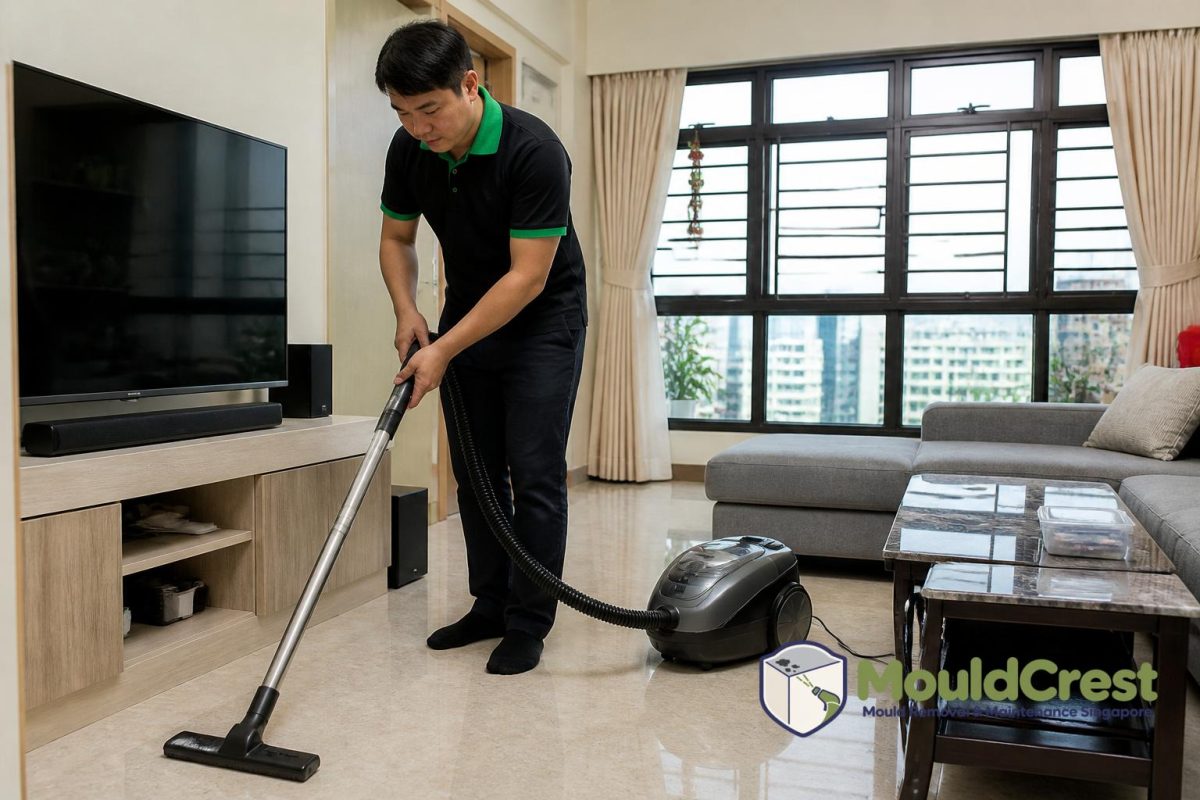
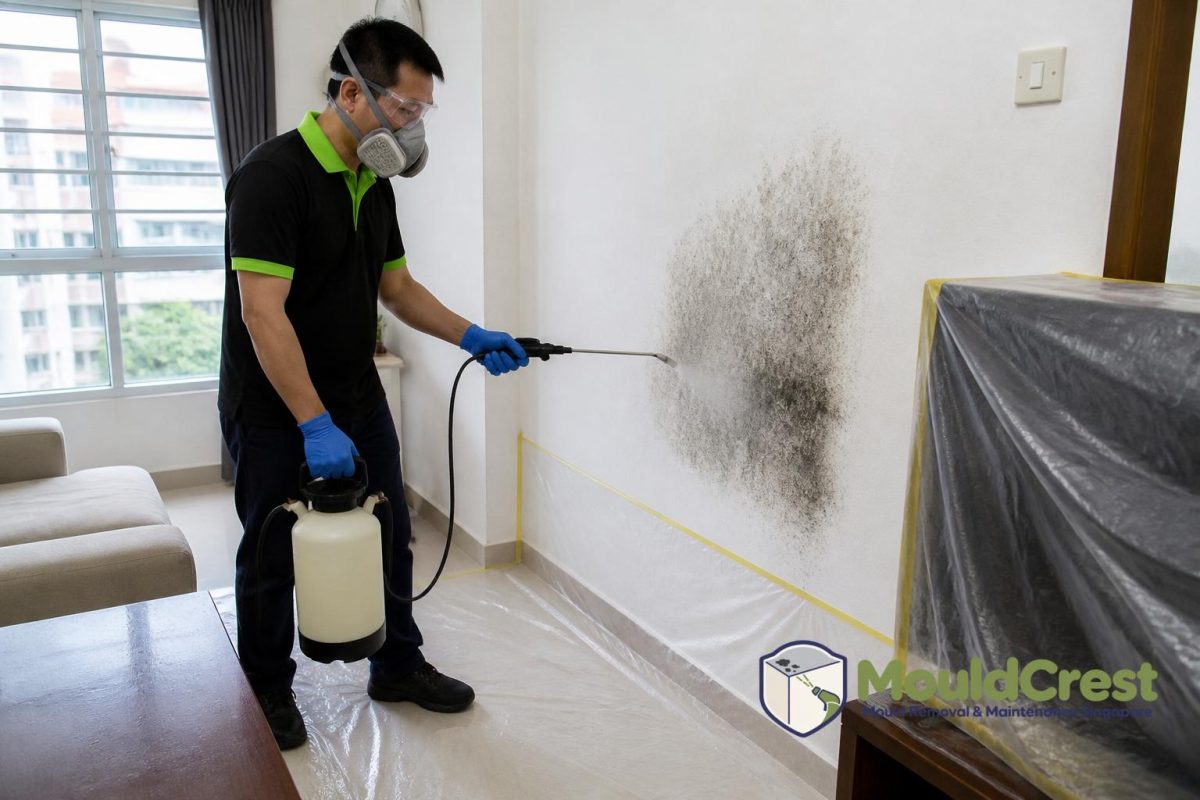
- Preparing the area carefully to avoid spreading spores into nearby rooms
- Using appropriate treatment for the accessible surface
- Reviewing likely moisture causes such as condensation or seepage
Walls also require attention to nearby furnishings and finishes, especially where wardrobes, curtains or storage units block airflow and allow dampness to persist.
Ceiling mould removal: overhead access and preparation matter
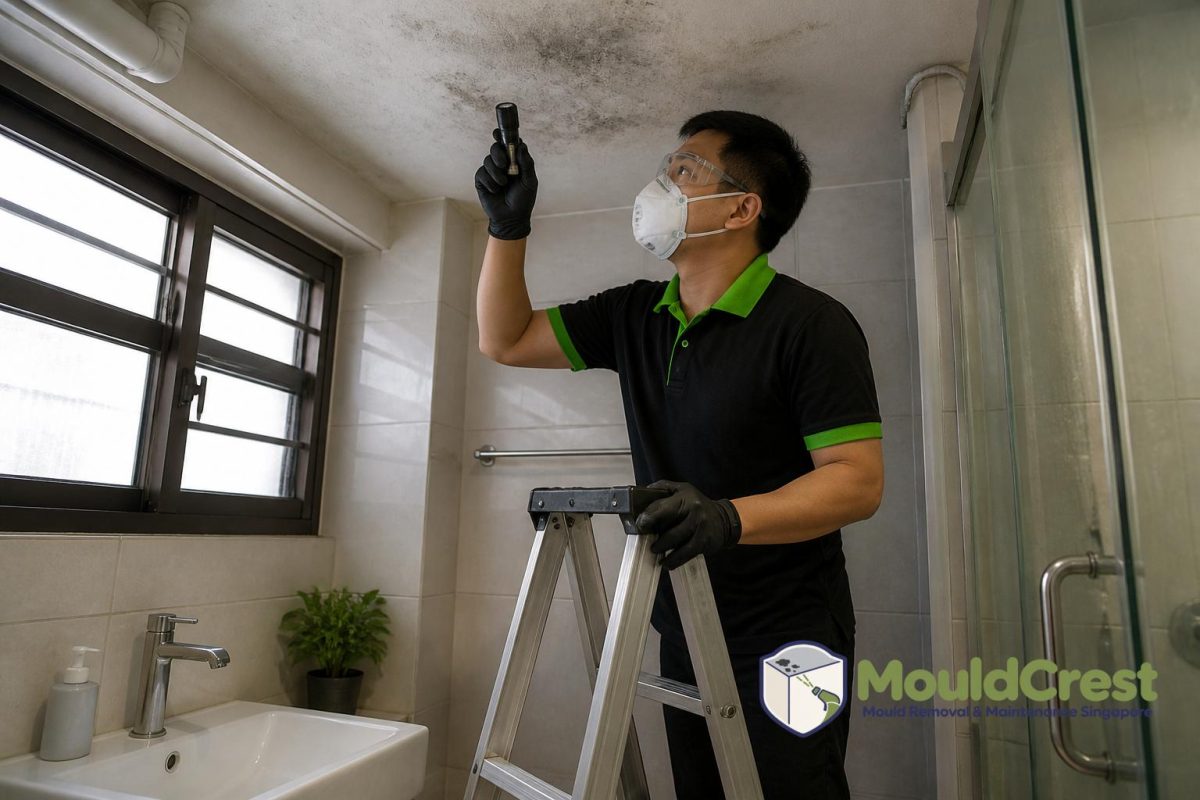
Ceiling mould removal is different from wall treatment because overhead work requires safer access, better preparation, and more care with falling dust or residue. Ceilings may be affected by condensation, roof or slab moisture, poor bathroom ventilation, or long-term humidity trapped above the room.
Before treatment, the work area should be prepared so nearby furniture and floors are protected. Personal protective equipment is also important when working overhead, particularly where there is loose residue or disturbed dust. This is one reason ceiling mould should not be treated as though it were the same as a low wall patch.
Ceiling conditions can vary widely across Singapore homes and businesses. A bathroom ceiling with recurring condensation needs a different approach from a bedroom ceiling near an aircon unit or an external wall. The underlying moisture and ventilation conditions should be considered as part of the job.
Mould mitigation: reducing the conditions that support regrowth
Mould mitigation is about prevention through moisture management. It focuses on the practical steps that reduce the chance of mould returning after treatment. In Singapore, this often means controlling humidity, improving ventilation, and reducing condensation on cooler surfaces.
Mitigation may include:
- Improving airflow in enclosed rooms
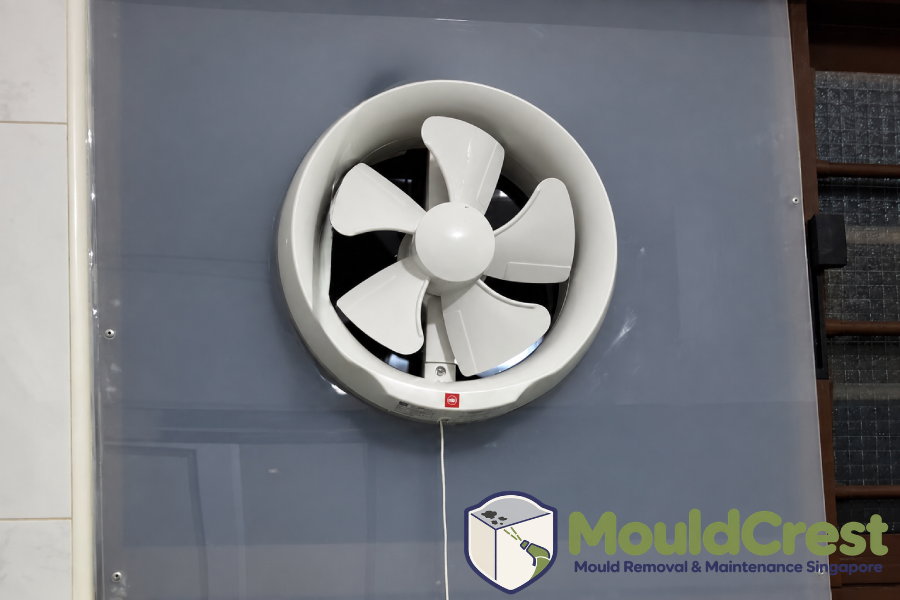
- Using exhaust fans appropriately in bathrooms and kitchens
- Keeping furniture slightly away from damp-prone walls where possible
- Reducing indoor moisture build-up from daily activities
- Checking for repeated condensation on windows, ceilings or external walls
Fogging or misting may be used as an additional method in some situations, but it is not a long-term solution by itself. If the moisture source remains, mould can return on the same or nearby surfaces.
When ventilation fan installation becomes part of the solution
In some properties, mould remediation is supported by ventilation fan installation. This is a separate fitting and electrical task, not a mould treatment on its own. The purpose is to improve airflow in rooms that hold moisture, especially bathrooms, utility areas, or enclosed spaces with poor natural ventilation.
A proper installation should consider the actual room size, fan location, ducting or discharge path where relevant, and the use of a suitable window acrylic panel when needed. Safe electrical installation should be carried out by the appropriate professional trade, rather than treated as an afterthought.
Ventilation is not a decorative add-on. It is part of moisture control. Without it, treated surfaces may still face the same damp conditions that encouraged mould growth in the first place.
Other related property services are not the same as mould remediation
Some property issues occur alongside mould, but they should not be confused with mould work itself. Plumbing services address leaks, dripping pipes, and water ingress at the source. Electrical services deal with wiring, power points, and safe connections. Aircon servicing focuses on cleaning and maintaining the cooling system, drip tray, filters, and drainage. Handyman and property maintenance services cover general repairs, fittings, sealants, and minor upkeep.
Cleaning services, mattress cleaning and sofa cleaning are separate trades with their own methods and scope. While they may help with surface hygiene or fabric care, they are not substitutes for proper mould assessment and moisture management. If mould is present on upholstery or soft furnishings, the material condition and cleaning suitability must be considered carefully before treatment.
What to expect from a professional mould remediation approach
A responsible mould remediation service for a Singapore property should be practical and transparent about scope. It should not promise to remove all mould forever or claim that one treatment solves every situation. Instead, it should explain what is visible, what is accessible, what materials are affected, and what moisture-related factors should be managed.
That approach is especially important in homes and business premises where mould may recur if ventilation is poor, if leaks continue, or if condensation is not addressed. A careful service will focus on the affected area, use suitable methods for the surface, and recommend sensible next steps without overstating what can be guaranteed.
To discuss the mould concern covered here, WhatsApp MouldCrest with details of the affected surface and any moisture signs to request an assessment or quotation.
Conclusion
What mould remediation involves for a property in Singapore is a combination of assessment, surface treatment, and moisture-source management. Mould removal handles the visible, accessible growth; remediation broadens the scope to include affected materials and the conditions that allowed mould to form. Wall mould removal and ceiling mould removal each require different access, preparation, and treatment considerations. Mould mitigation then helps reduce recurrence through better humidity control, ventilation, and general moisture management.
For homeowners, landlords and business premises alike, the key is to treat mould as both a surface issue and a moisture issue. That balanced approach is more practical than relying on a single spray or fogging method alone.
Choose MouldCrest Mould Removal & Maintenance Singapore
At MouldCrest Mould Removal & Maintenance Singapore, we offer mould removal services to address mould growth and improve the condition of affected spaces. We provide wall mould removal to treat growth and marks on walls and mould on ceilings can be addressed through our ceiling mould removal service. For a more comprehensive approach, our mould remediation service addresses mould concerns across the affected area. We also offer mould mitigation to help reduce the risk of recurring growth. As airflow is an important part of managing moisture, we provide ventilation fan installation to improve air circulation and help reduce the likelihood of mould growth.
Our services also cover property maintenance, which includes handyman services for repairs and installations, plumbing services for leaking taps and fixture issues, and electrical services for switches, sockets and light fittings. To refresh frequently used furnishings, we offer cleaning services that include mattress cleaning and sofa cleaning to remove accumulated dirt. Visit our blog for helpful insights and browse our completed projects to see our work. WhatsApp us today at +65 8241 0032 to enquire about our services and to discuss your requirements.
Frequently Asked Questions
Is mould removal the same as mould remediation?
Not exactly. Mould removal usually refers to treating visible mould on an accessible surface. Mould remediation is broader and may include assessing affected materials, managing moisture sources, and recommending prevention steps.
Why is ceiling mould treated differently from wall mould?
Ceiling mould often needs overhead access, more careful preparation, and additional attention to moisture or ventilation factors. Wall mould is treated on a vertical surface and may involve different access and material conditions.
Will fogging or spraying stop mould from coming back?
Not by itself. Fogging or spraying may be part of a wider treatment plan, but mould can return if the underlying moisture problem is not addressed. Ventilation and humidity control are usually important parts of long-term mitigation.