
In a Singapore home, mould remediation becomes necessary when the problem is no longer limited to a small, visible patch on an accessible surface. Condensation on cool walls, leaking pipework, repeated air-conditioning drip, poor bathroom ventilation and damp building materials can all allow mould to return if the underlying moisture issue is not addressed. For homeowners, landlords and managing agents in HDB flats, condominiums, landed homes and some commercial premises, the practical question is not just whether mould can be seen, but whether the affected area needs simple surface treatment or a broader remediation approach.
MouldCrest Mould Removal & Maintenance Singapore works with these distinctions in mind. Mould removal focuses on visible growth on accessible surfaces. Mould remediation goes further by assessing the scope, identifying likely moisture contributors and recommending suitable treatment for the affected materials. This article explains when remediation is the more appropriate option, and how it differs from wall mould removal, ceiling mould removal and broader mould mitigation measures.
What mould remediation means in a Singapore home
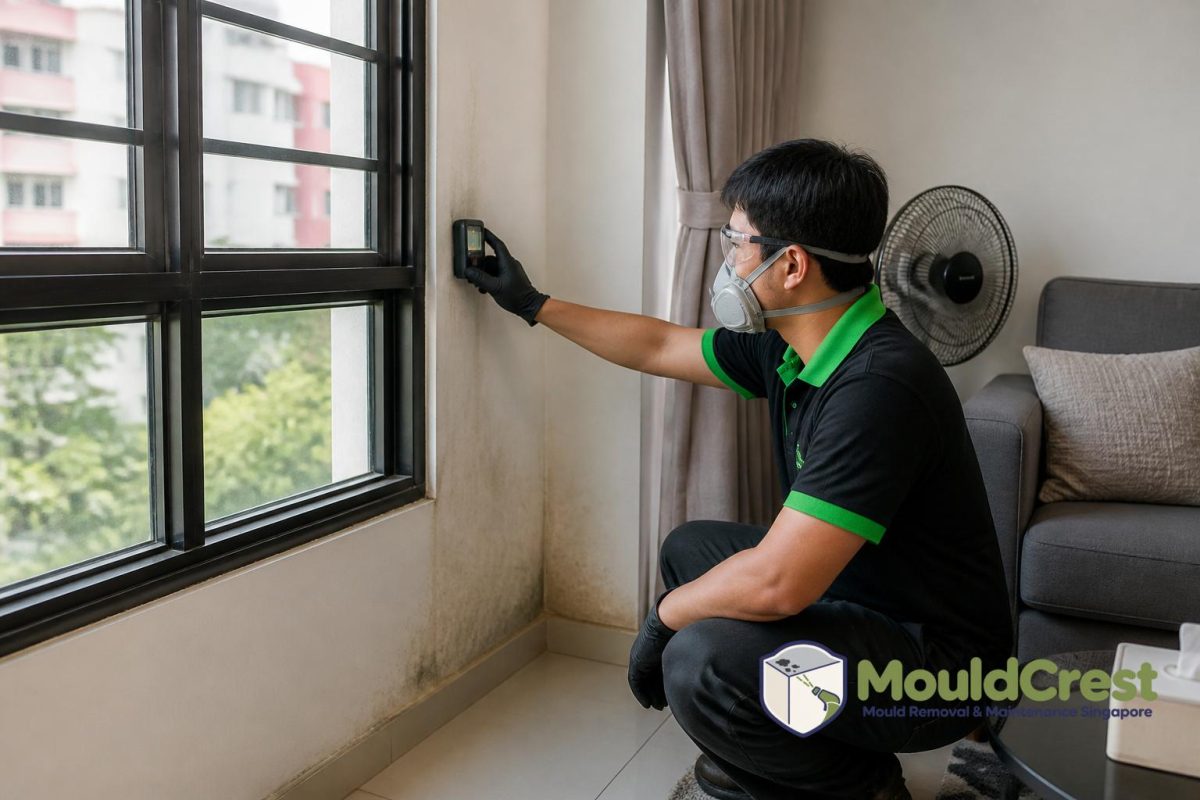
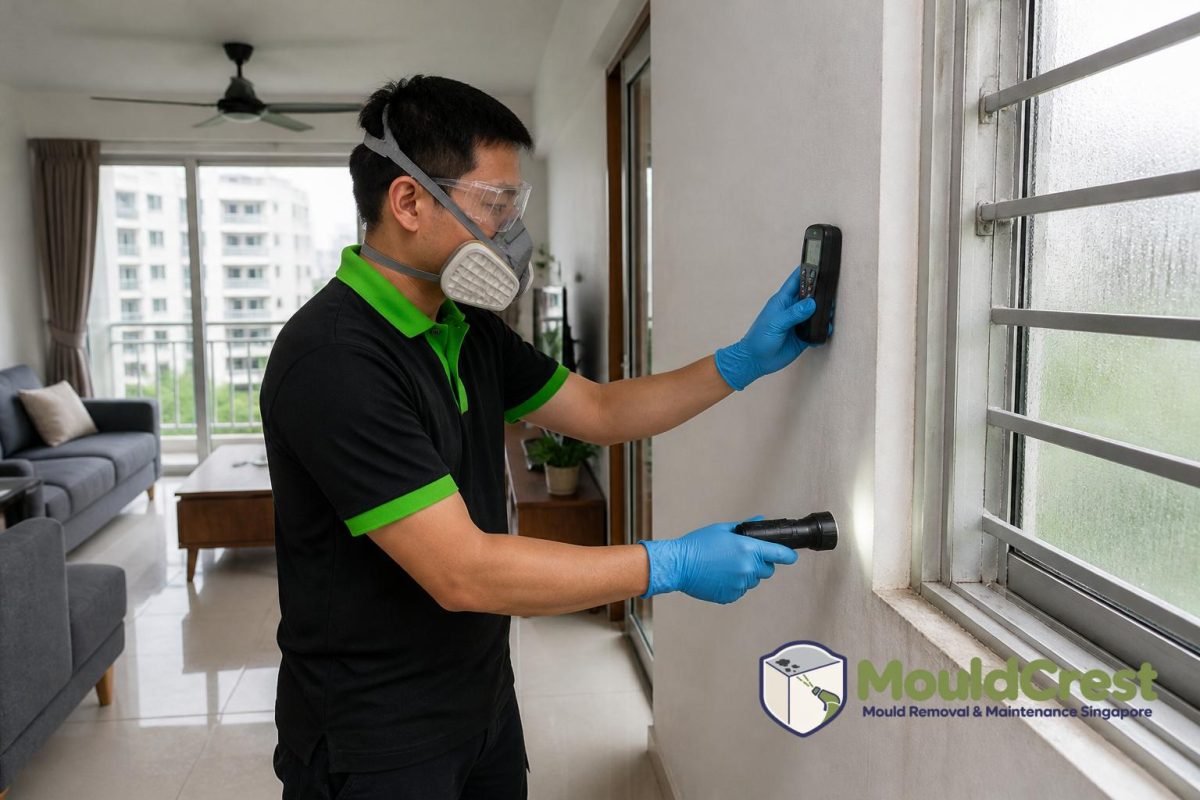
Mould remediation is a wider process than basic mould removal. It usually starts with a scope assessment to understand where mould is present, what surfaces or materials are affected, and whether there are signs of recurring moisture. In a Singapore setting, this often involves checking areas exposed to humidity, poor ventilation or water ingress, such as bathrooms, bedrooms, store rooms, service yards, ceiling corners and air-con affected walls.
The goal is not to promise that mould will never return. Rather, it is to reduce the conditions that support regrowth by addressing visible contamination, recommending appropriate treatment for the material involved, and looking at the likely source of moisture. If a patch is limited to painted plaster, a surface-based approach may be suitable. If the material is repeatedly damp or deteriorating, a broader remedy may be needed.
Signs that remediation may be necessary
Not every mould spot requires full remediation, but certain signs suggest that the issue is more than cosmetic. These include:
- Mould returning after repeated cleaning or spraying
- Large or spreading patches on walls, ceilings or skirting areas
- Persistent musty odour in a room or cupboard
- Visible dampness, staining or peeling paint near the mould
- Condensation that keeps forming on cool surfaces
- Evidence of leak history from plumbing, roof edges, windows or air-con drainage
- Mould appearing in multiple areas, not just one isolated spot
In these cases, a simple wipe-down may only remove the surface growth temporarily. If the moisture condition remains, mould can reappear. That is why remediation is often considered when the problem is recurring, widespread or linked to an ongoing damp source.
How wall mould removal differs from remediation
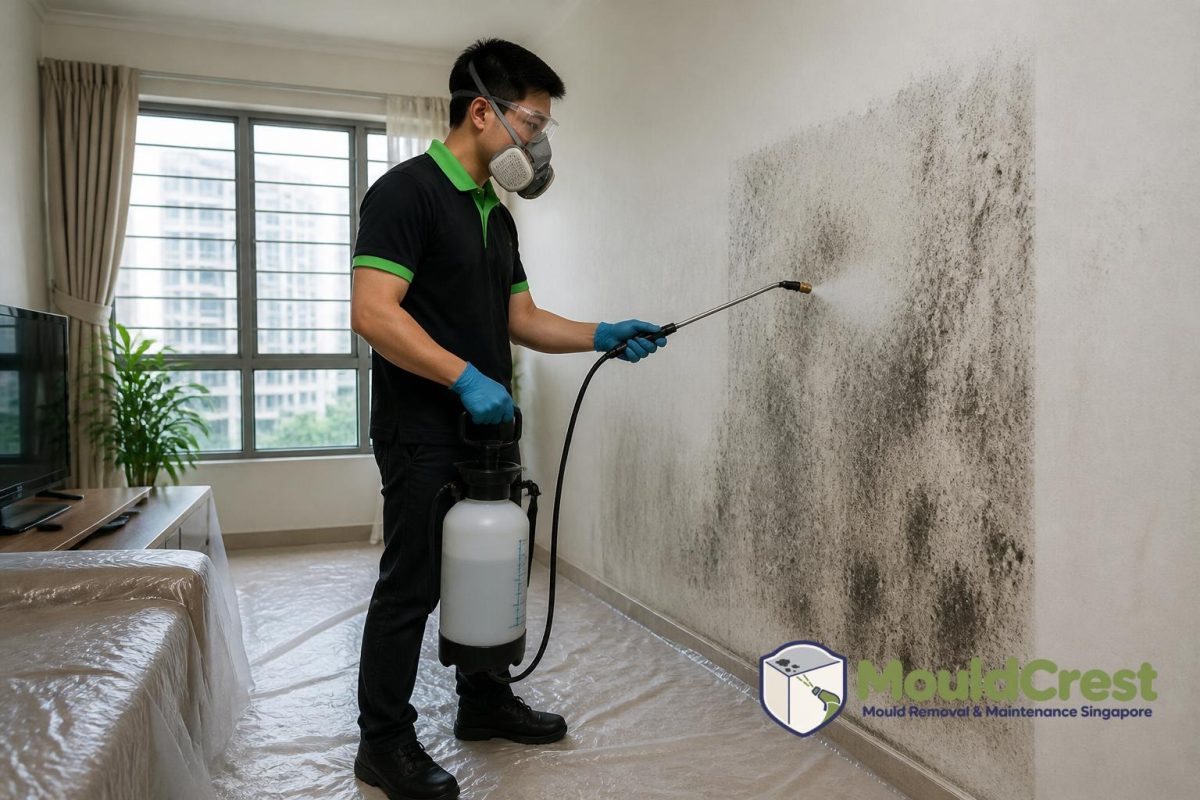
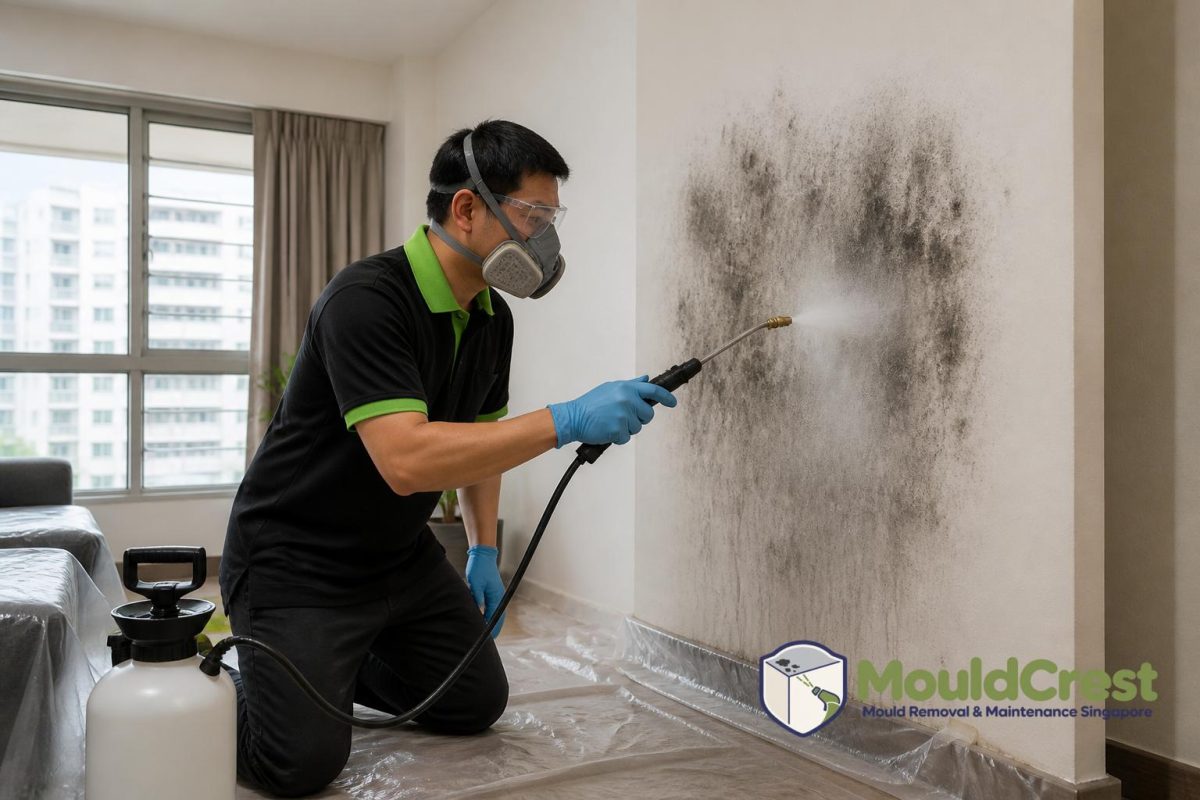
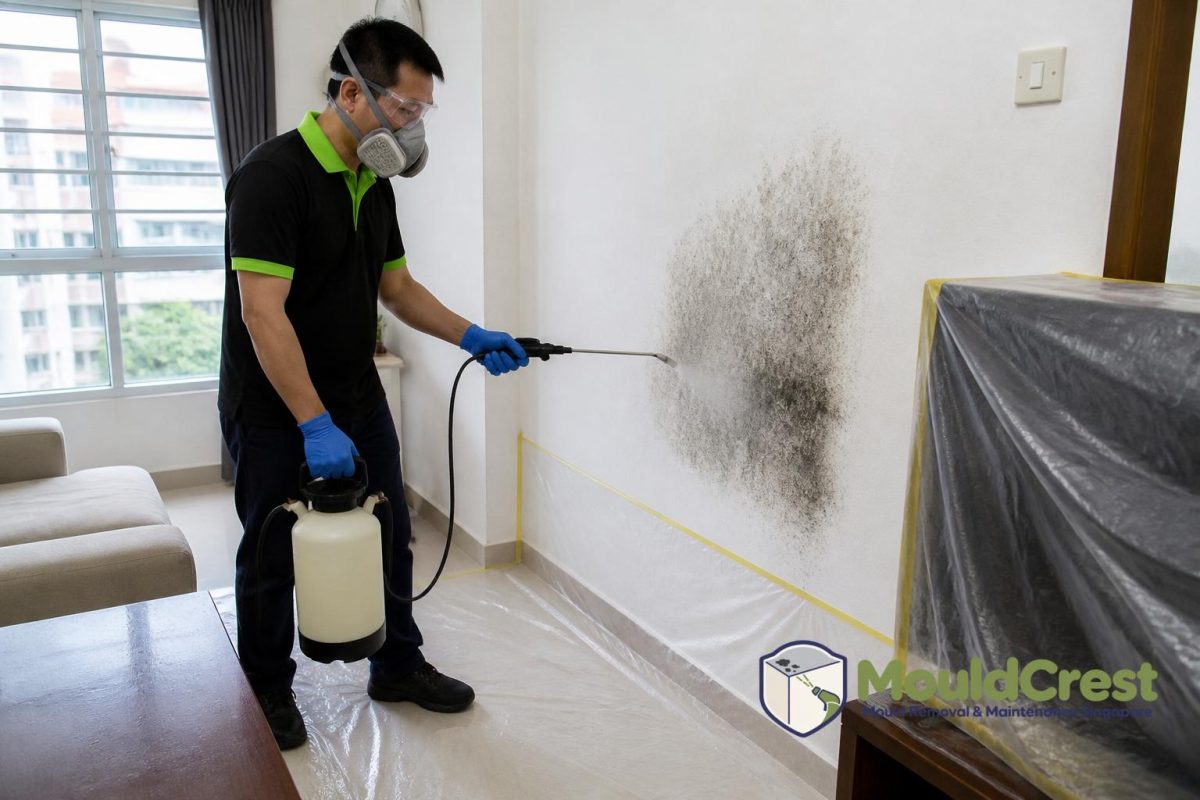
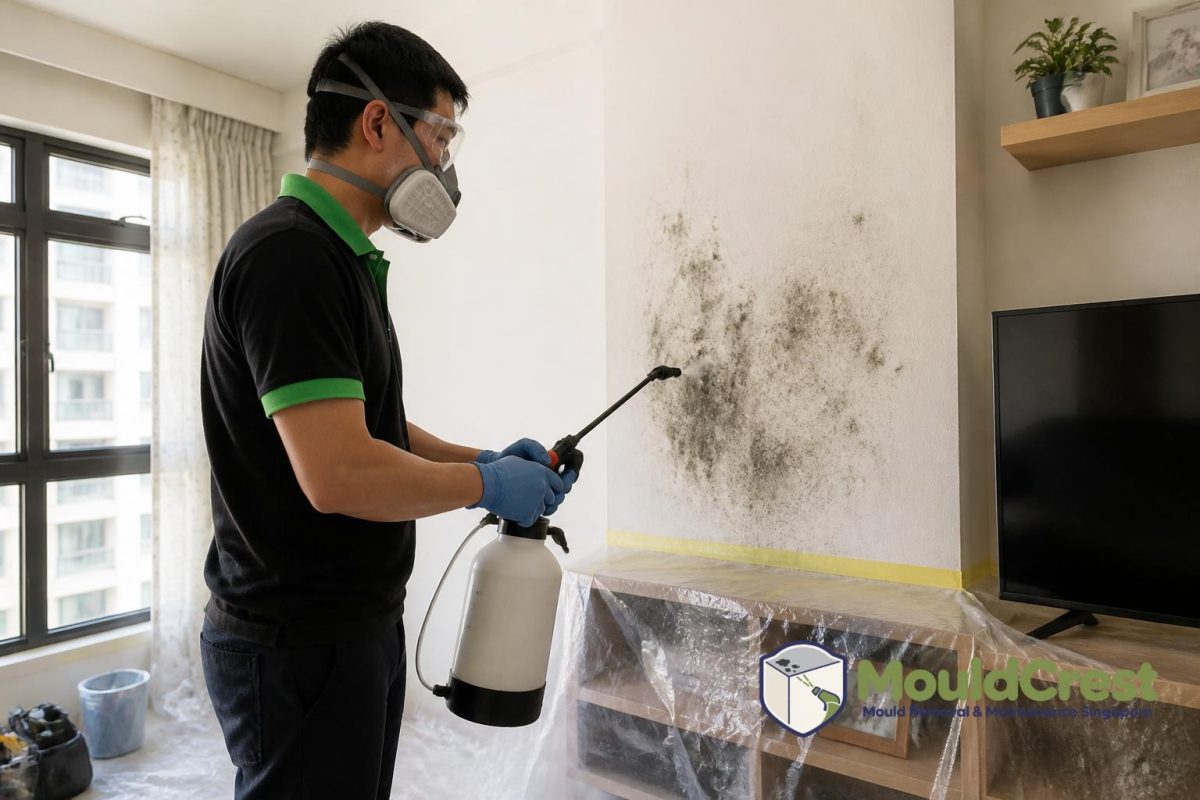
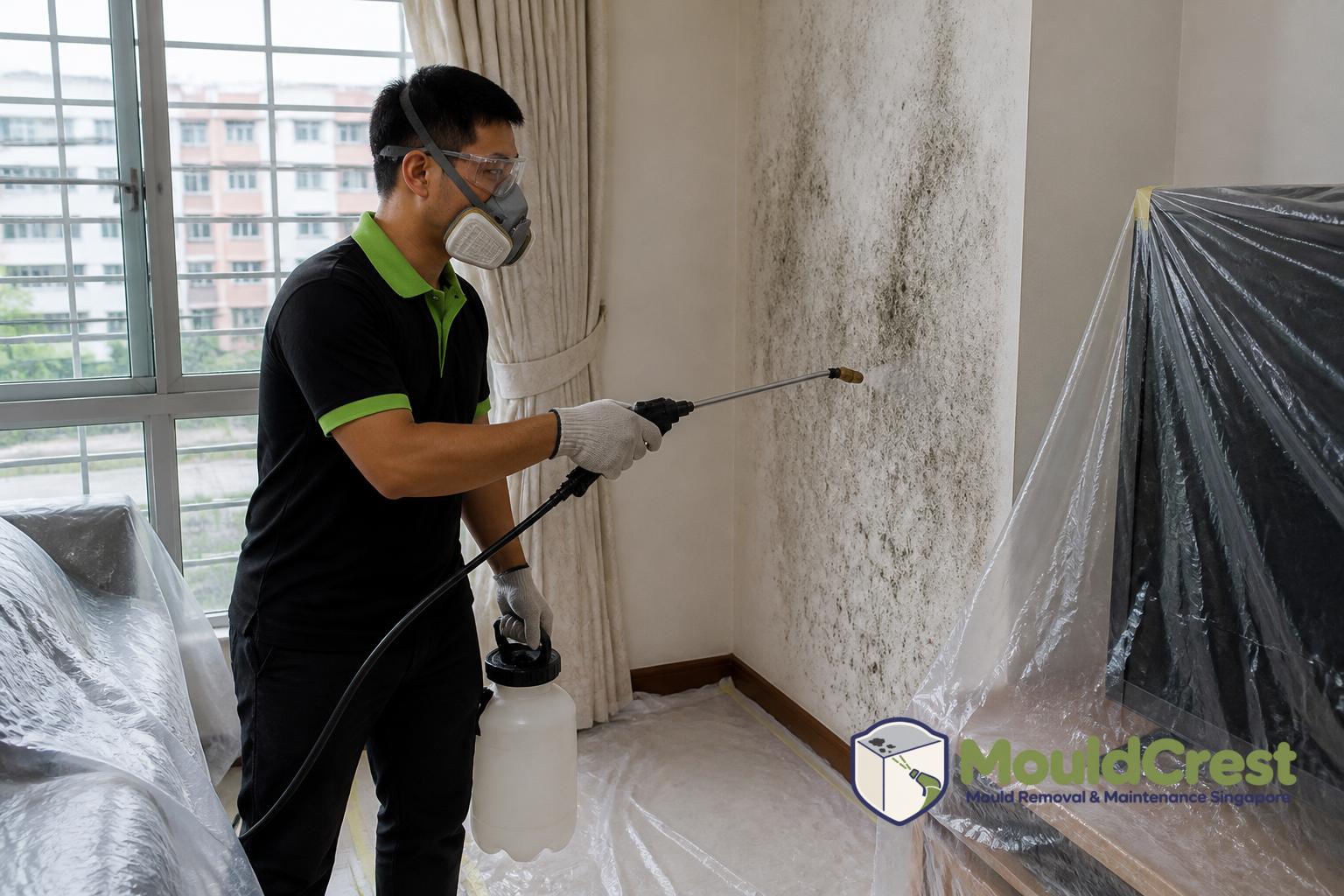
Wall mould removal is best suited to vertical plastered or painted wall surfaces where mould is visible and accessible. The approach depends on the condition of the surface. If the paint film is intact and the area is small, suitable treatment can be applied to the affected wall surface after proper assessment. If the paint is bubbling, the plaster is soft, or the wall is repeatedly damp, the issue may extend beyond simple wall cleaning.
Walls in Singapore homes often show mould because of condensation, especially in air-conditioned rooms, bedrooms with little airflow, or corners behind furniture. In these situations, wall mould removal may be one part of the answer, but it should be accompanied by moisture management. This may involve improving airflow, managing humidity, checking for leaks, or reducing furniture contact with cold external walls.
Surface treatment alone should not be presented as a cure for hidden or recurring dampness. If the wall continues to absorb moisture, the mould can return even after careful cleaning.
Why ceiling mould needs a different approach
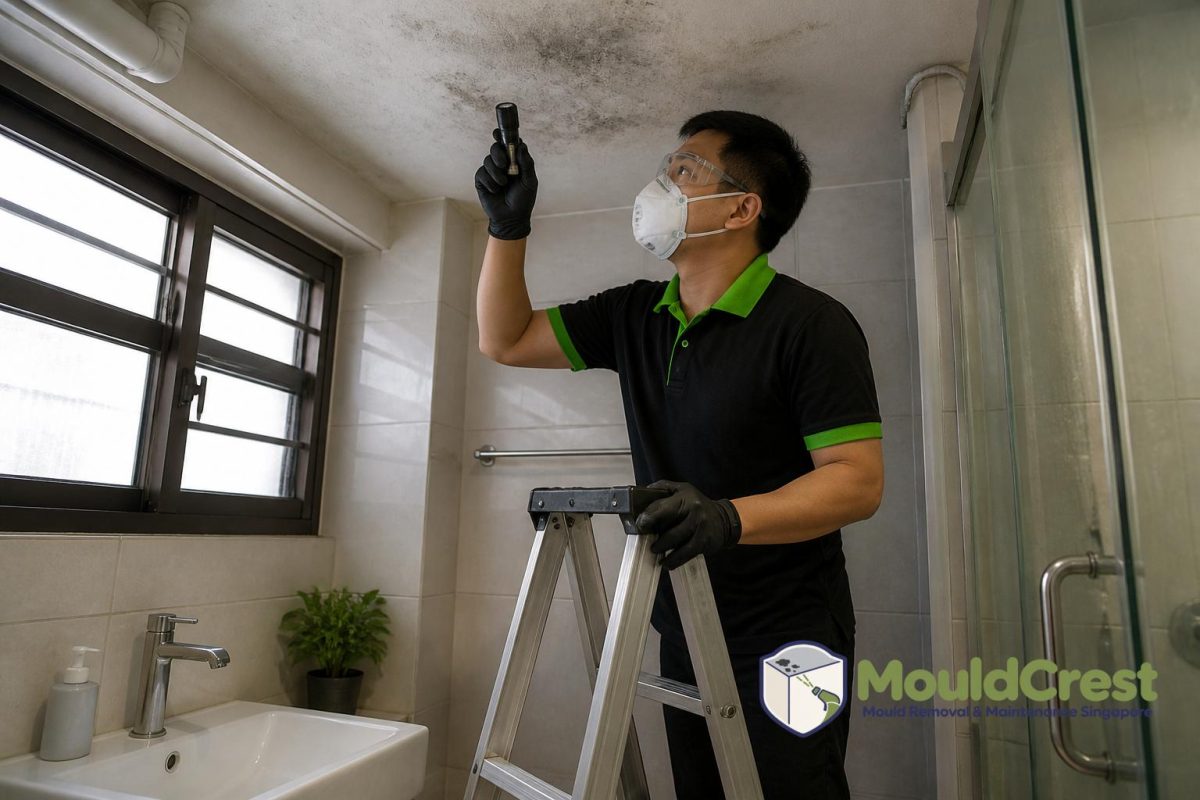
Ceiling mould removal is not the same as treating a wall. Overhead work requires different access, preparation and safety precautions. Ceilings may be affected by bathroom steam, poor extractor performance, roof leaks in landed homes, or condensate issues around air-conditioning. Because the work is overhead, proper preparation and personal protective equipment are important, especially if the affected area is above eye level or near fixtures.
Ceilings also behave differently from walls. Water staining on a ceiling may indicate a leak or condensation pattern above the surface, not just a surface contamination issue. A careful assessment is therefore important before treatment begins. If the ceiling material is damaged, soft, cracked or repeatedly wet, remediation may involve more than cleaning the visible mould. The source of moisture should be considered alongside the surface condition.
When mould mitigation should be part of the plan
Mould mitigation refers to practical prevention measures that reduce the chances of mould coming back. In Singapore homes, this often means managing humidity, reducing condensation and improving ventilation. It is not a substitute for removing visible mould, and fogging or misting alone is not a long-term solution.
Useful mitigation measures may include:
- Improving cross-ventilation where possible
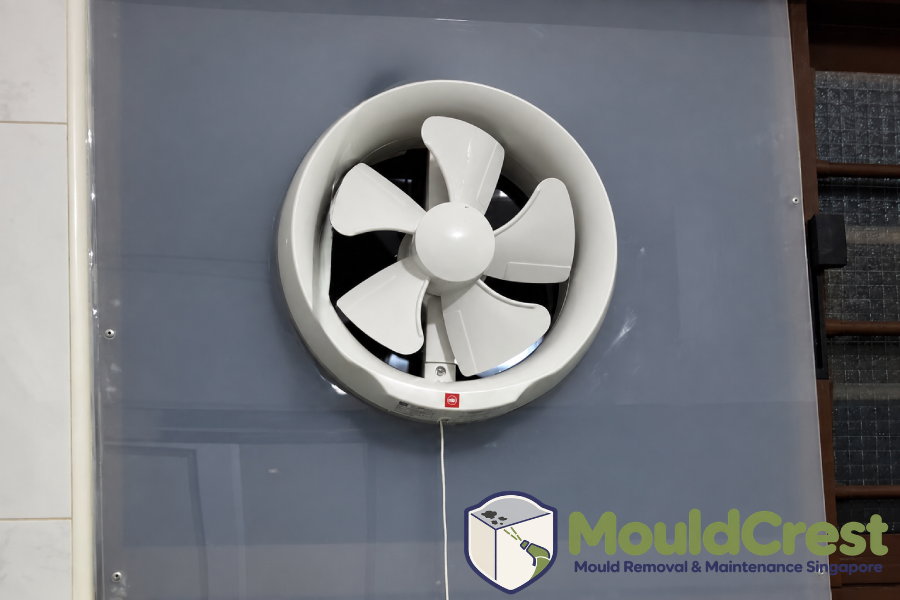
- Using a properly sized ventilation fan in suitable wet areas
- Managing indoor humidity with sensible airflow and dehumidification where needed
- Fixing minor leaks promptly
- Keeping furniture slightly away from cold external walls
- Ensuring bathrooms and utility areas dry out more effectively after use
These steps help reduce the moisture that mould needs to thrive. They are especially relevant in Singapore, where high ambient humidity and daily indoor cooling can create condensation on walls, ceilings and around windows.
Where ventilation fan installation fits in
Ventilation fan installation is a separate service from mould removal and remediation. It is a practical trade task that may support mould mitigation, but it does not replace cleaning or moisture-source management. In some homes, the right fan location and suitable airflow can help reduce steam build-up in bathrooms or enclosed areas. In others, a window acrylic panel or a different installation arrangement may be needed to fit the opening safely and neatly.
Because this involves electrical work and correct fitting, it should be treated as a distinct service from general cleaning or handyman tasks. A proper installation should consider the room layout, ventilation path and safety requirements. It should not be described as a universal fix for mould, but as one part of a wider moisture-management plan when appropriate.
Why plumbing, electrical, aircon and maintenance issues matter
Mould problems often overlap with other home maintenance issues, but each trade remains distinct. Plumbing faults can lead to leaks under sinks, behind walls or near sanitary fittings. Electrical fittings may be affected by nearby damp conditions but should be handled as electrical work, not as part of a cleaning service. Aircon servicing is relevant when blocked condensate drainage, dirty coils or poor drainage routing contribute to damp patches or dripping.
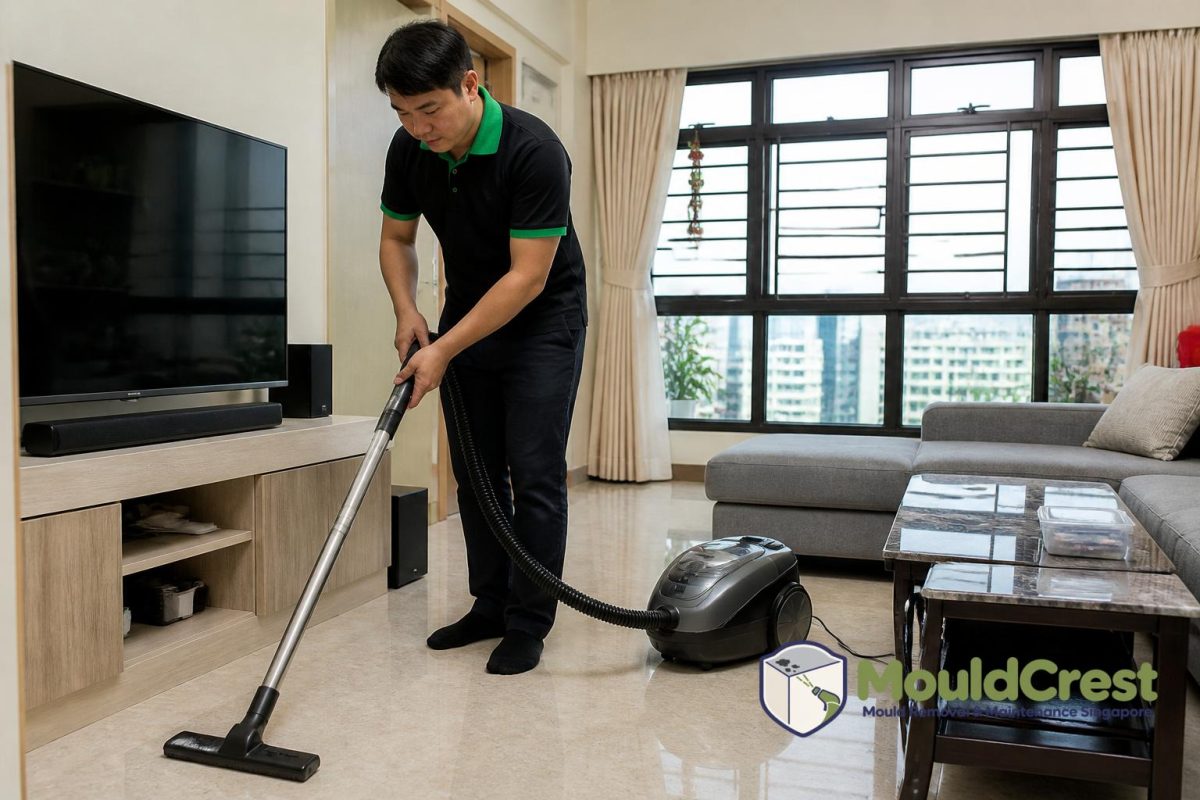
Property maintenance and handyman services may assist with minor repairs, sealing, access panels, or reinstatement after treatment, while cleaning services address general hygiene and non-specialist surface cleaning. Mattress cleaning and sofa cleaning are separate upholstery services and should not be confused with mould remediation on walls or ceilings. Each service has its own method and limits, and the right approach depends on the affected area and the reason moisture is present.
What to expect from a professional assessment
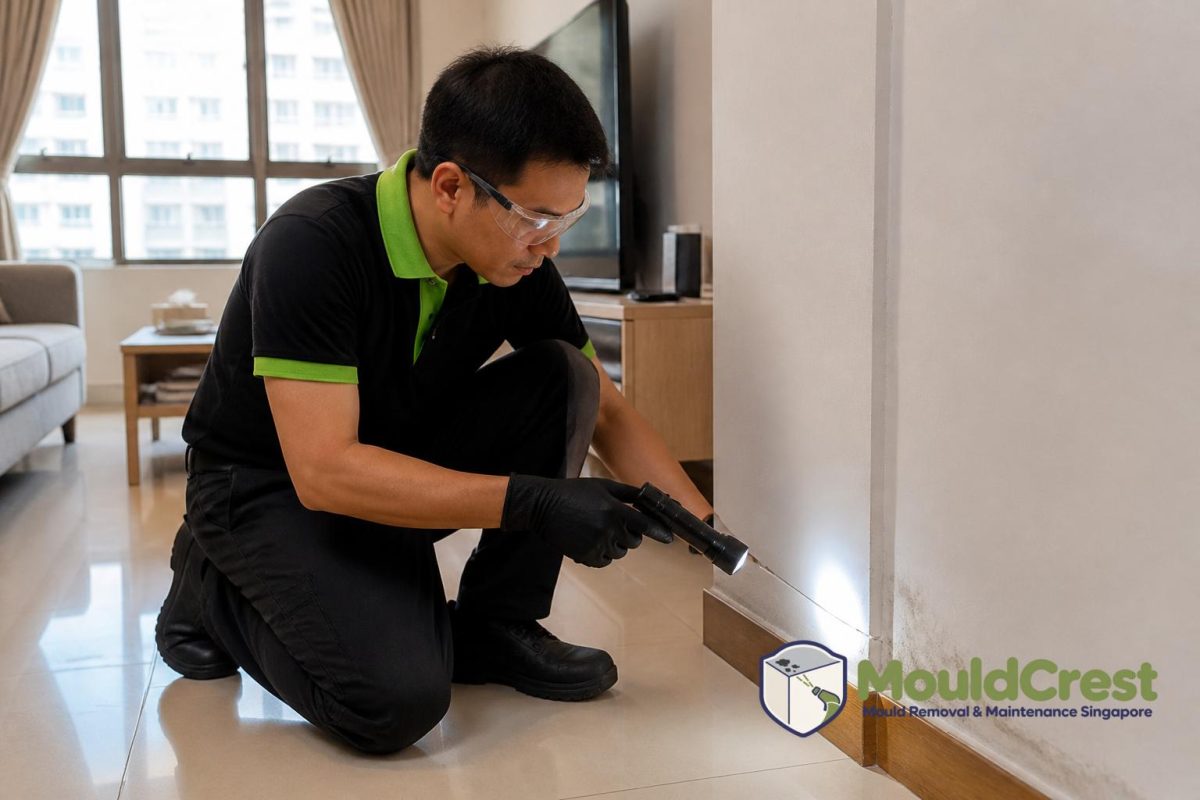
A sensible mould assessment should look at what is visible, what material is affected, and whether there are clues pointing to moisture from condensation, leaks or poor ventilation. It should not rely on guesswork or exaggerated claims. If the mould is on an accessible surface, the treatment method should be matched to that surface. If the problem involves repeated dampness or larger affected areas, a broader remediation plan may be more suitable.
For homeowners and landlords in Singapore, the practical aim is to manage the current contamination and reduce the conditions that allow it to return. That usually means combining surface treatment with moisture-source management and, where needed, ventilation improvements or repair work.
To discuss the mould concern covered here, WhatsApp MouldCrest with details of the affected surface and any moisture signs to request an assessment or quotation.
Conclusion
Mould remediation is necessary when mould in a Singapore home is more than a small, isolated surface issue. If the mould keeps returning, covers a wider area, or is linked to ongoing dampness, a broader approach is usually more appropriate than simple cleaning alone. Wall mould removal and ceiling mould removal each require different access, preparation and moisture considerations, while mould mitigation focuses on preventing future regrowth through humidity and ventilation control.
The most reliable approach is to assess the affected area properly, treat the visible growth on the appropriate surface, and address the moisture source where possible. That is how MouldCrest Mould Removal & Maintenance Singapore approaches mould-related issues across homes and selected commercial premises in Singapore.
Choose MouldCrest Mould Removal & Maintenance Singapore
At MouldCrest Mould Removal & Maintenance Singapore, we provide mould removal to treat affected surfaces and restore their appearance. Our wall mould removal service addresses growth and marks on walls. For mould on ceilings, we offer ceiling mould removal. We also provide mould remediation for a more comprehensive approach to affected areas. To help manage the risk of mould returning, our mould mitigation service focuses on the conditions that encourage growth. We offer ventilation fan installation to improve airflow and help reduce moisture build-up. Our services also cover property maintenance, including handyman services for various repairs and installations, plumbing services to address plumbing issues, and electrical services for different electrical fittings. We also provide cleaning services such as mattress cleaning and sofa cleaning to freshen frequently used furnishings. Explore our blog for practical information and browse our completed projects to see our work. WhatsApp us today at +65 8241 0032 to enquire about our services and discuss your needs.
Frequently Asked Questions
Can mould be removed with spraying alone?
Spraying may form part of treatment for visible growth on an accessible surface, but it is not a long-term solution on its own. If the underlying moisture remains, mould may return. That is why moisture management is important alongside surface treatment.
How do I know if I need wall mould removal or full remediation?
If the mould is limited to a small, visible patch on a painted wall and the surface is otherwise sound, wall mould removal may be appropriate. If the mould keeps returning, spreads to other areas, or the wall is damp or damaged, broader remediation may be more suitable.
Is ceiling mould treated the same as wall mould?
No. Ceiling mould requires different access, overhead preparation and attention to possible leaks or condensation above the surface. It should be assessed separately from wall mould because the causes and treatment approach can differ.