
Property maintenance for Singapore homes is not just about keeping a place looking neat. It covers the practical upkeep that helps a home function well, stay comfortable, and deal with common issues such as dampness, wear, minor faults, and surface problems. In Singapore, where humidity is high and homes may be exposed to condensation, plumbing leaks, air-conditioning use, and limited ventilation in some spaces, maintenance often involves more than a quick cosmetic fix.
For HDB flats, condominiums, landed homes and even small business premises, property maintenance can include many distinct services. Some tasks are preventive, such as improving ventilation or checking for moisture build-up. Others are corrective, such as treating visible mould on an accessible wall or ceiling, repairing a leaking tap, servicing an air-conditioner, or carrying out basic handyman work. Understanding what is included helps homeowners decide which service is appropriate for each issue.
What property maintenance typically covers in Singapore homes
Property maintenance usually refers to ongoing care and repair work that helps preserve the condition and usability of a property. In a Singapore home, this may include:
- General handyman work, such as fixing loose fittings, door hardware, shelving, silicone seals or minor fixtures
- Plumbing work, including leak checks, pipe fittings, tap or basin issues, and drainage-related repairs
- Electrical services, such as light fitting replacement, socket issues, fan installation support, or checking electrical faults within scope
- Aircon servicing, including cleaning of filters, fan coils and drainage components
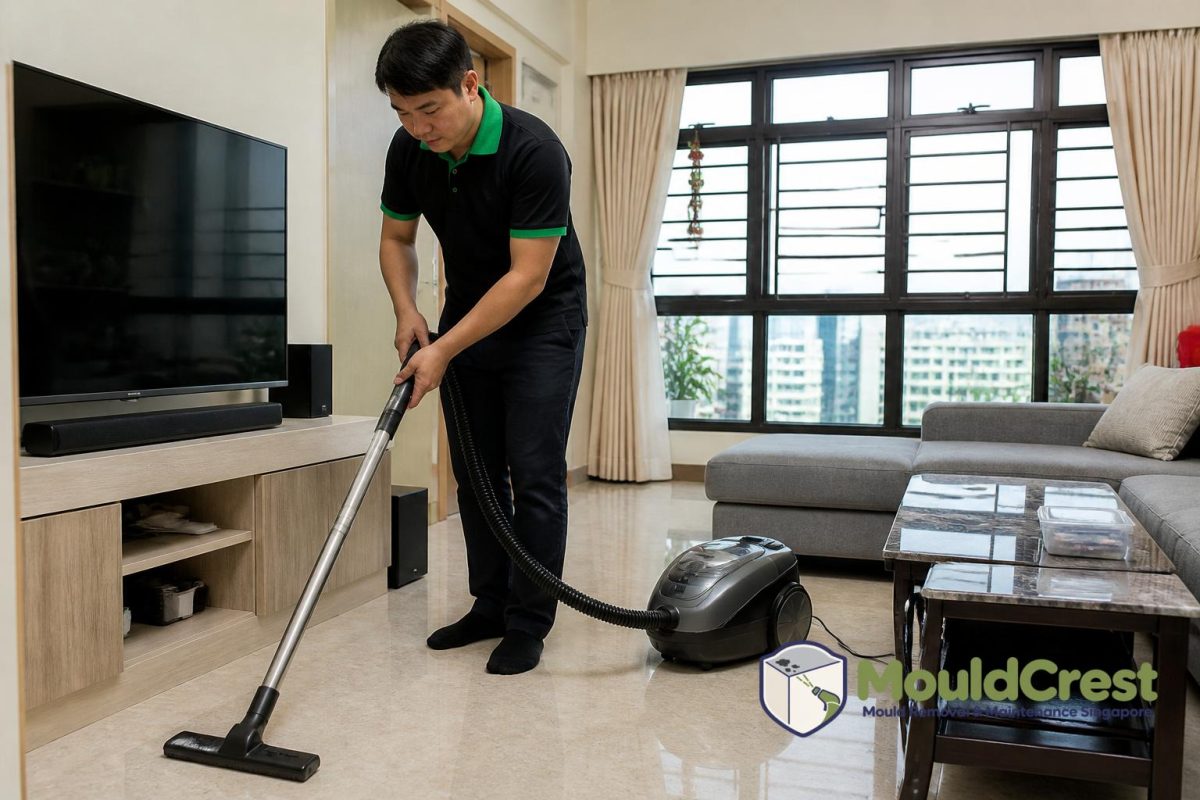
- Cleaning services for home surfaces and furniture, including mattress cleaning and sofa cleaning
- Mould-related services where visible growth or moisture issues need professional assessment and treatment
These are distinct trades and each one addresses a different type of problem. A leaking pipe, for example, is a plumbing issue; it may also contribute to mould, but treating the mould alone will not solve the leak. Likewise, poor ventilation can contribute to condensation and mould, but cleaning the affected area without addressing moisture may only provide a temporary result.
Mould removal: visible growth on accessible surfaces
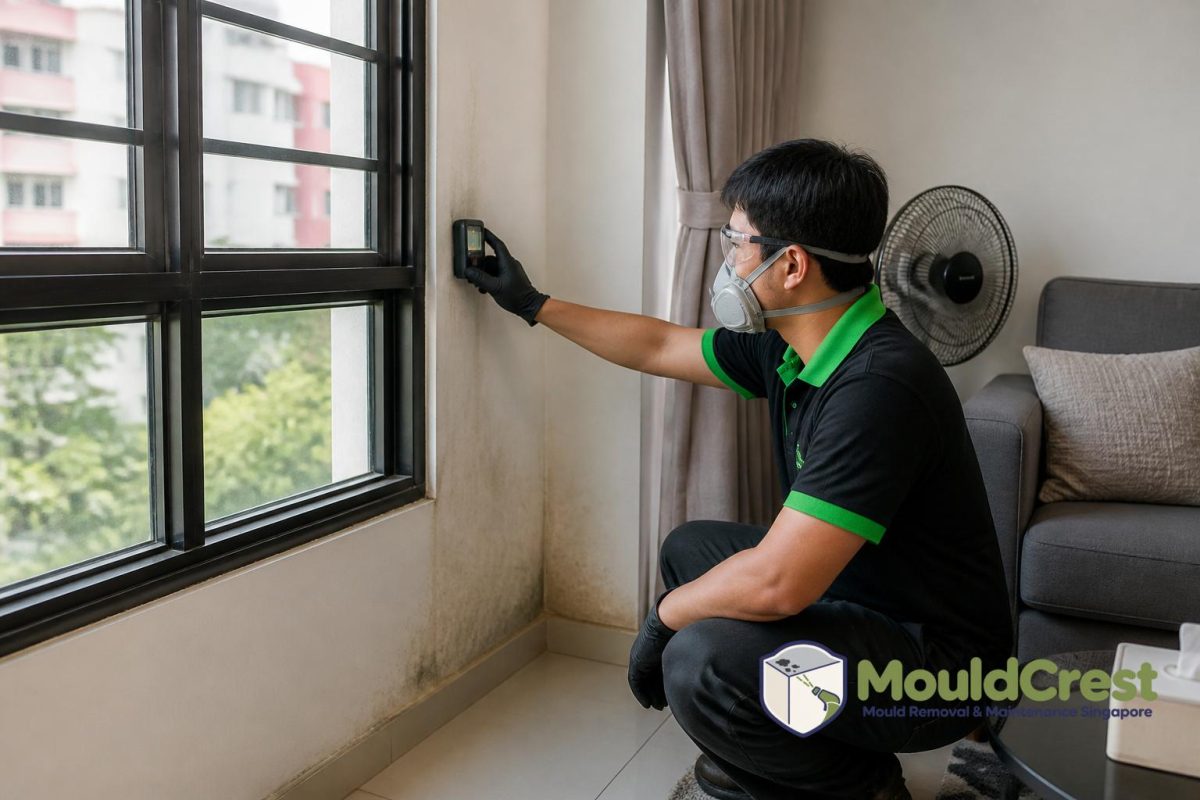
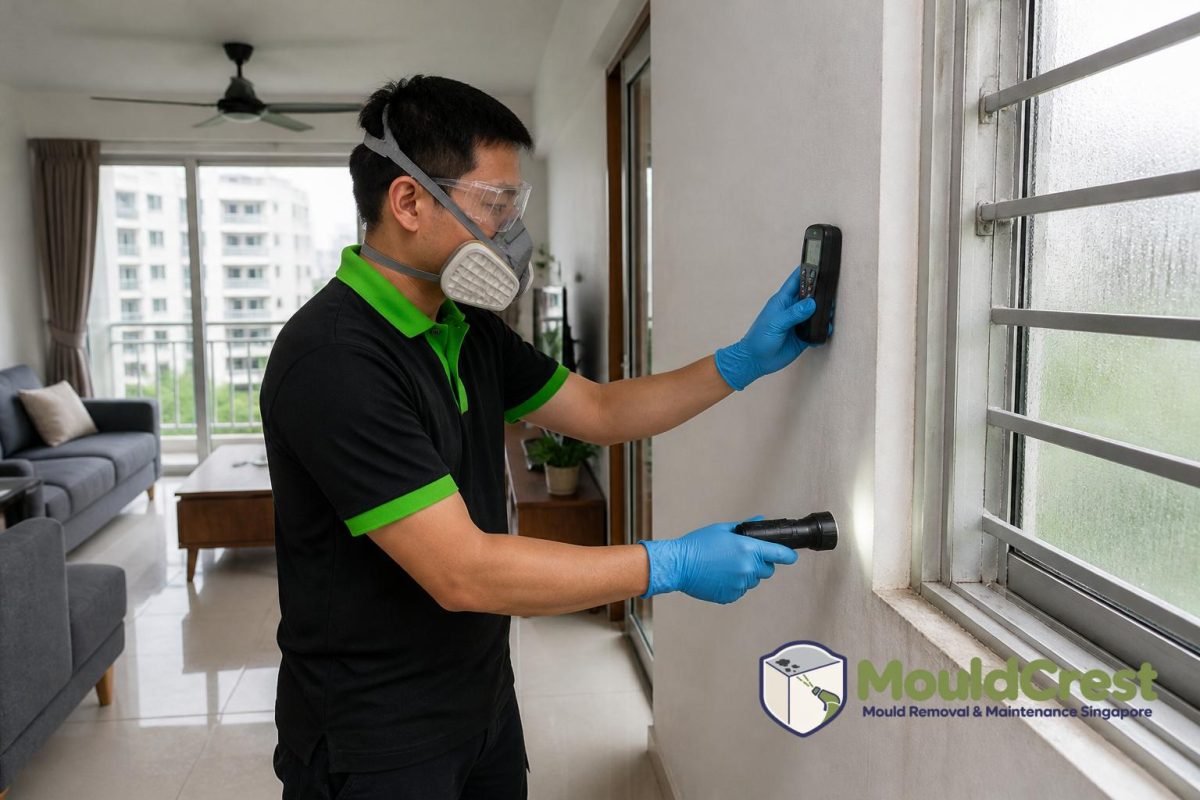
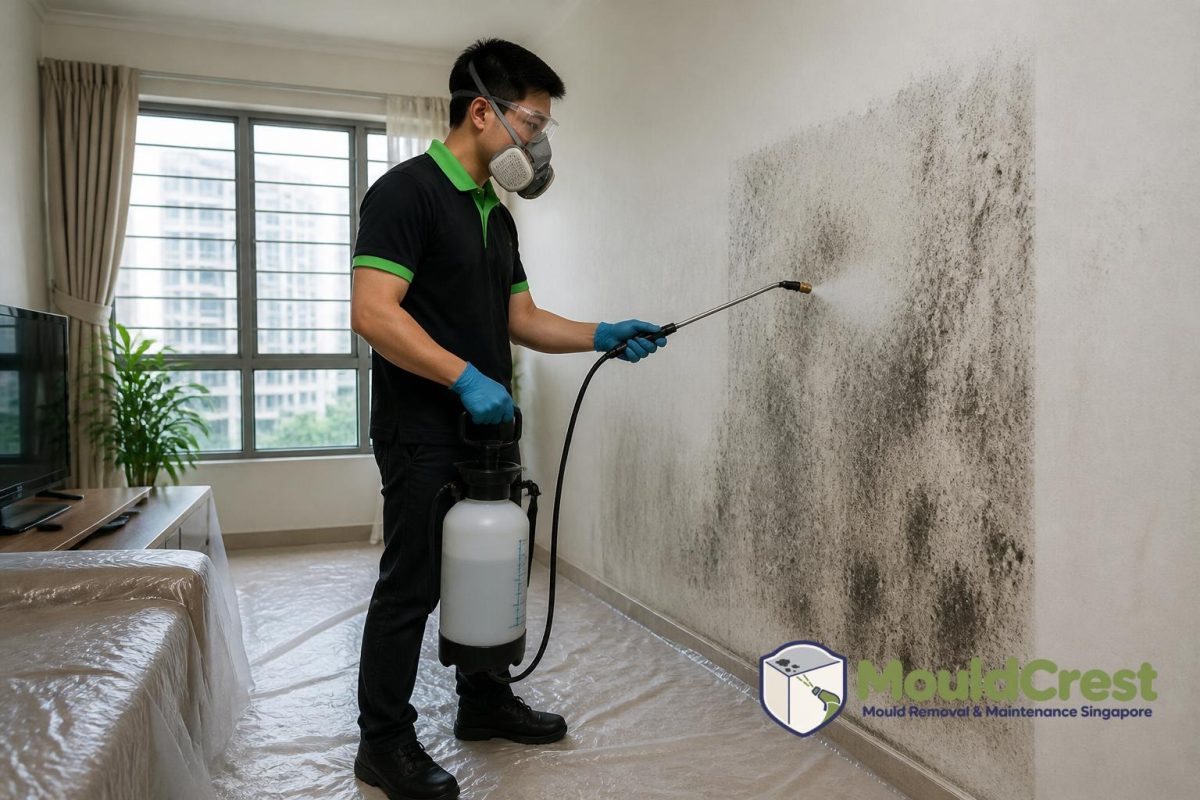
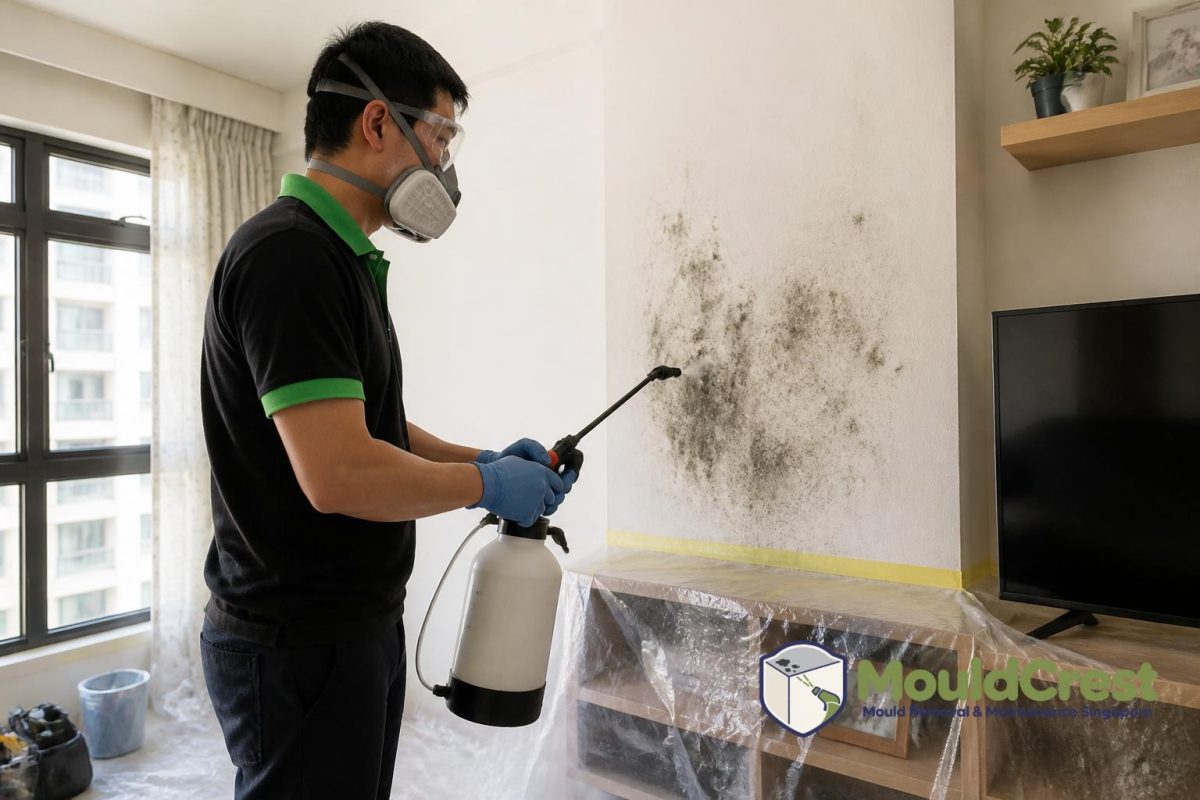
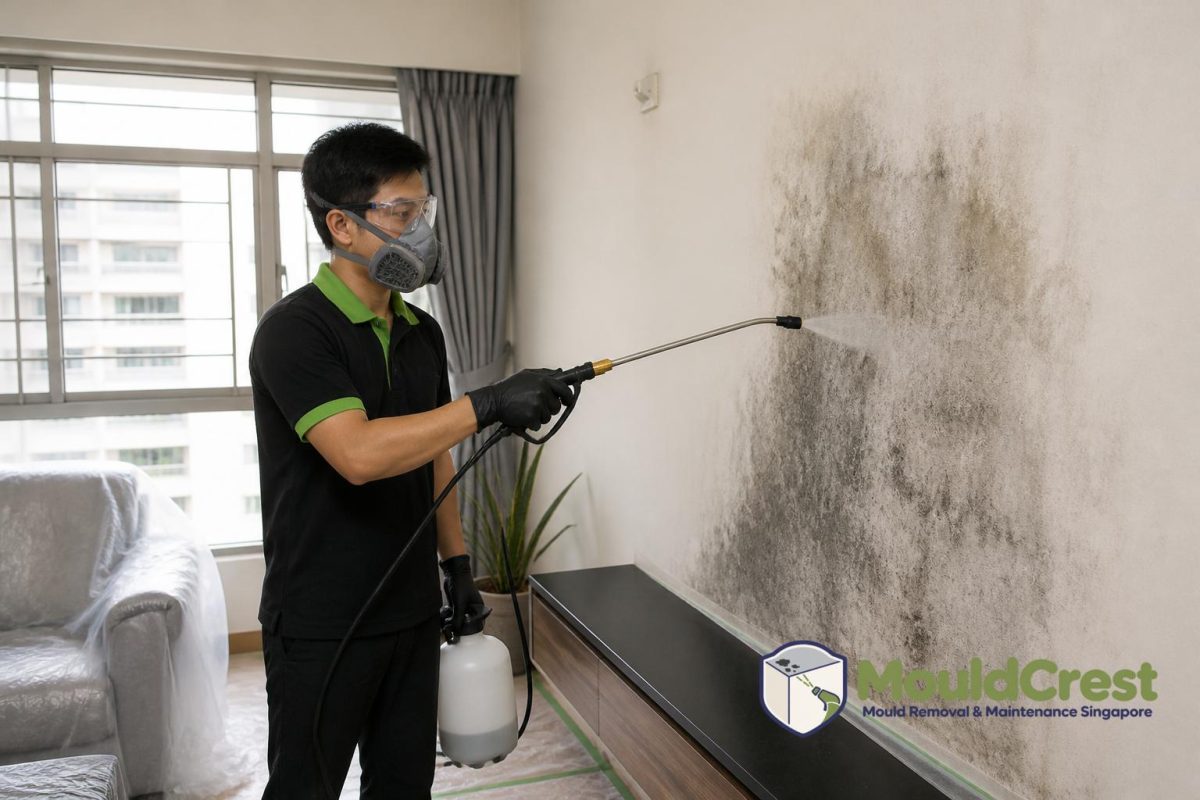
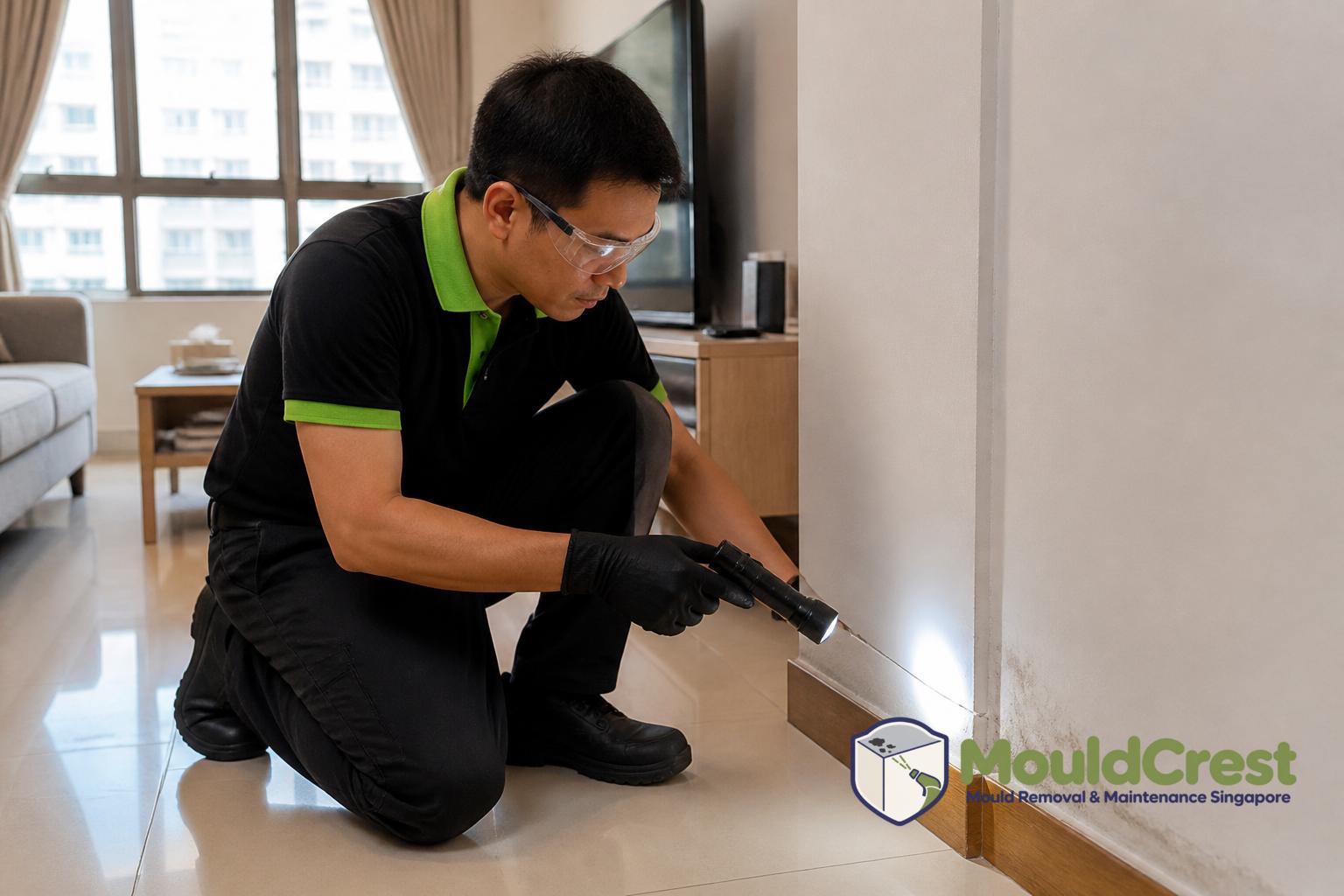
Mould removal focuses on the assessment and treatment of visible growth on accessible surfaces. This usually means a professional inspects the affected area, identifies the surface involved, and applies suitable cleaning or treatment methods based on the material and severity of the visible contamination. The aim is to remove what can be seen and treated safely, while also noting what may be contributing to the problem.
In Singapore homes, mould is commonly found on painted walls, ceiling surfaces, bathroom grout, silicone joints, window frames, and areas with recurring condensation. Mould removal should not be treated as a “one spray solves all” service. A proper approach considers the surface condition, the extent of visible growth, and whether the underlying moisture source is still present.
For smaller, accessible patches, surface treatment may be suitable. For more widespread growth, staining, or repeated recurrence, a broader mould remediation approach may be needed.
Mould remediation: broader assessment and moisture-source management
Mould remediation goes beyond treating a visible patch. It involves a broader scope assessment, consideration of affected materials, professional treatment of the impacted area, and steps to manage the moisture source that allowed growth to develop. This is especially relevant when mould keeps returning, when the affected area is larger, or when materials such as plasterboard, timber, or porous finishes are involved.
Remediation may include identifying whether the issue is linked to condensation, poor airflow, plumbing leakage, air-conditioning drainage, or water intrusion from another source. If a material is heavily affected, the suitable approach may differ from simple surface cleaning. In some cases, the focus is on treating the surface and improving conditions around it; in others, the affected material itself may need further inspection by the relevant trade.
This is why mould remediation is different from general cleaning. It is not about masking the symptom. It is about understanding the scope, treating the visible issue properly, and reducing the conditions that encourage recurrence.
Wall mould removal versus ceiling mould removal
Wall mould removal and ceiling mould removal are related, but they are not identical jobs. The surface orientation, access, preparation, and likely moisture patterns are different.
Wall mould removal
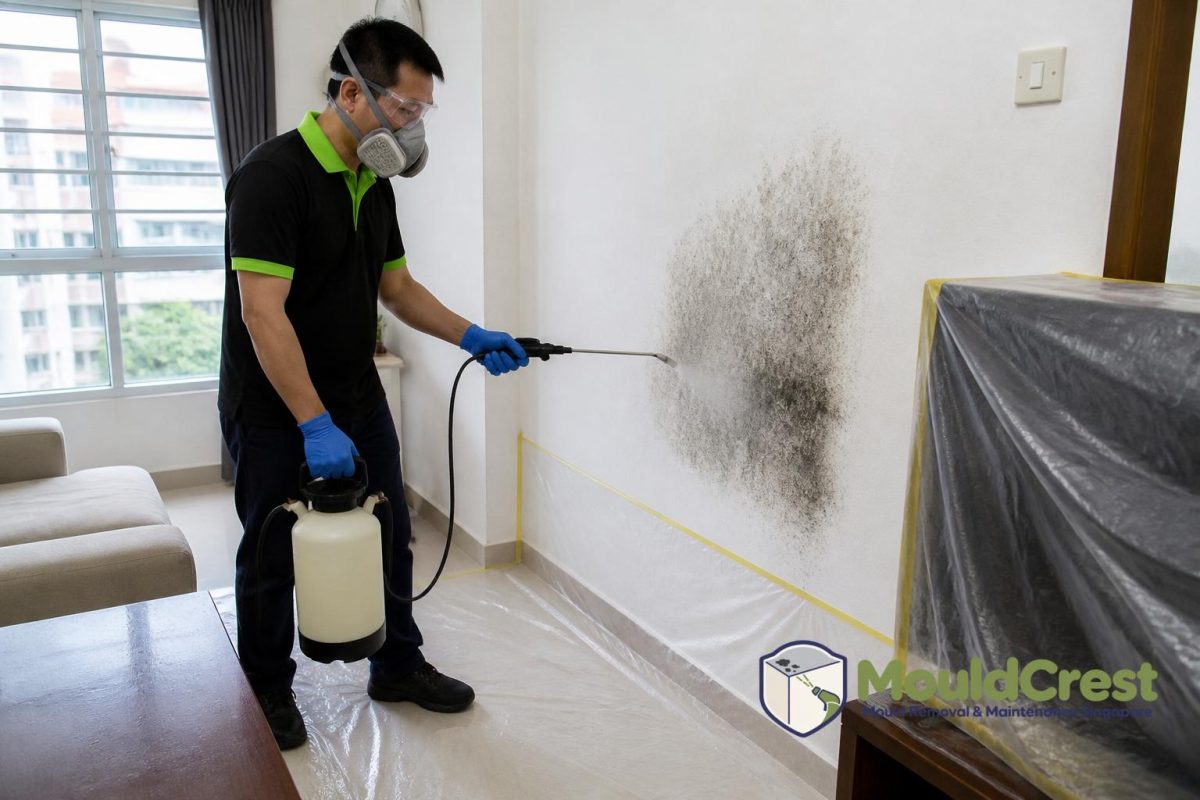
Wall mould removal usually involves vertical plaster or painted wall surfaces. These areas may show spotting, discolouration, or surface growth near corners, wardrobes, external-facing walls, or areas affected by condensation. Before treatment, the wall should be assessed for accessibility and surface condition. A suitable treatment method depends on whether the wall is painted, plastered, tiled, or otherwise finished.
Because wall mould can be linked to condensation, air flow, or a nearby leak, the cause should be considered alongside the surface treatment. Simply cleaning the wall without dealing with the moisture source may mean the issue returns.
Ceiling mould removal
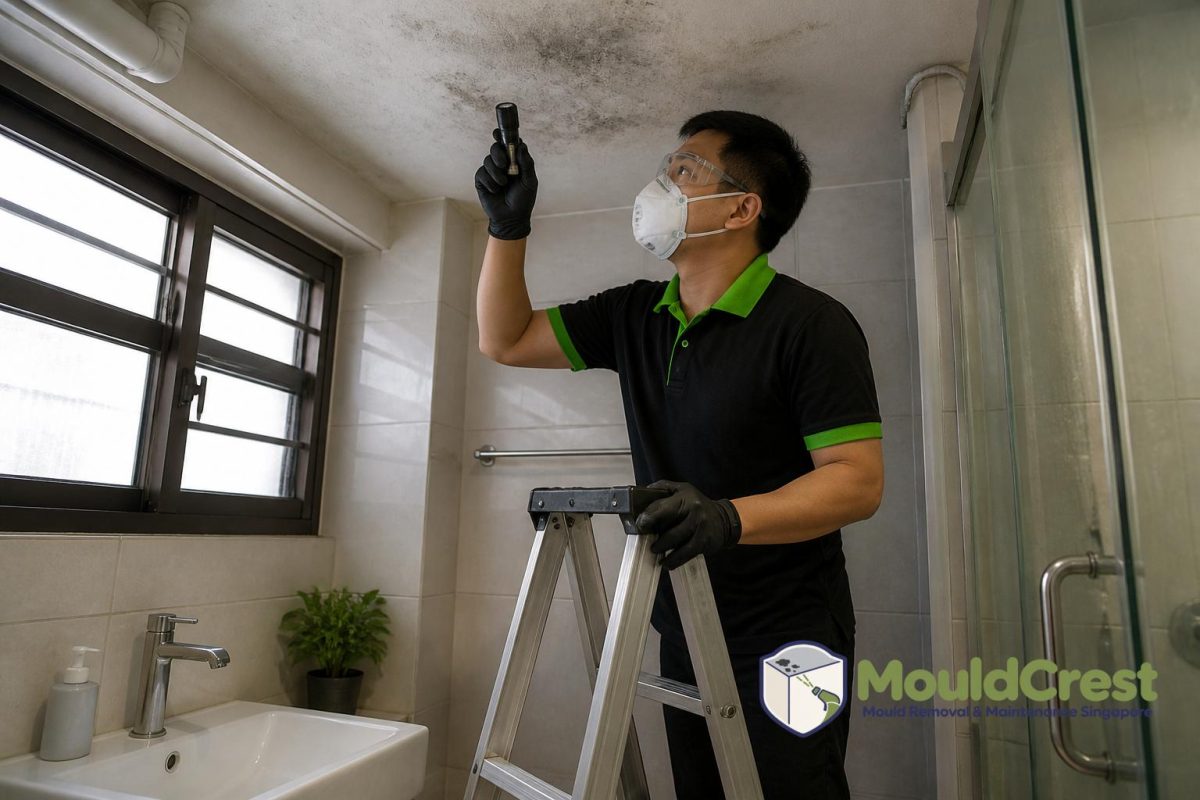
Ceiling mould removal often needs more careful preparation because overhead access can be more demanding. Work may require ladders or other safe access methods, suitable protective equipment, and attention to debris control. Ceilings can also be affected by different moisture sources, such as roof or upper-unit seepage in some properties, bathroom steam, or poor ventilation in enclosed spaces.
Ceiling work is not the same as wall treatment. The angle, access, and surface condition all matter. In practical terms, ceiling mould removal should include preparation for overhead work, safe handling of the area, and consideration of ventilation and moisture patterns that may be contributing to the issue.
Mould mitigation and why prevention matters
Mould mitigation is about reducing the conditions that allow mould to grow or return. In Singapore homes, this often means managing moisture, reducing condensation, and improving ventilation. It is a preventive approach rather than a cosmetic one.
Useful mitigation measures may include:
- Improving airflow in enclosed rooms, toilets, kitchens, or wardrobes
- Reducing indoor humidity where practical
- Addressing condensation on cold surfaces or poor-ventilation zones
- Repairing leaks or seepage promptly
- Using appropriate ventilation or extraction where needed
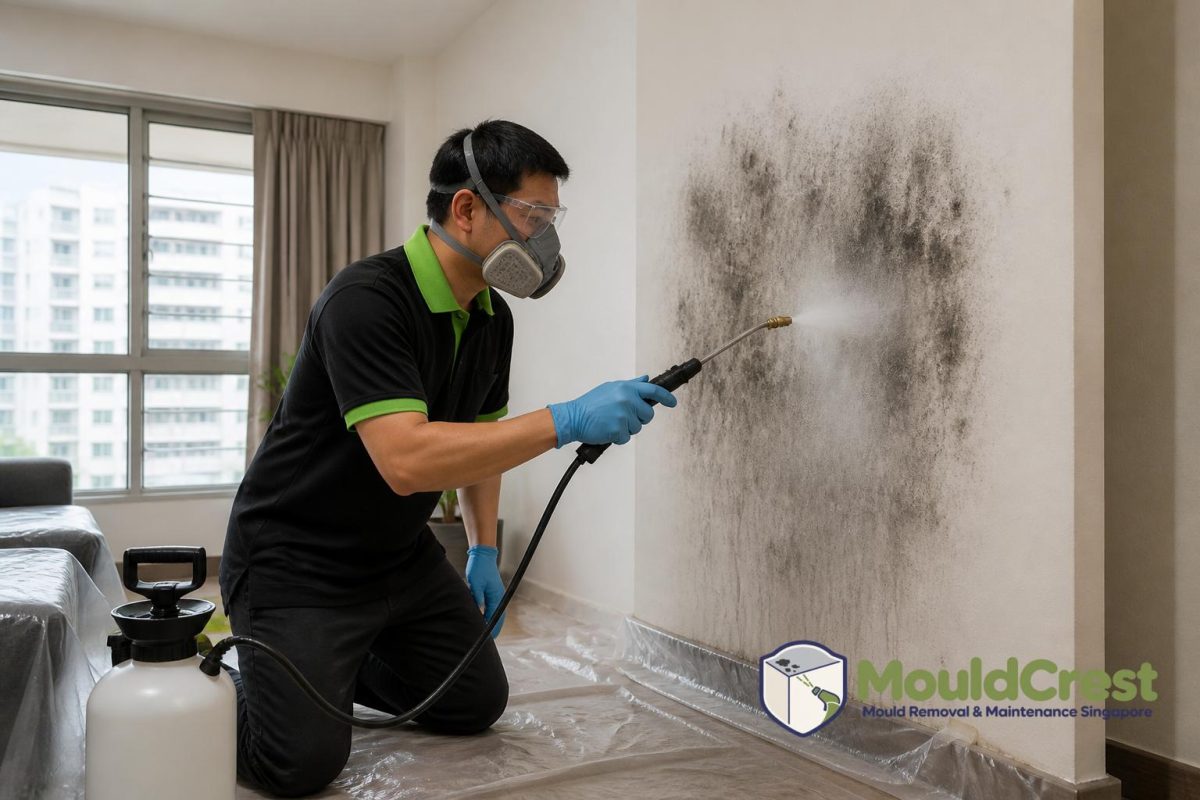
ULV fogging or misting may sometimes be used as an additional method in mould-related work, but it should not be viewed as the only solution or a long-term guarantee against regrowth. If moisture remains, mould can return. That is why mitigation is best understood as a combination of environmental control, proper maintenance, and targeted treatment where necessary.
Other property maintenance services that matter to Singapore homes
Property maintenance often includes several separate services that support the overall condition of the home. These should be handled according to their own methods and scope.
Handyman services cover general repairs and installation tasks such as fixing loose fittings, replacing basic hardware, or mounting everyday fixtures. Plumbing services deal with water supply, drainage, and leak-related issues. Electrical services handle fittings, switches, sockets, and related installation or fault-checking work within the appropriate scope.
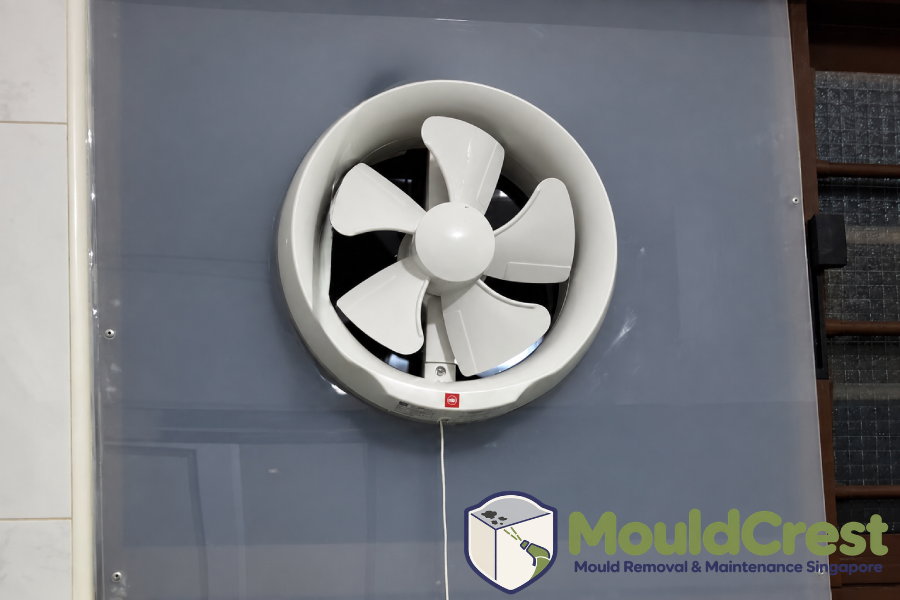
Ventilation fan installation is a distinct task and should be treated as such. It involves choosing a suitable fan size and location, making sure the setup suits the room layout, considering a window acrylic panel where relevant, and ensuring the electrical work is carried out safely. It is not simply a matter of attaching a fan somewhere; the installation should suit the space and the intended airflow.
Aircon servicing is also separate from mould work. It focuses on the air-conditioning unit itself, including cleaning key components and checking drainage issues that may affect performance or contribute to dampness nearby. Cleaning services can include routine household cleaning, while mattress cleaning and sofa cleaning address furniture hygiene using methods suitable for those materials. These services are useful, but they are not substitutes for targeted mould treatment when visible growth is present.
How to decide which service you need
If you can see mould on a wall, ceiling, or other accessible surface, mould removal may be the appropriate starting point. If the problem is recurring, widespread, or linked to moisture that has not been addressed, mould remediation is more suitable. If the issue is a leak, condensation, blocked drainage, poor airflow, or an electrical or mechanical fault, the relevant trade should be involved alongside any mould treatment.
For homeowners in Singapore, the most effective maintenance approach is usually coordinated rather than isolated. That means identifying the visible symptom, checking the likely cause, and choosing the correct service for each part of the problem. A well-maintained home is one where surface care, moisture management, repairs, and cleaning all work together.
For assistance with the maintenance issue covered here, WhatsApp MouldCrest with a description of the fault and relevant photographs where available.
Conclusion
Property maintenance for Singapore homes includes much more than occasional cleaning. It covers practical work that helps manage everyday wear, moisture issues, and service-related faults across the home. Mould removal, mould remediation, wall mould removal, ceiling mould removal, mould mitigation, ventilation fan installation, handyman tasks, plumbing, electrical work, aircon servicing, and specialised cleaning services all serve different purposes.
When each issue is handled with the right method, the result is a home that is easier to maintain, more comfortable to live in, and better prepared for Singapore’s humid conditions. The key is to match the service to the actual problem rather than relying on a single fix for everything.
Choose MouldCrest Mould Removal & Maintenance Singapore
At MouldCrest Mould Removal & Maintenance Singapore, we provide mould removal to treat affected surfaces and restore their appearance. Our wall mould removal service addresses growth and marks on walls. For mould on ceilings, we offer ceiling mould removal. We also provide mould remediation for a more comprehensive approach to affected areas. To help manage the risk of mould returning, our mould mitigation service focuses on the conditions that encourage growth. We offer ventilation fan installation to improve airflow and help reduce moisture build-up. Our services also cover property maintenance, including handyman services for various repairs and installations, plumbing services to address plumbing issues, and electrical services for different electrical fittings. We also provide cleaning services such as mattress cleaning and sofa cleaning to freshen frequently used furnishings. Explore our blog for practical information and browse our completed projects to see our work. WhatsApp us today at +65 8241 0032 to enquire about our services and discuss your needs.
Frequently Asked Questions
Is mould removal the same as mould remediation?
No. Mould removal focuses on treating visible mould on accessible surfaces. Mould remediation is broader and includes scope assessment, treatment of affected materials, and attention to the moisture source or conditions that allowed the mould to grow.
Why do wall mould and ceiling mould need different handling?
Walls and ceilings differ in access, surface orientation, and common moisture causes. Wall mould is usually treated on vertical painted or plastered surfaces, while ceiling mould may require overhead access, more preparation, and different safety considerations.
Can ventilation or fogging alone prevent mould from coming back?
No single method can guarantee that mould will not return. Ventilation helps reduce moisture and condensation, and fogging or misting may be used as an additional measure, but long-term prevention depends on controlling humidity, improving airflow, and addressing the underlying moisture source.