
Recurring mould is a familiar issue in many Singapore homes and business premises, especially where humidity, condensation, water leakage or limited airflow create repeated surface dampness. In that context, mould mitigation is not about chasing every visible spot with a quick spray. It is about controlling the conditions that allow growth to return, while addressing the affected surfaces and any contributing moisture source in a practical, proportionate way.
Why recurring mould is common in Singapore properties
Singapore’s warm and humid climate means indoor surfaces can stay damp for longer, particularly in rooms with poor ventilation, air-conditioning usage, or hidden moisture from leaks. HDB flats, condominiums, landed homes and commercial units may all experience recurring mould if the underlying moisture pattern is not managed. Common situations include:
- Condensation on cool walls, ceilings, windows or behind furniture.
- Bathroom and kitchen humidity after regular water use.
- Leaking plumbing, roof seepage or bathroom waterproofing issues.
- Insufficient air movement in enclosed rooms, storerooms or wardrobes.
- Air-conditioning settings that cool surfaces without reducing humidity effectively.
When growth keeps returning to the same area, it usually means the environment is still suitable for it. That is why mould mitigation focuses on moisture control rather than treating the visible patch alone.
How mould mitigation helps manage recurrence
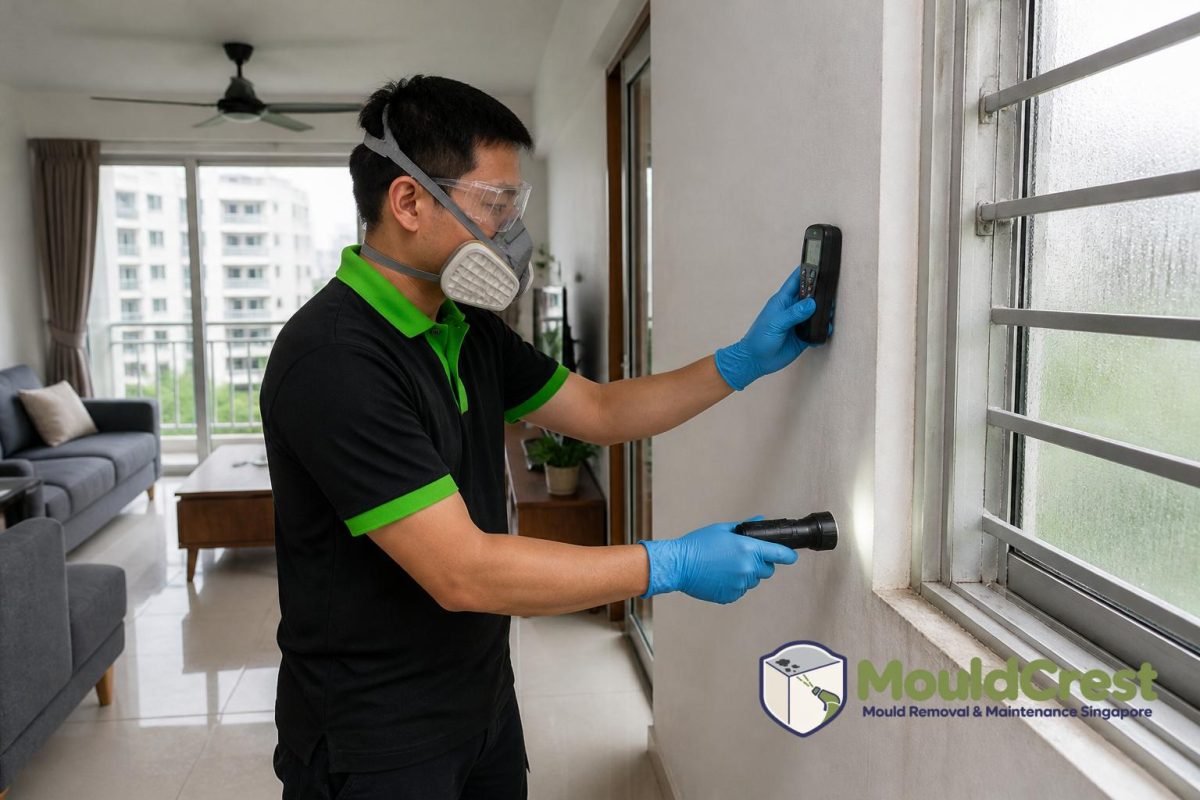
Mould mitigation is a prevention-led service. Its purpose is to reduce the conditions that support repeat growth, especially moisture and condensation. In practical terms, this may include checking ventilation patterns, identifying areas that trap humidity, and recommending changes to daily use or property fittings that can improve airflow.
Effective mitigation often involves more than one measure:
- Improving natural or mechanical ventilation in enclosed spaces.
- Reducing condensation on cool surfaces through airflow and humidity management.
- Addressing moisture pathways from leaks, seepage or plumbing faults.
- Supporting regular maintenance so affected areas are easier to keep dry.
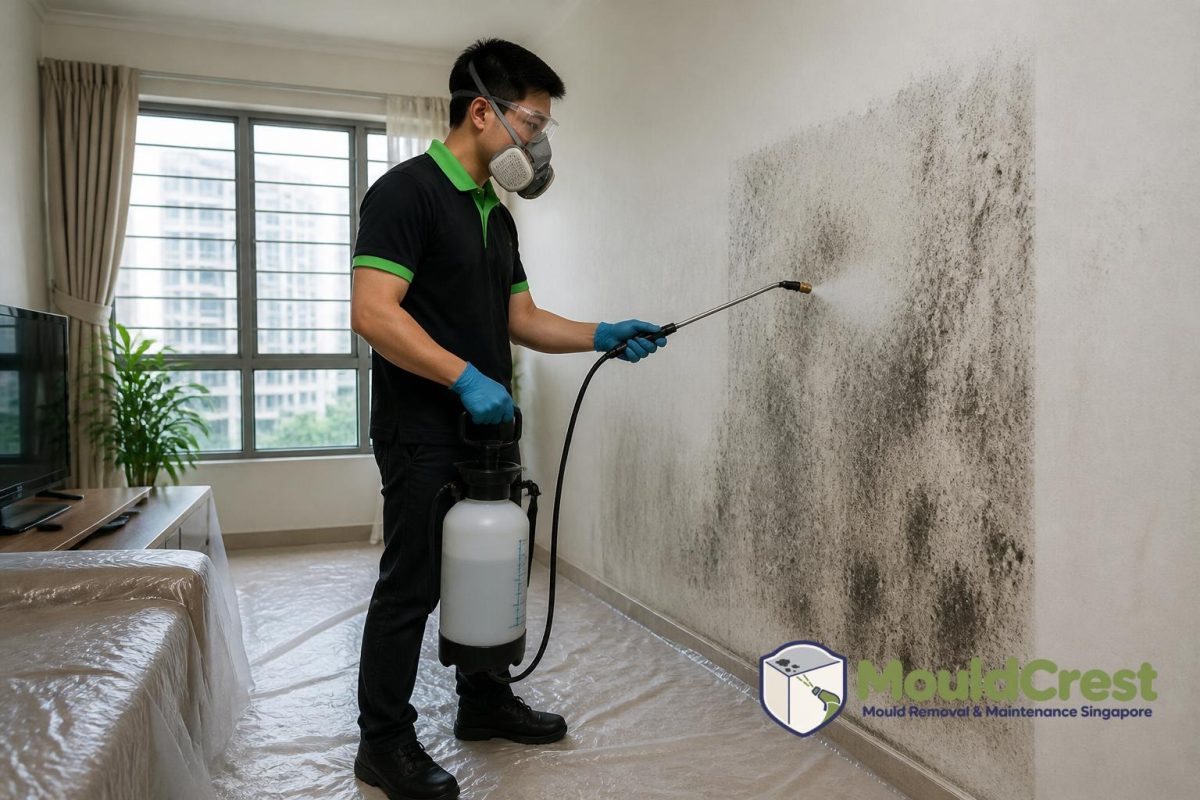
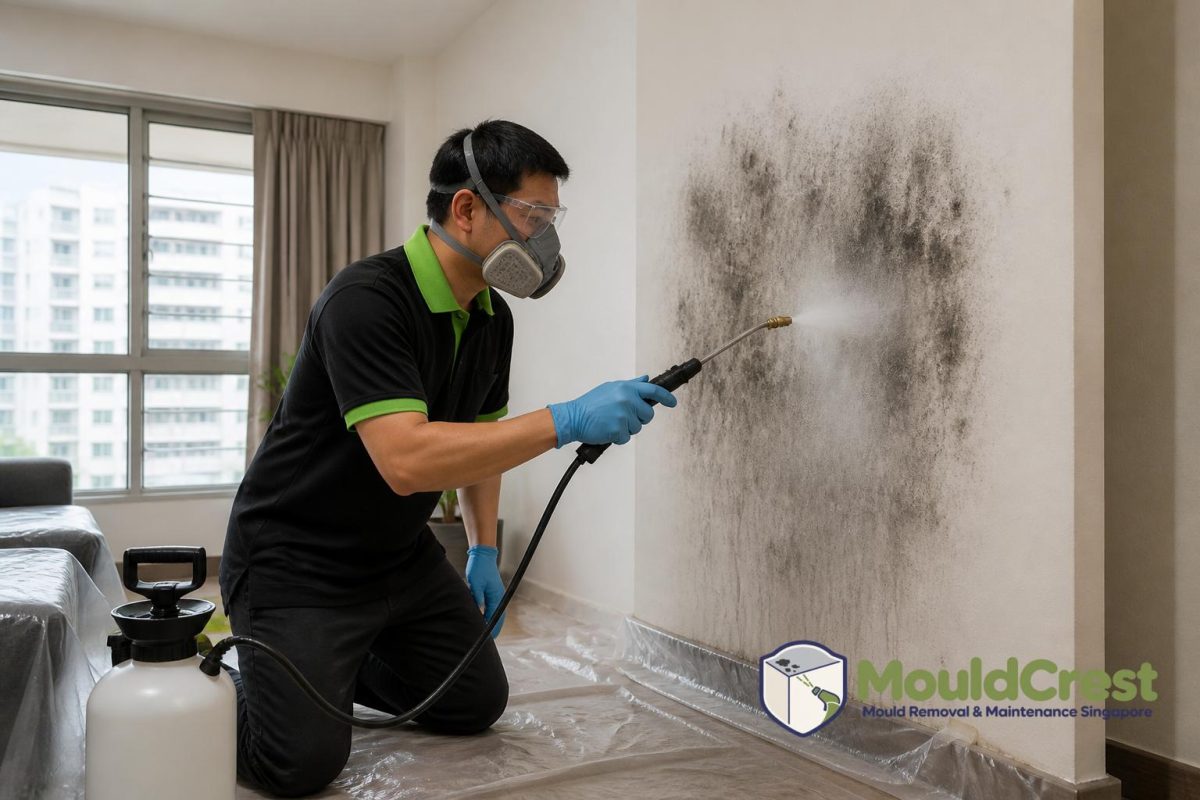
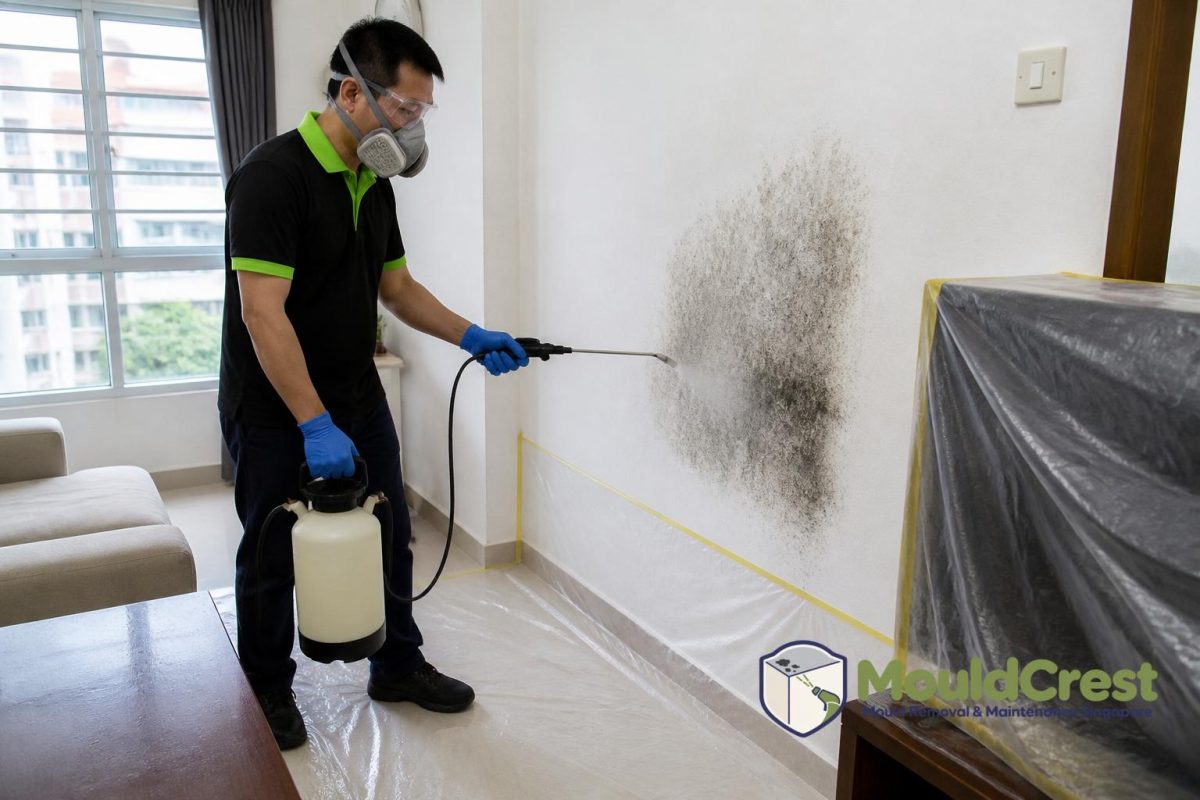
ULV fogging or misting may sometimes be used as an additional treatment step on accessible surfaces, but it should not be treated as a long-term solution on its own. If moisture remains, mould can return.
Mould removal versus mould remediation
Although the terms are often used together, they are not the same. Mould removal usually refers to assessing the affected accessible surface and applying appropriate treatment to visible growth. This may suit localised growth on paint, plaster, tile grout or other cleanable surfaces where the issue is limited and accessible.
Mould remediation is broader. It involves a scope assessment, consideration of affected materials, professional treatment and moisture-source management. Depending on what is found, remediation may require different methods for different materials. For example, a painted wall, a ceiling board and a fabric item do not respond to the same treatment approach.
This distinction matters because a surface that looks clean after treatment may still be at risk if the source of dampness remains unresolved. MouldCrest Mould Removal & Maintenance Singapore treats these as separate service intents, not one blanket solution.
Wall mould removal: what is different about vertical surfaces
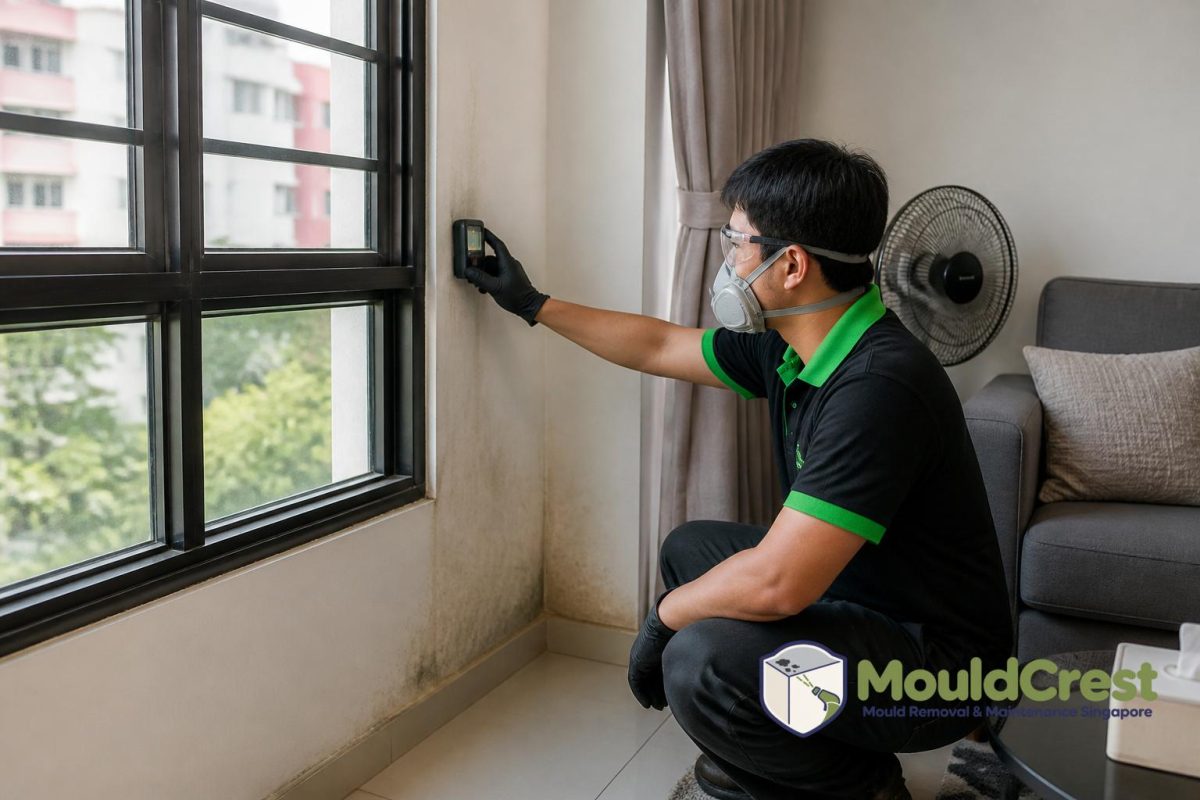
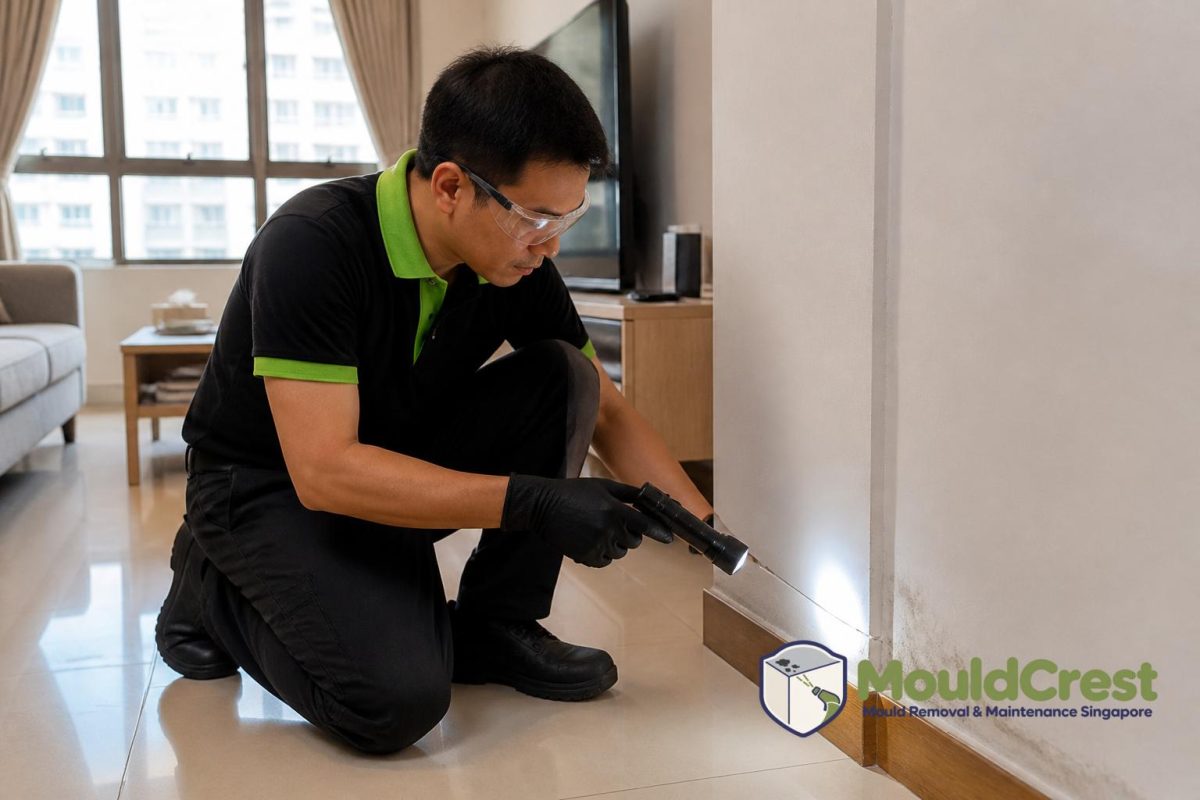
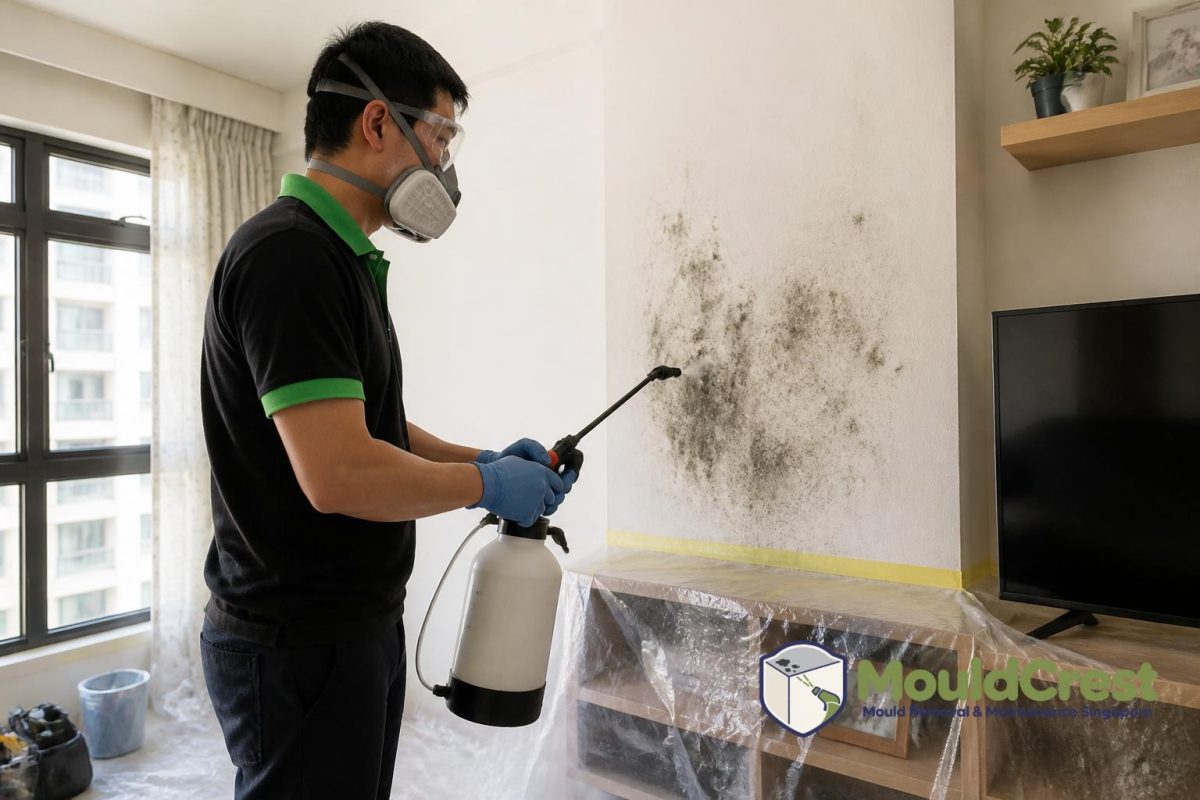
Wall mould removal is typically concerned with vertical plaster or painted wall conditions. Walls may show spotting, staining, surface discolouration or a fine mould film, especially behind wardrobes, beds or cabinets where air circulation is poor. Access, preparation and moisture assessment are important here because the wall finish may be affected differently from other surfaces.
Before treatment, the affected area should be assessed for:
- Paint condition, peeling or bubbling.
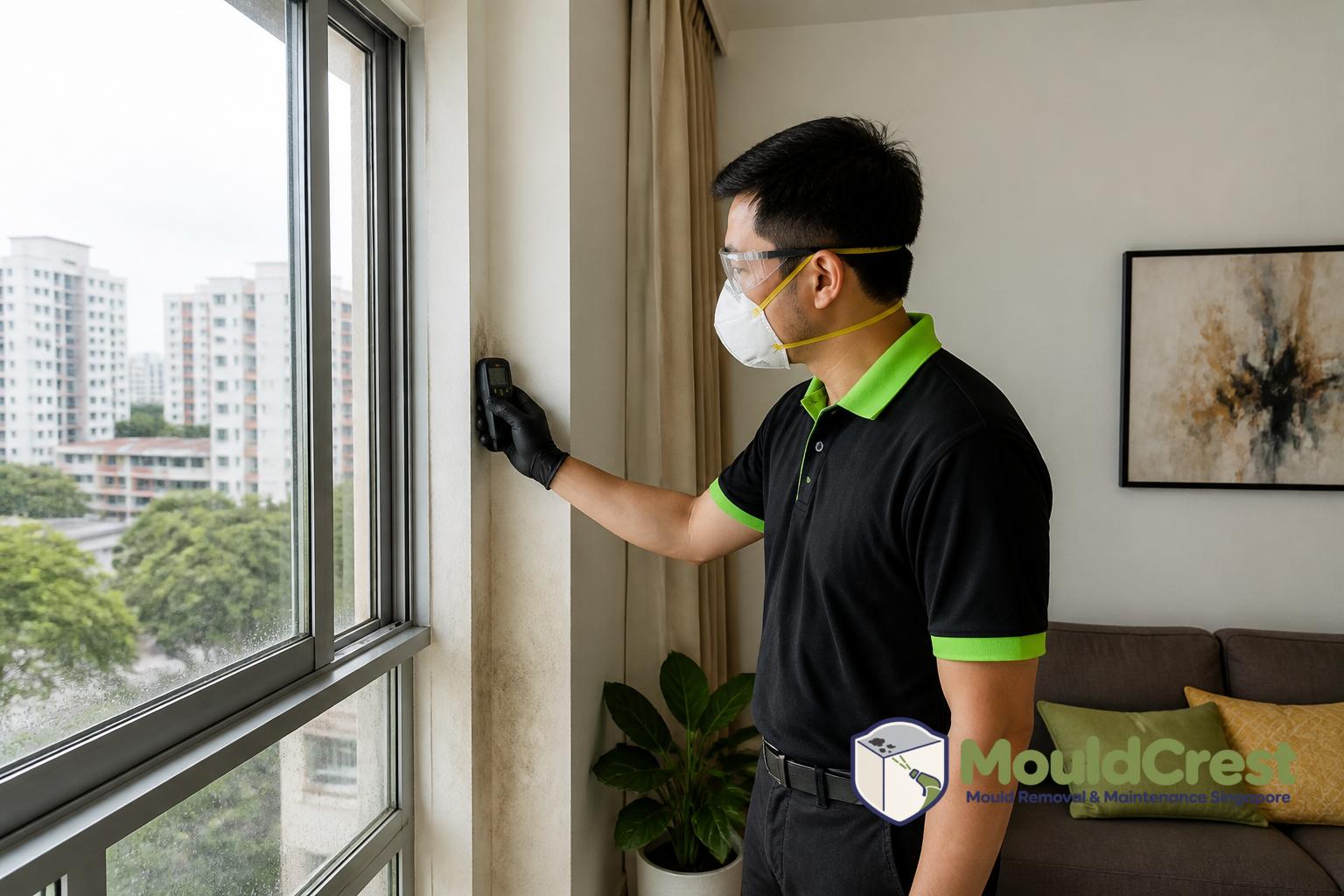
- Whether the wall is damp from condensation, seepage or a leak.
- Whether furniture placement is restricting airflow.
- Whether the wall is cool enough to encourage repeated moisture build-up.
Where the growth is on a sound, accessible surface, professional surface treatment may be suitable. However, if the moisture source is active, wall treatment alone is unlikely to prevent recurrence. The cause must be considered alongside the finish.
Ceiling mould removal: overhead access and ventilation factors
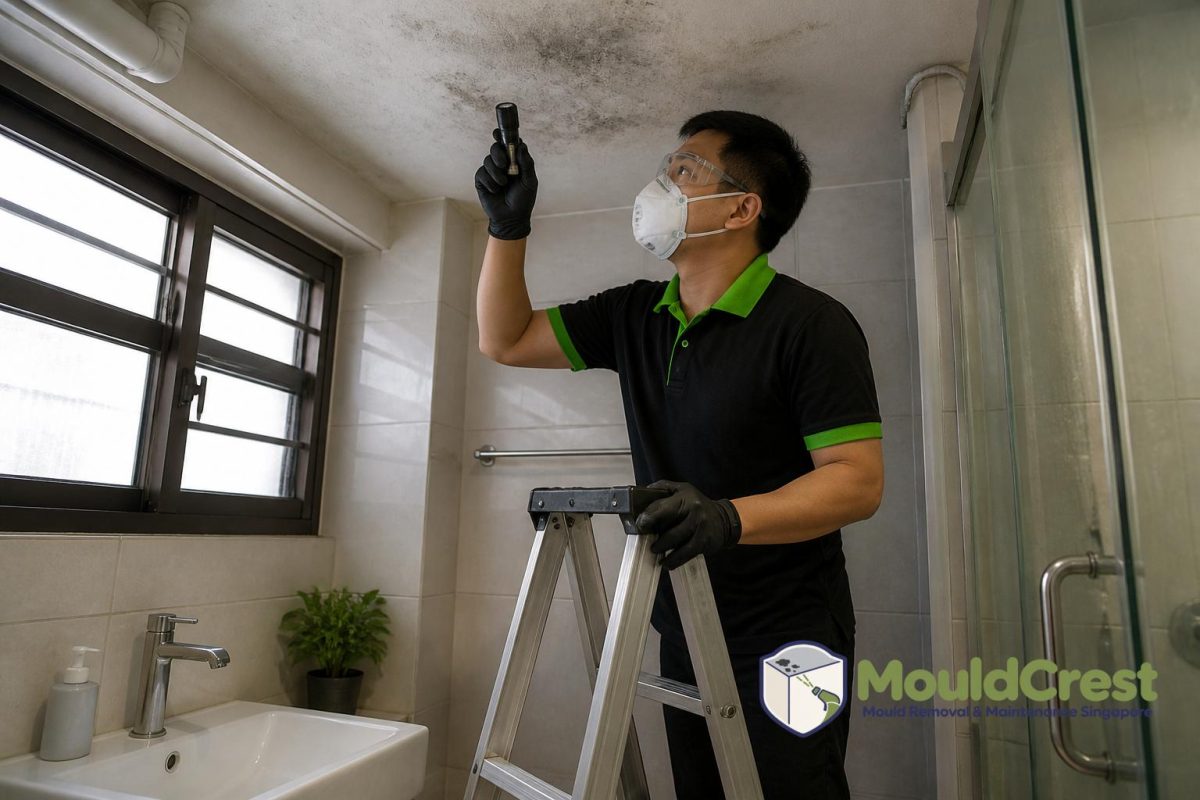
Ceiling mould removal is different from wall work because overhead surfaces require proper access, preparation and protective equipment. Ceilings may be affected by bathroom humidity, roof seepage, air-conditioning condensation, or inadequate ventilation in upper-floor rooms. Work at height also requires care when protecting the surrounding area and handling residues safely.
Compared with walls, ceilings often need additional attention to:
- Safe access to the overhead area.
- Preparation of furnishings and floor protection below the work zone.
- Use of suitable PPE during treatment.
- Review of ventilation, exhaust fan performance and moisture build-up above the room.
A ceiling stain may also indicate a moisture issue above the surface rather than just a visible patch of mould. For that reason, ceiling treatment should be approached differently from wall treatment, with the source and location of dampness kept in view.
What a practical mould mitigation plan usually considers
A sensible mitigation plan for Singapore properties is built around the way the space is used and how moisture moves through it. This can include bathrooms, kitchens, bedrooms, service yards, storerooms and air-conditioned spaces. The goal is not merely to clean the symptom, but to reduce the chance of repeat growth.
- Humidity control: keeping indoor moisture at a level less likely to support surface growth.
- Ventilation: improving air exchange so damp air does not linger.
- Condensation control: reducing cold-surface moisture on walls, ceilings and windows.
- Maintenance coordination: checking for leaks, failed seals or blocked drainage that may contribute to dampness.
In some homes, a combination of cleaning, minor maintenance and ventilation improvements is enough to reduce recurrence. In others, the issue may need a broader remedial approach, especially where there is repeated dampness from building or plumbing conditions.
Ventilation fan installation as a separate trade
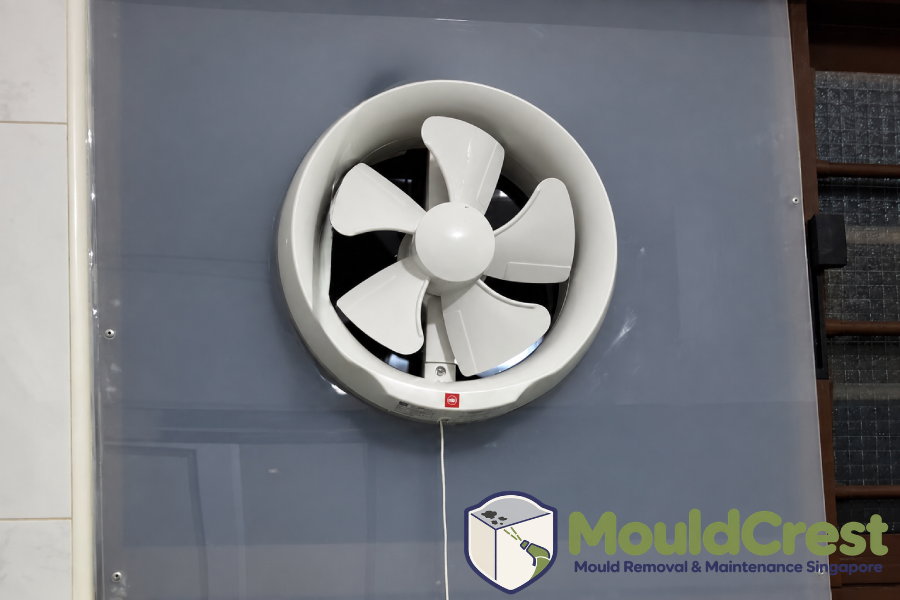
Where poor airflow is a key factor, ventilation fan installation may be part of the solution. This is a distinct fitting and electrical task, not a mould treatment by itself. A properly chosen fan should suit the room size, location and use pattern, and it should be installed with attention to safe electrical work and practical exhaust routing.
In Singapore homes, this may involve selecting a suitable fan location for a bathroom, service yard or enclosed space, and in some cases fitting a window acrylic panel where a window-mounted fan arrangement is appropriate. The aim is to improve air movement and help reduce humidity build-up. That said, if there is an active leak or serious seepage, a fan alone will not solve the mould issue.
Where property maintenance and other services fit in
Recurring mould is sometimes linked to issues that sit outside mould treatment itself. That is why property maintenance and related trades may be relevant alongside mould mitigation. For example:
- Plumbing: leak checks, faulty seals, tap or pipe issues and drainage problems.
- Electrical services: fan points, wiring and safe installation of relevant equipment.
- Aircon servicing: cleaning filters, checking drainage and improving performance in cooled rooms.
- Handyman work: resealing, minor repairs and access improvements.
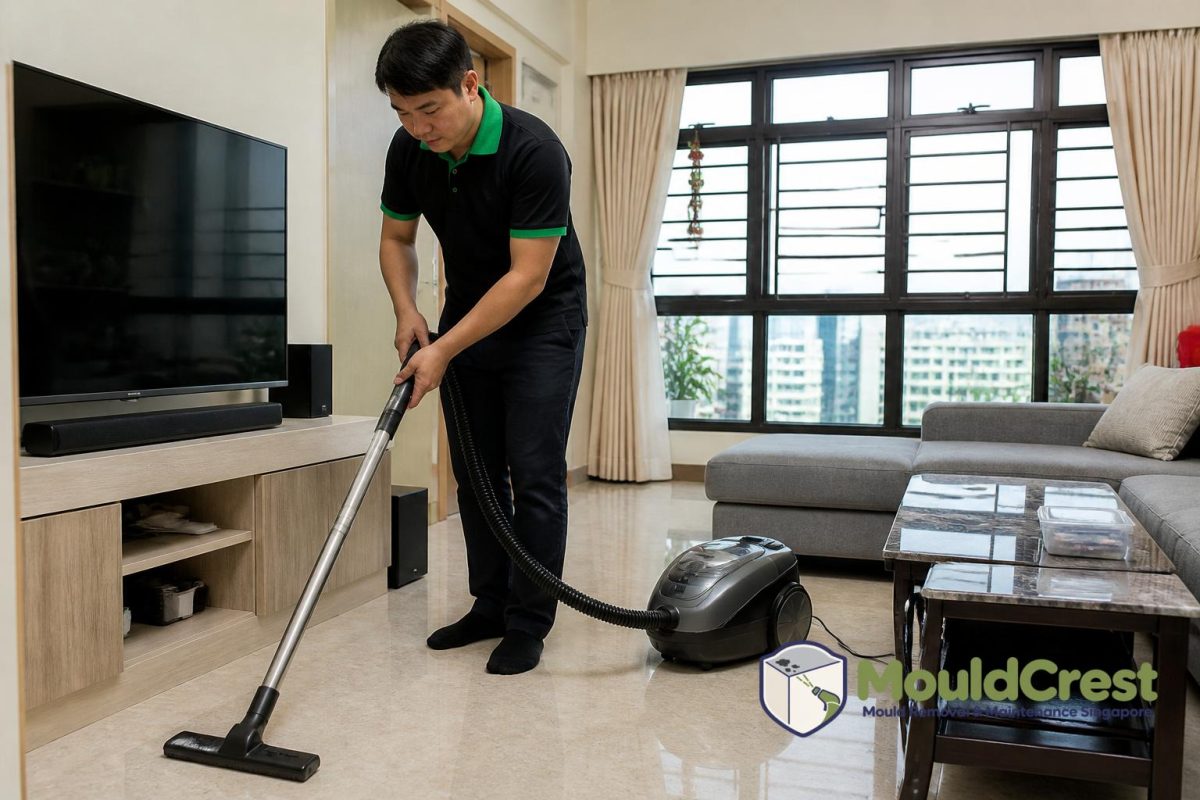
- Cleaning services: general upkeep that reduces dirt and moisture retention.
- Mattress cleaning and sofa cleaning: separate fabric care for items affected by humidity or storage conditions.
These services remain distinct because each addresses a different cause or surface type. A mattress or sofa, for instance, requires fabric-appropriate cleaning methods and should not be treated as though it were a painted wall or bathroom ceiling.
To discuss the mould concern covered here, WhatsApp MouldCrest with details of the affected surface and any moisture signs to request an assessment or quotation.
Conclusion
For Singapore properties, mould mitigation is most effective when it is treated as a moisture-management strategy rather than a one-time surface fix. Recurring growth is often linked to humidity, poor airflow, condensation or unresolved leaks, so the right approach combines visible surface treatment with practical prevention measures. Whether the issue is on a wall, ceiling or another accessible surface, the main objective is to reduce the conditions that allow mould to return.
MouldCrest Mould Removal & Maintenance Singapore approaches mould removal, mould remediation and mitigation as separate but connected services, with attention to surface condition, moisture causes and suitable preventive steps for each property type.
Choose MouldCrest Mould Removal & Maintenance Singapore
At MouldCrest Mould Removal & Maintenance Singapore, we offer mould removal services to address mould growth and improve the condition of affected spaces. We provide wall mould removal to treat growth and marks on walls and mould on ceilings can be addressed through our ceiling mould removal service. For a more comprehensive approach, our mould remediation service addresses mould concerns across the affected area. We also offer mould mitigation to help reduce the risk of recurring growth. As airflow is an important part of managing moisture, we provide ventilation fan installation to improve air circulation and help reduce the likelihood of mould growth.
Our services also cover property maintenance, which includes handyman services for repairs and installations, plumbing services for leaking taps and fixture issues, and electrical services for switches, sockets and light fittings. To refresh frequently used furnishings, we offer cleaning services that include mattress cleaning and sofa cleaning to remove accumulated dirt. Visit our blog for helpful insights and browse our completed projects to see our work. WhatsApp us today at +65 8241 0032 to enquire about our services and to discuss your requirements.
Frequently Asked Questions
Is mould mitigation the same as mould removal?
No. Mould removal focuses on treating visible growth on accessible surfaces, while mould mitigation is about reducing the conditions that lead to recurrence, such as dampness, condensation and poor ventilation.
Will a fogging or spray treatment stop mould from coming back?
Not by itself. Fogging or misting can be used as an additional step in some situations, but it is not a long-term solution if the moisture source remains active. Prevention depends on managing humidity, airflow and any underlying dampness.
Why are wall mould and ceiling mould treated differently?
Walls and ceilings have different access, preparation and moisture patterns. Wall mould often relates to vertical surface conditions and nearby furniture or seepage, while ceiling mould may be linked to overhead condensation, ventilation issues or moisture above the surface.